Industrial sawmills from Wood-Mizer and Wravor

Bailey's supplies production sawmill equipment from both makers. Pick the one that fits your logs, or let a specialist compare both.

Wood-Mizer

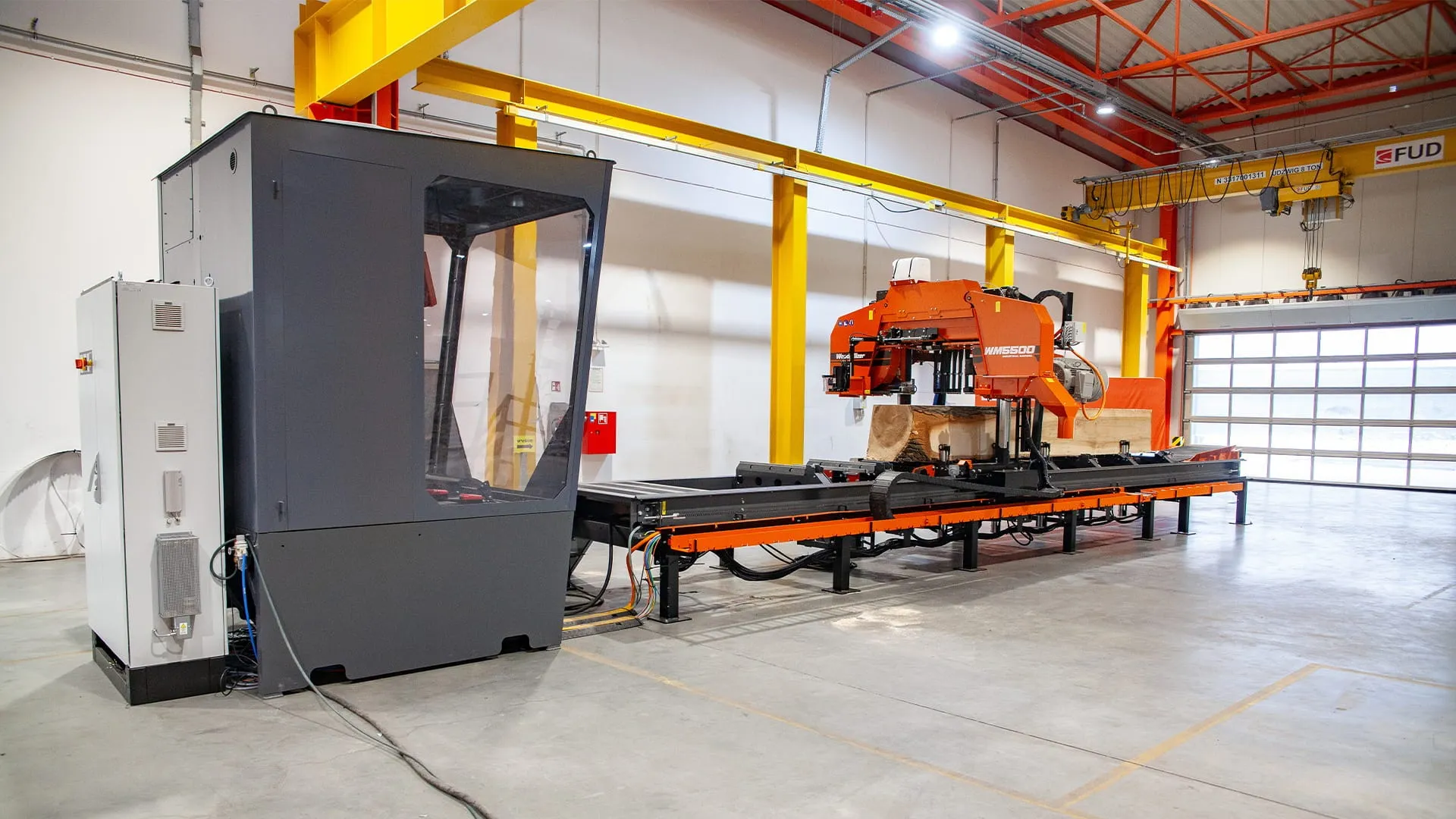
Integrated industrial systems: headrig, machine centers and handling that run as one line

Bailey’s is a Wood-Mizer dealer for industrial systems.

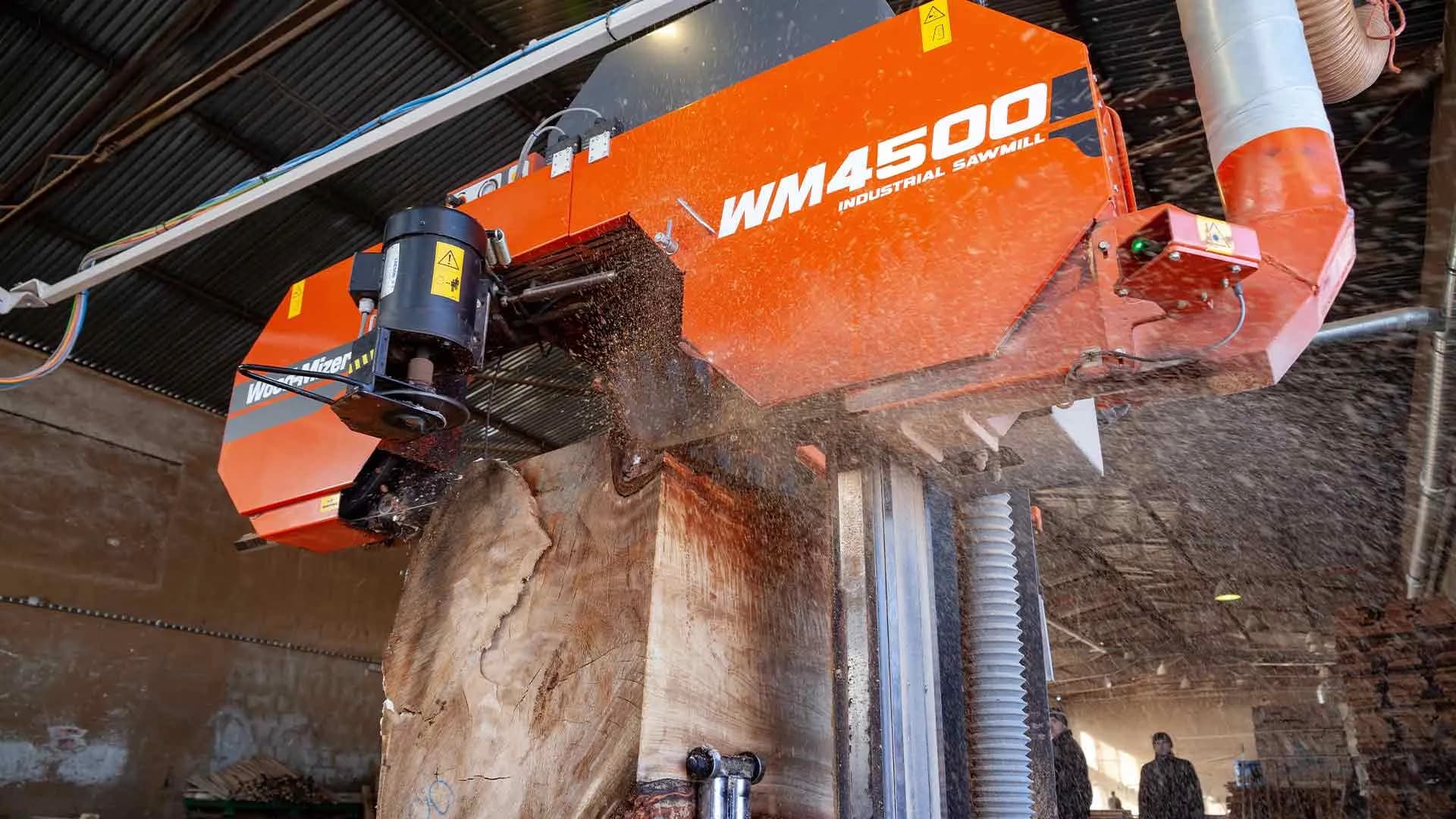
Wood-Mizer WM4500 industrial sawmill head sawing a large cant, sawdust in the air
WM headrigs
3, for logs up to about 41 in
Sawmill systems
8 example lines
Machines and handling
21 machine centers, 13 handling items
Wravor

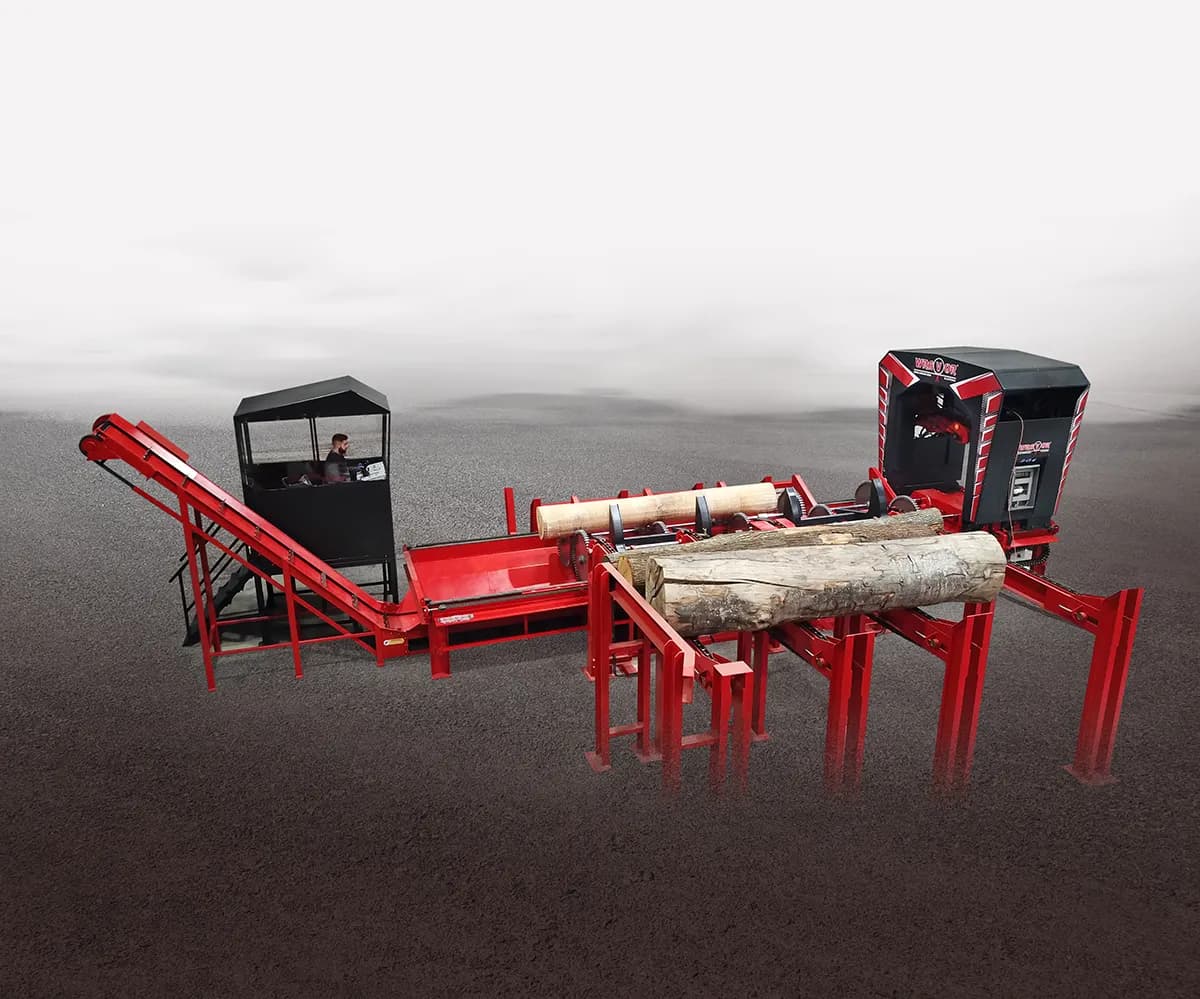
Big-log band headrigs and sawing lines, built to order in Slovenia

Bailey’s is a Wravor dealer and Wravor’s listed U.S. sales partner.

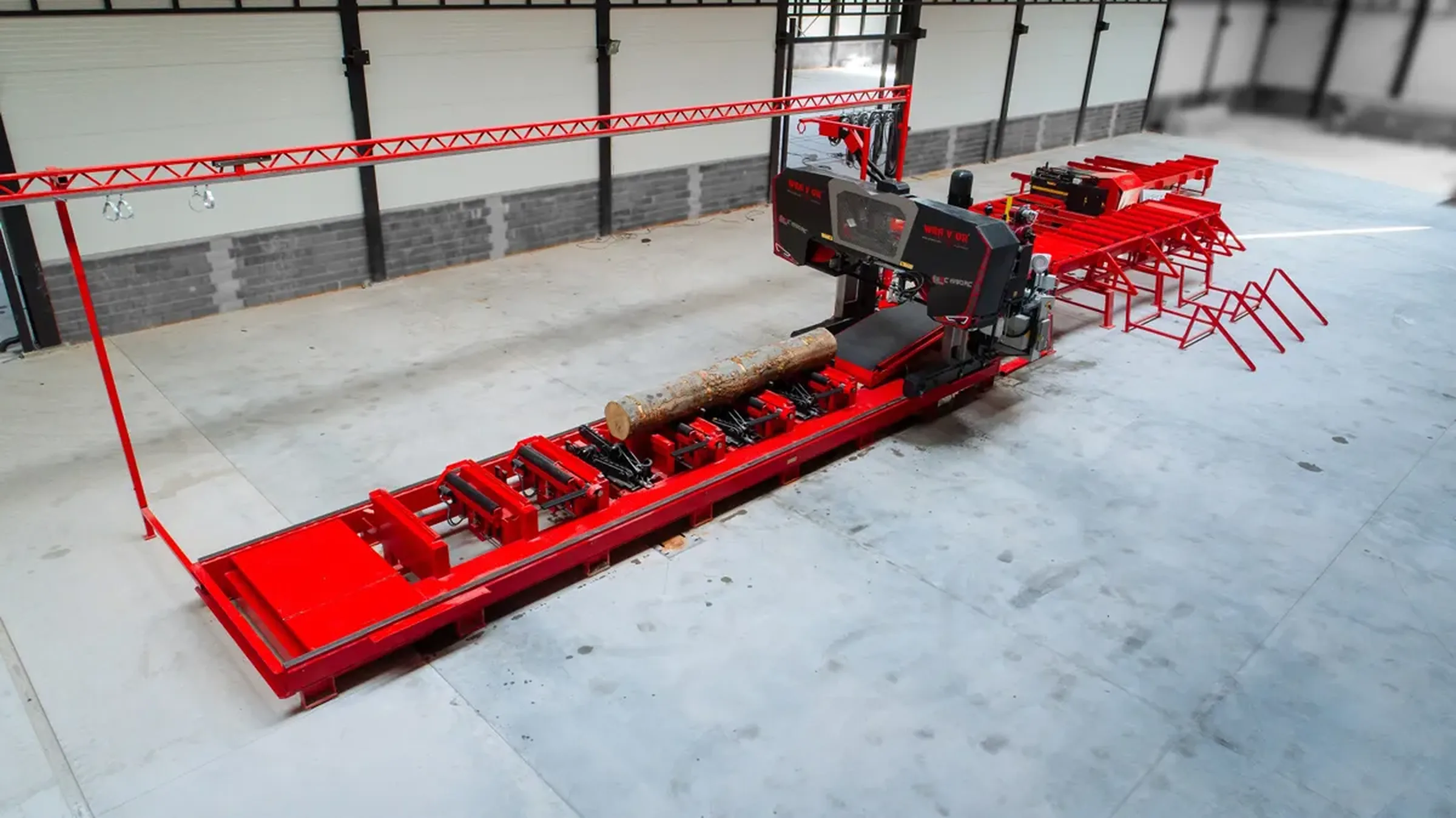
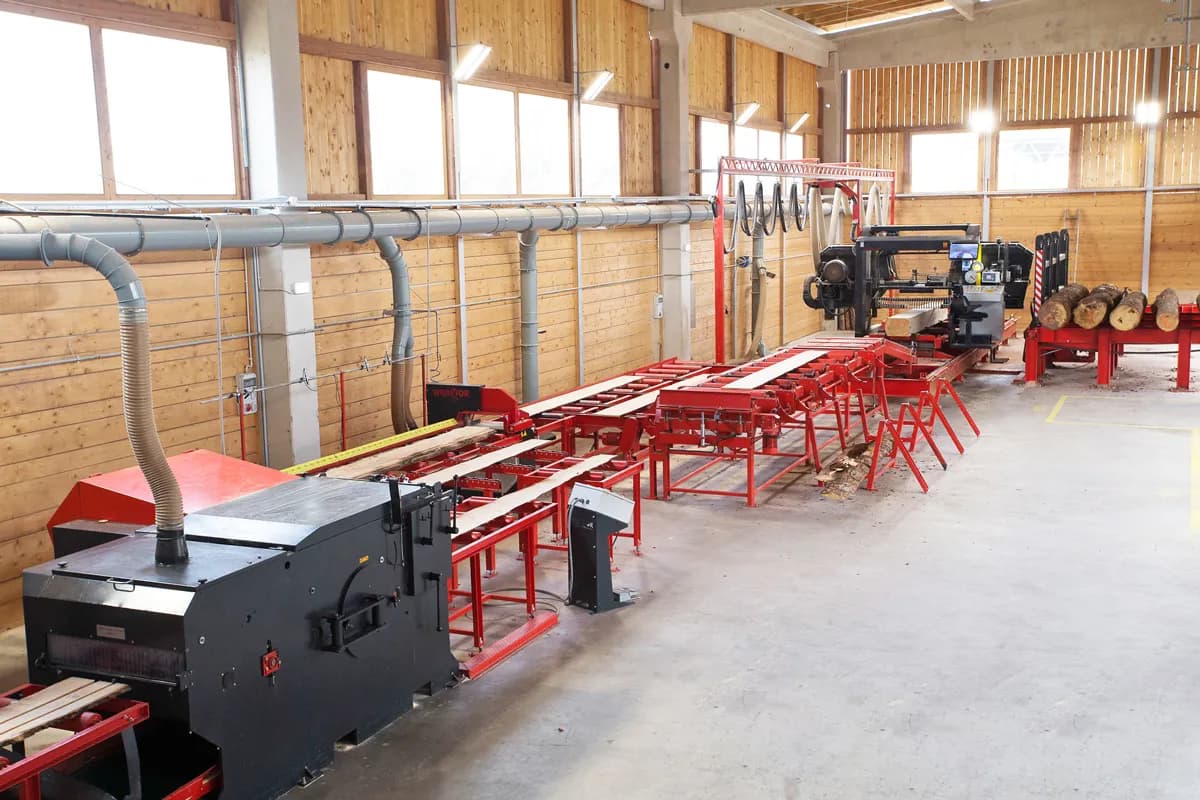
Wravor WRC 1550 headrig on its line with a red log deck in a new mill hall
WRC headrigs
6, for logs 41–79 in
Sawing lines
5 line families
Edgers and debarking
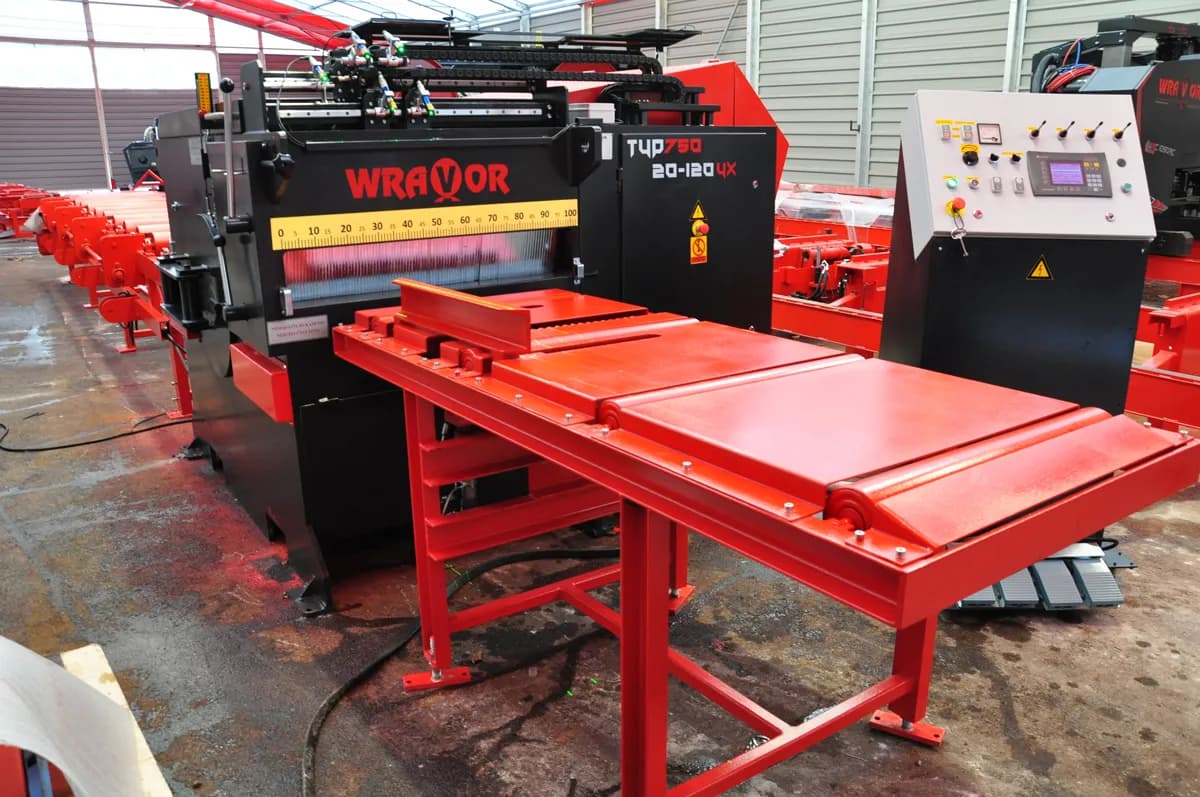
5 Type 750 edgers and a debarker

What we offer from each maker

Each maker has its own pages on this site. Start with the family you need; every machine there has its published specifications and a quote request.

Logs around 41 inches sit where the two ranges meet.

That is the top of the WM headrigs and the start of the WRC range. A specialist compares both on your species, log sizes, output and site power, then quotes the one that fits.

Compare both on your logs

Production headrigs side by side

The headrig is the mill's primary saw: it opens each log and decides how much the rest of the line can do. Wood-Mizer's WM headrigs take logs up to about 41 in; Wravor's WRC range runs from 41 in to almost 79 in. Where they overlap, a specialist can compare them on your logs.

Wravor and Wood-Mizer industrial headrigs compared
ModelMax log diameterWidth at the bladeMain motorBlade widthLog lengthPublished capacity
Wravor WRC seriesBuilt to order in SloveniaAsk about a Wravor headrigAll six WRC headrigs
WRC 1050 ACSmaller mills, sawing alongside other workMax log diameter41.3 in (1,050 mm)Width at the blade41.3 in (1,050 mm)Main motorUp to 45 kW (≈ 60 hp); options varyBlade width120 mm (4.7 in)Log lengthBuilt to orderPublished capacityUp to 30 m³ per 8 h
WRC 1150 ACSmaller sawmillsMax log diameter45.3 in (1,150 mm)Width at the blade45.3 in (1,150 mm)Main motor22–45 kW (≈ 30–60 hp)Blade width140 mm (5.5 in)Log lengthBuilt to orderPublished capacity20–40 m³ per 8 h
WRC 1225 ACMedium capacity, usually in a lineMax log diameter49.2 in (1,250 mm)Width at the blade49.2 in (1,250 mm)Main motor30–45 kW (≈ 40–60 hp)Blade width150 mm (5.9 in)Log lengthBuilt to orderPublished capacityUp to 43 m³ per 8 h
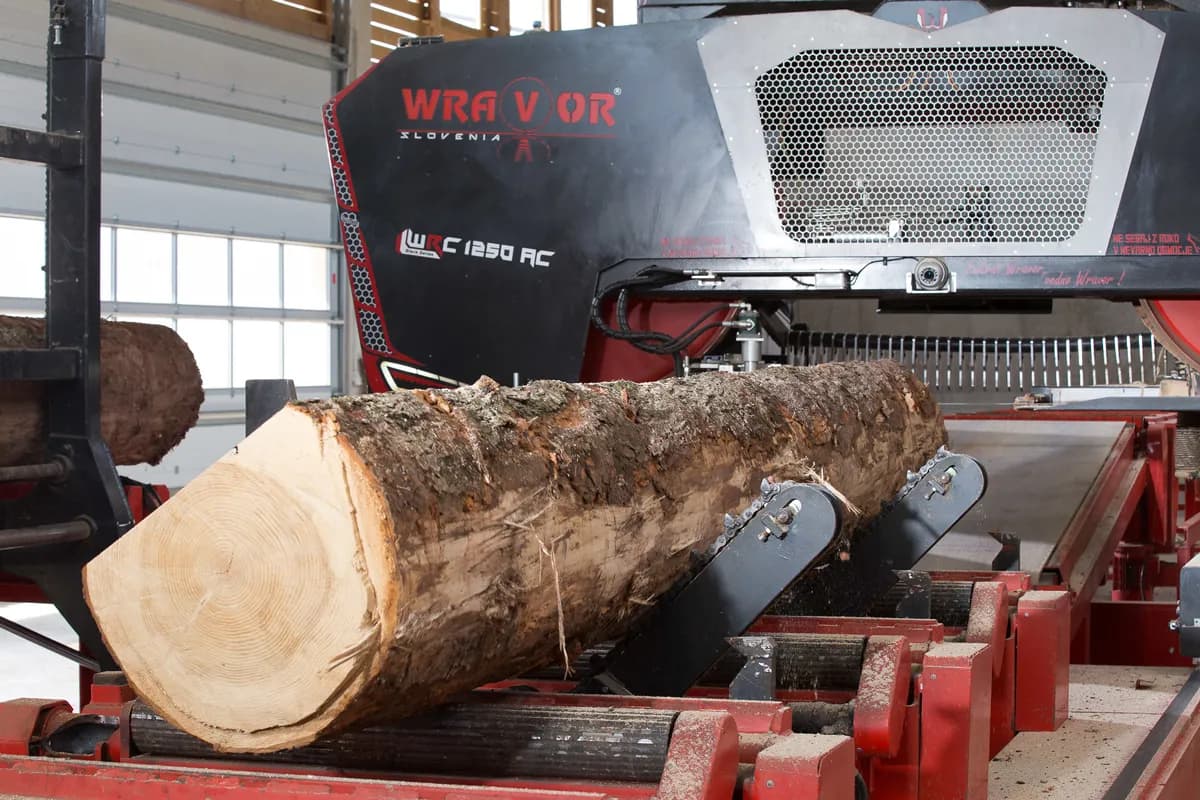
WRC 1250 ACHigh-productivity millsMax log diameter49.2 in (1,250 mm)Width at the blade49.2 in (1,250 mm)Main motor45 or 55 kW (≈ 60 or 74 hp)Blade width160 mm (6.3 in)Log lengthBuilt to orderPublished capacityUp to 55 m³ per 8 h
WRC 1550 ACLarge hard and exotic logsMax log diameter61.0 in (1,550 mm)Width at the blade59.1 in (1,500 mm)Main motor55 or 75 kW (≈ 74 or 101 hp)Blade width180 mm (7.1 in)Log lengthBuilt to orderPublished capacityUp to 80 m³ per 8 h
WRC 2000 ACVery large logsMax log diameter78.7 in (2,000 mm)Width at the blade78.7 in (2,000 mm)Main motor75 or 110 kW (≈ 101 or 148 hp)Blade width180 mm (7.1 in)Log lengthBuilt to orderPublished capacityUp to 100 m³ per 8 h
Wood-Mizer WM seriesIndustrial headrigs from Wood-Mizer’s systems rangeAsk about a Wood-Mizer headrigAll three WM headrigs
WM2500Pallet, grade and lumber; standalone or in a lineMax log diameter41 in (1.05 m)Width at the blade33 in (84 cm)Main motor30 HP (22.4 kW) 3-phase electricBlade width1-1/2 in (38 mm); 2 in (50 mm) optionalLog length6–20 ft (1.8–6.1 m)Published capacityNot published
WM4500Flagship headrig, enclosed cabMax log diameter40 in (summary as published)Width at the blade32-1/4 in (81.9 cm)Main motor30 HP (22 kW) electricBlade width2 in (50 mm)Log length22 ft 6 in (6.85 m); 21 ft with board removalPublished capacityNot published
WM5500Wideband twin-rail headrigMax log diameter41 in (1.05 m)Width at the blade35 in (900 mm)Main motor50 HP (37 kW) electricBlade width2–5 in (50–120 mm), chosen at orderLog length24 ft 6 in (7.5 m) as listed; bed length is configured per orderPublished capacityNot published

Financing available

Specifications as published by Wood-Mizer; confirm your configuration with a specialist.

Specifications as published by Wravor. Each Wravor machine is built to order, so confirm your configuration with a specialist. Log diameters are from Wravor's catalog; inches and hp are conversions from millimetres and kilowatts.

† Wood-Mizer publishes the maximum width of cut; Wravor publishes the maximum width between the blade guides. They are different measures.

‡ Wravor's published cutting capacity per 8 hours. Wravor doesn't state its basis (log or sawn volume, species, method), so it is a guide, not a guaranteed output. Wood-Mizer publishes no capacity figure for these headrigs.

How to size a production sawmill

Five things decide the right equipment. Bring these to a specialist and the first conversation turns into a configuration you can price.

Send us your numbers
  1. Log diameter and length

    Your biggest regular log sets the headrig. Wood-Mizer’s WM headrigs are published for logs up to about 41 in; Wravor’s WRC range runs from 41 in (WRC 1050 AC) to 2,000 mm, about 79 in (WRC 2000 AC). Length decides the bed and the log deck.

    Tell us: Typical and largest diameter, and the lengths you buck to.

  2. Species

    Dense hardwoods and exotics need more motor and a wider, stiffer blade than softwood of the same size. Wravor builds its WRC 1550 AC and 2000 AC for large hard and exotic logs.

    Tell us: What you saw most, and anything unusually hard, frozen or dirty.

  3. Daily volume and products

    Pallet stock, grade lumber, timbers and boards each call for different machine centers after the headrig. As volume climbs, the limit usually moves from the saw to loading, edging and moving lumber away.

    Tell us: What you sell, and the output you want per day or shift.

  4. Power on site

    Production headrigs are electric, and the main motors on the headrigs here range from about 25 hp to 148 hp (18.5–110 kW), before hydraulics, conveyors and machine centers. Voltage and service size are set per configuration, so check your supply before choosing.

    Tell us: Single-phase or three-phase, and the service size if you know it.

  5. Space and layout

    A line needs room for the log yard, infeed, the saw, outfeed, machine centers, sawdust and stacking. Equipment is laid out for your building or pad, not the other way round.

    Tell us: Building size, or the pad you plan, and how logs arrive.

Questions buyers ask

Anything else, call a specialist at 1-888-465-8227.

What does a commercial sawmill need besides the saw?

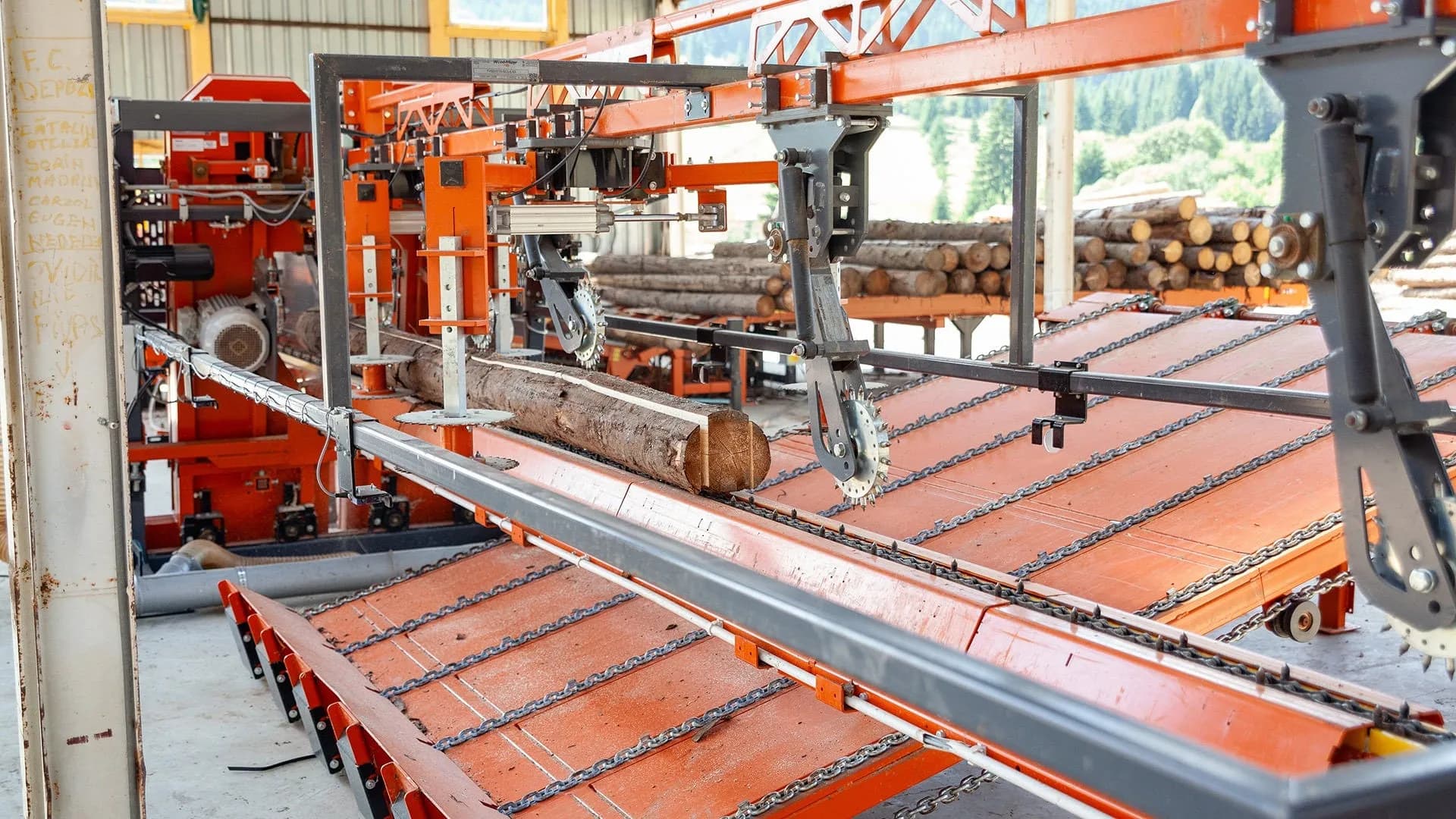
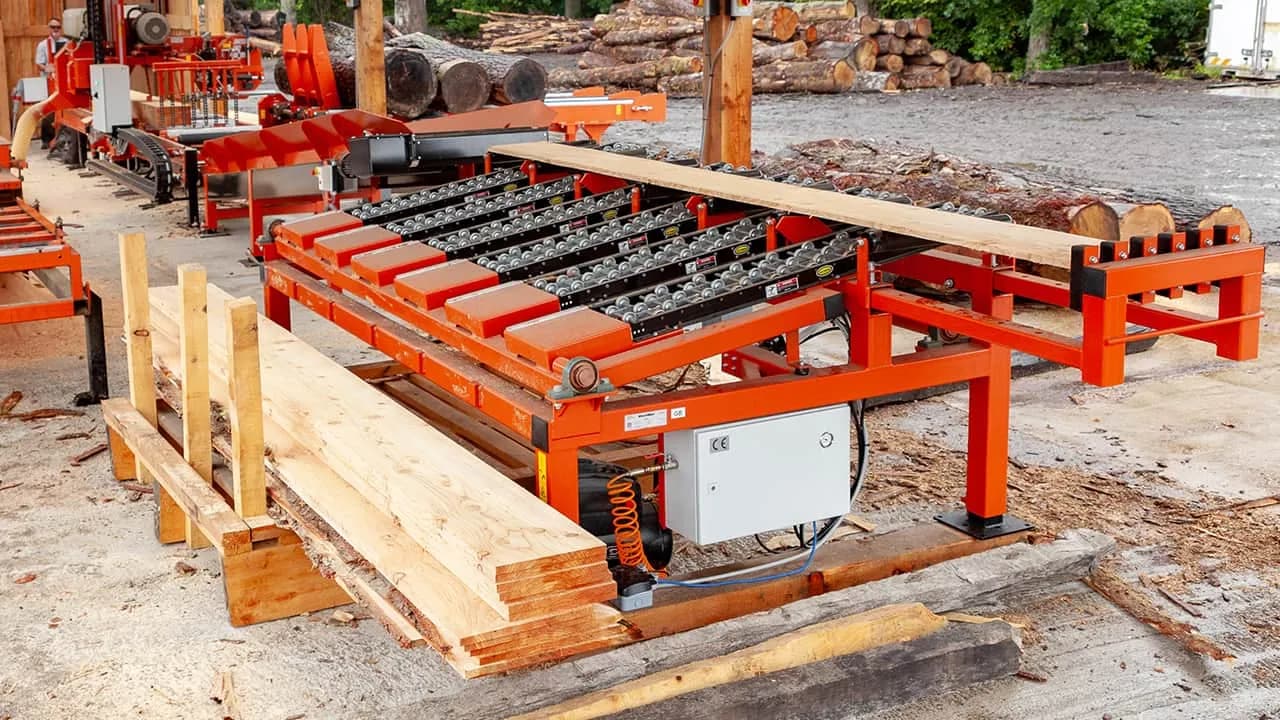
The headrig opens the logs, but output depends on the equipment around it: a log deck to feed it, a debarker to keep grit off the blade, an edger or multirip to turn flitches into boards, a resaw for cants, and conveyors, a green chain or sorting to move lumber away. Most mills add these one at a time, starting with whatever holds the headrig up.

Wood-Mizer log decks and conveyors
What is the difference between a portable and an industrial sawmill?

A portable sawmill goes to the log and is usually run by one or two people. An industrial (stationary) sawmill stays in a building or on a pad, runs on electric motors, and is fed by log handling so the saw keeps cutting. It is built for daily volume rather than mobility.

Portable sawmills
What power does an industrial sawmill need?

Production headrigs are electric. Wood-Mizer lists its WM2500 and WM4500 at 30 HP and its WM5500 at 50 HP; Wravor’s WRC main motors run from 18.5 kW to 110 kW depending on the model. Hydraulics, conveyors and machine centers add to that. Motors this size normally need three-phase service, and the voltage and service size depend on the configuration, so tell us what you have on site before choosing.

Should I choose Wravor or Wood-Mizer?

Both make horizontal band headrigs. Wood-Mizer’s WM headrigs are published for logs up to about 41 in, with resaws, edgers, multirips and handling from the same range, and example systems that show how they run together. Wravor builds each WRC headrig to order, from 41 in up to about 79 in logs, with its own edgers, debarker and sawing lines. Each maker has its own page on this site. Where the ranges overlap, a specialist compares them on your logs, products and building.

How much does an industrial sawmill cost?

It depends on the configuration: the headrig, its options, the machine centers and the log handling around it. Wravor builds every machine to order, and Wood-Mizer configures its systems per mill, so we quote each setup for your logs and site rather than publishing a price list.

How does quoting work?

Send the form or call 1-888-465-8227 with your logs, species, target output, current setup and site power. A specialist goes through the options with you and works out a configuration that fits. You then get a written quotation that lists the machines, options and what is included, so you can compare it before you commit.

Can I add machines to the mill I already run?

Yes. Wood-Mizer says its material handling is modular and can be retrofitted to existing lines, and its resaws and edgers run standalone or in a line. Wravor’s Type 750 edgers also run standalone or inside a line. Tell us what you run now and where the bottleneck is.

Wood-Mizer edgers and resaws
Where do I get blades and parts for an industrial sawmill?

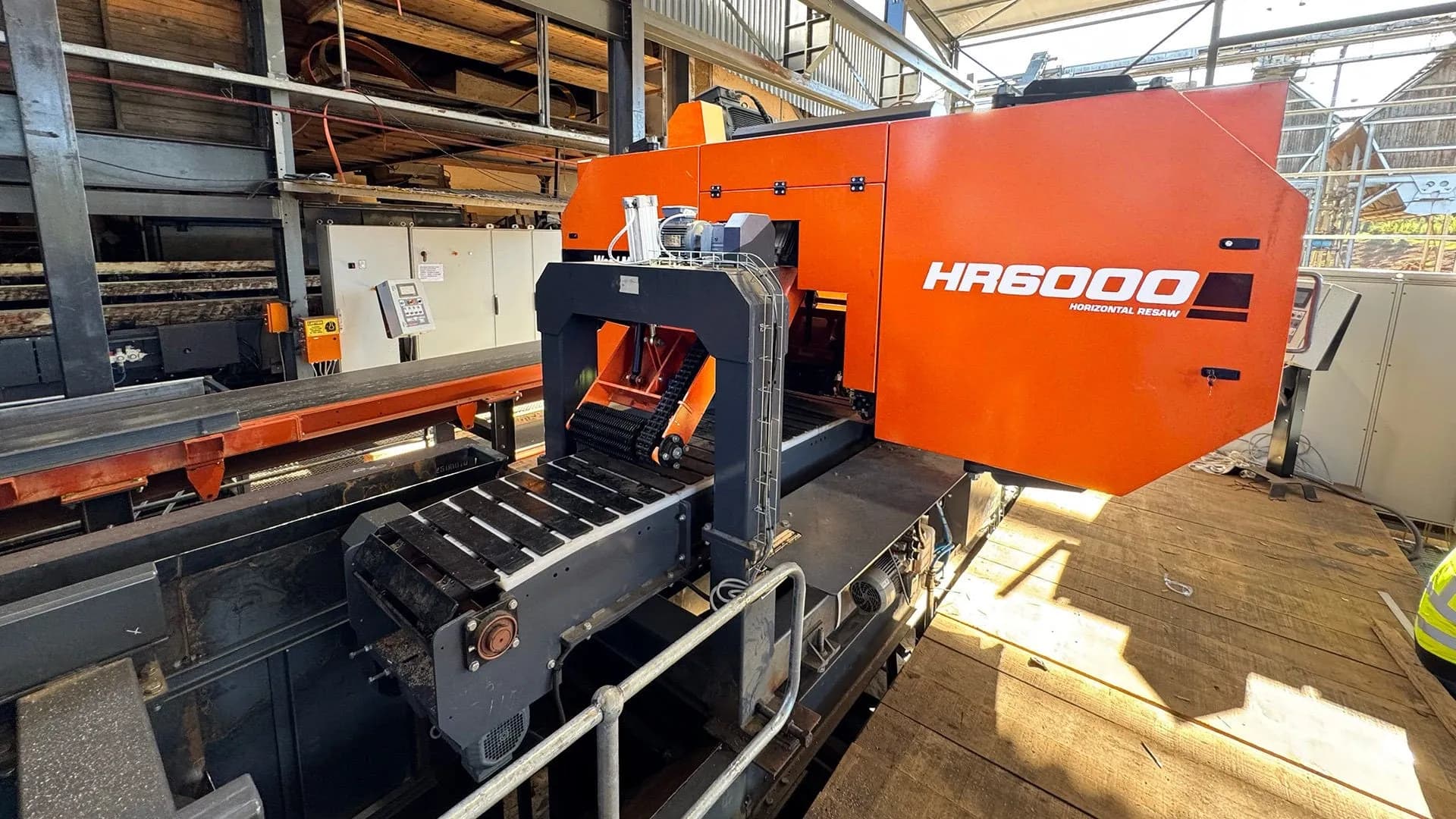
Ask a specialist, ideally when you plan the machine. Blades, sharpening and spare parts depend on the model and the blade width you choose: Wood-Mizer’s listed band sharpeners and setters take blades up to 3 in wide, so wider blades, such as on the wideband WM5500 and HR6000, need their servicing planned. Already running a headrig or line? Tell us what you have and we go through blade supply and parts with you.

Ask a specialist
Is financing available?

Bailey’s offers equipment financing. See the financing page for current options, and ask a specialist whether the configuration you are quoted qualifies.

Financing

Plan your mill with a specialist

Tell us about your logs, the output you want and the site. The more we know, the closer the first quotation is to the mill you need.

Fields marked optional can be skipped. Everything else helps the specialist quote the right setup.

Interested in financing? (optional)
Best way to reach you (optional)

We use your details to answer this request. See Bailey's privacy policy.