

Wood-Mizer sawmill systems
Eight example lines that put a log deck, a WM headrig or twin vertical saw, machine centers and sorting together, grouped by log size, volume band and wood type. Wood-Mizer presents them as starting points and says it designs custom lines to suit the mill.
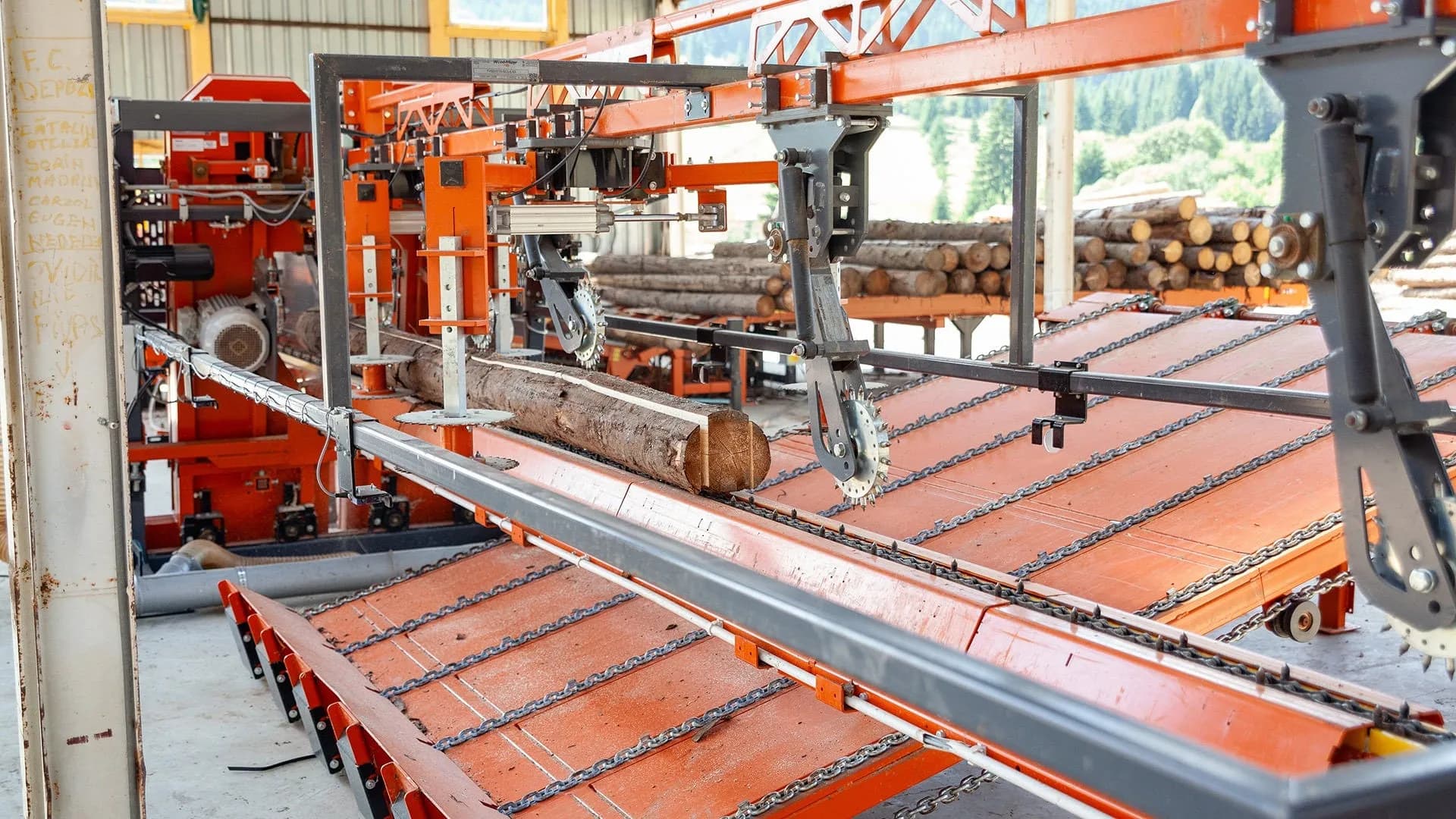
Bailey's is a Wood-Mizer dealer for industrial systems.
How a sawmill production line fits together
Every line, small or large, moves wood through the same five stations. What changes is the machine at each station and how much of the handling between them is automated. The lines and systems below are different answers to the same layout.
Step 1: Log deck and infeed
Logs are staged, turned and fed to the saw one at a time, and can be measured and counted on the way in.
Step 2: Headrig
The primary saw opens each log into cants, flitches and boards. A band headrig takes larger logs; a twin vertical saw squares small logs in one pass.
Step 3: Edger, resaw or multirip
Secondary machines edge flitches into boards and break cants down, so the headrig is free to open the next log.
Step 4: Trimming and sorting
Boards are cut to length, then sorting tables and a green chain group them by size and grade for stacking.
Step 5: Conveying and residue
Conveyors, transfer tables and roller tables join every station, and sawdust is carried out of the way.
Wood-Mizer sawmill systems
Eight Wood-Mizer systems, from System 1 for high-throughput small logs to System 5 for softwood, hardwood and tropical logs. Treat each as a starting point rather than a fixed package: Wood-Mizer shows the machines it names for each line, and a specialist adapts the mix to your mill.
Log diameter
Showing all 8 lines
Systems by log size
From Wood-Mizer’s industrial systems rangeNo Wood-Mizer system matches this log size.
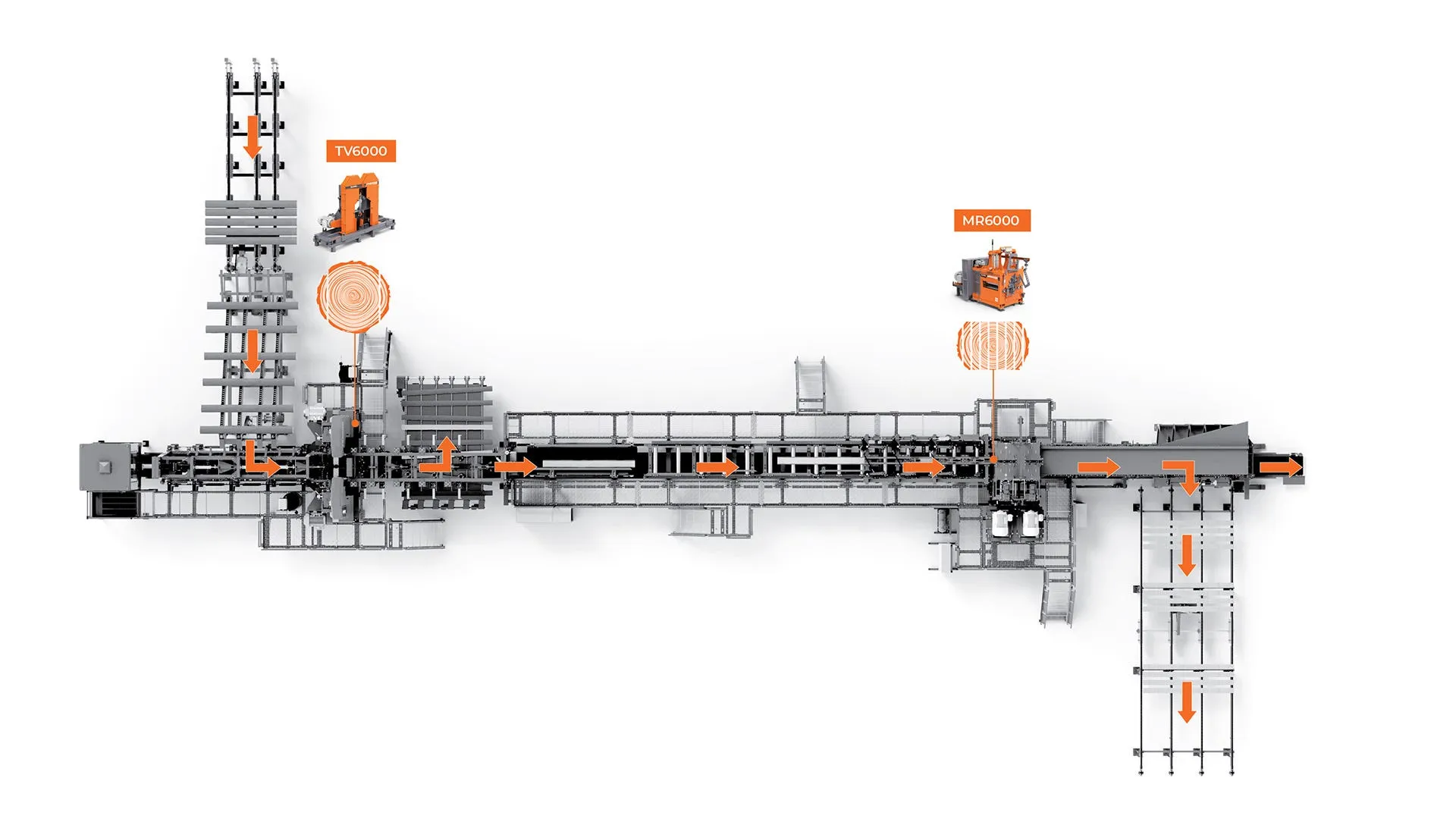
Layout drawing published by Wood-Mizer Wood-Mizer System 1
Made for: Small logs for pallet and structural timber
Specs and details for the Wood-Mizer System 1
High throughput of small logs with automated material flow, for pallet and structural-timber sawmillers.
- Log diameter
- 6–12 in
- Volume band
- 0–883 ft³
- Wood type
- Softwood
Machines Wood-Mizer shows in it
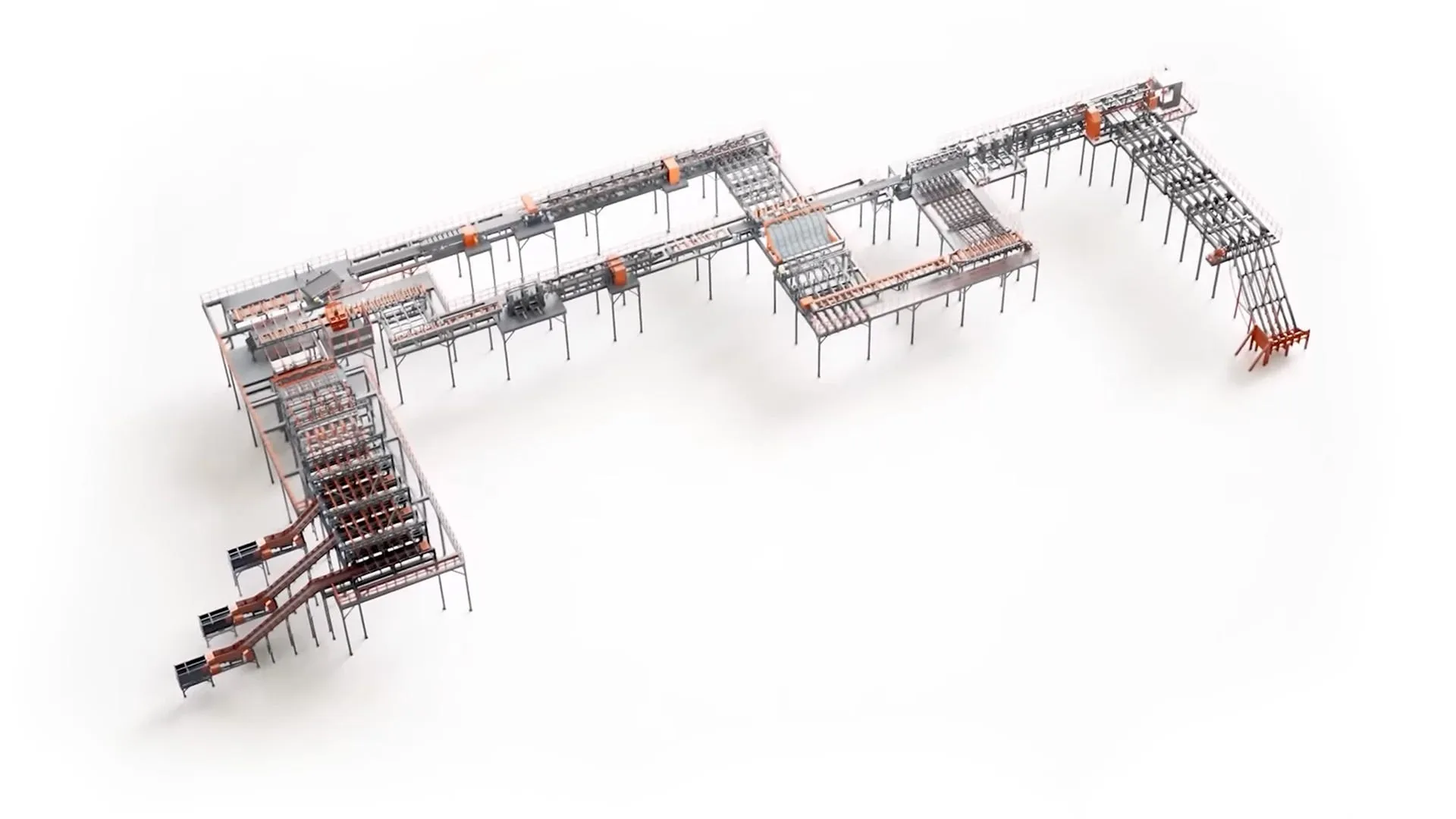
Render published by Wood-Mizer Wood-Mizer System 7
Made for: High-production small-log sawing, customized
Specs and details for the Wood-Mizer System 7
High-production, optimized small-log sawing, customized to the mill’s requirements.
- Log diameter
- 6–12 in
- Volume band
- 2,649 ft³ and up
- Wood type
- Softwood
Machines Wood-Mizer shows in it
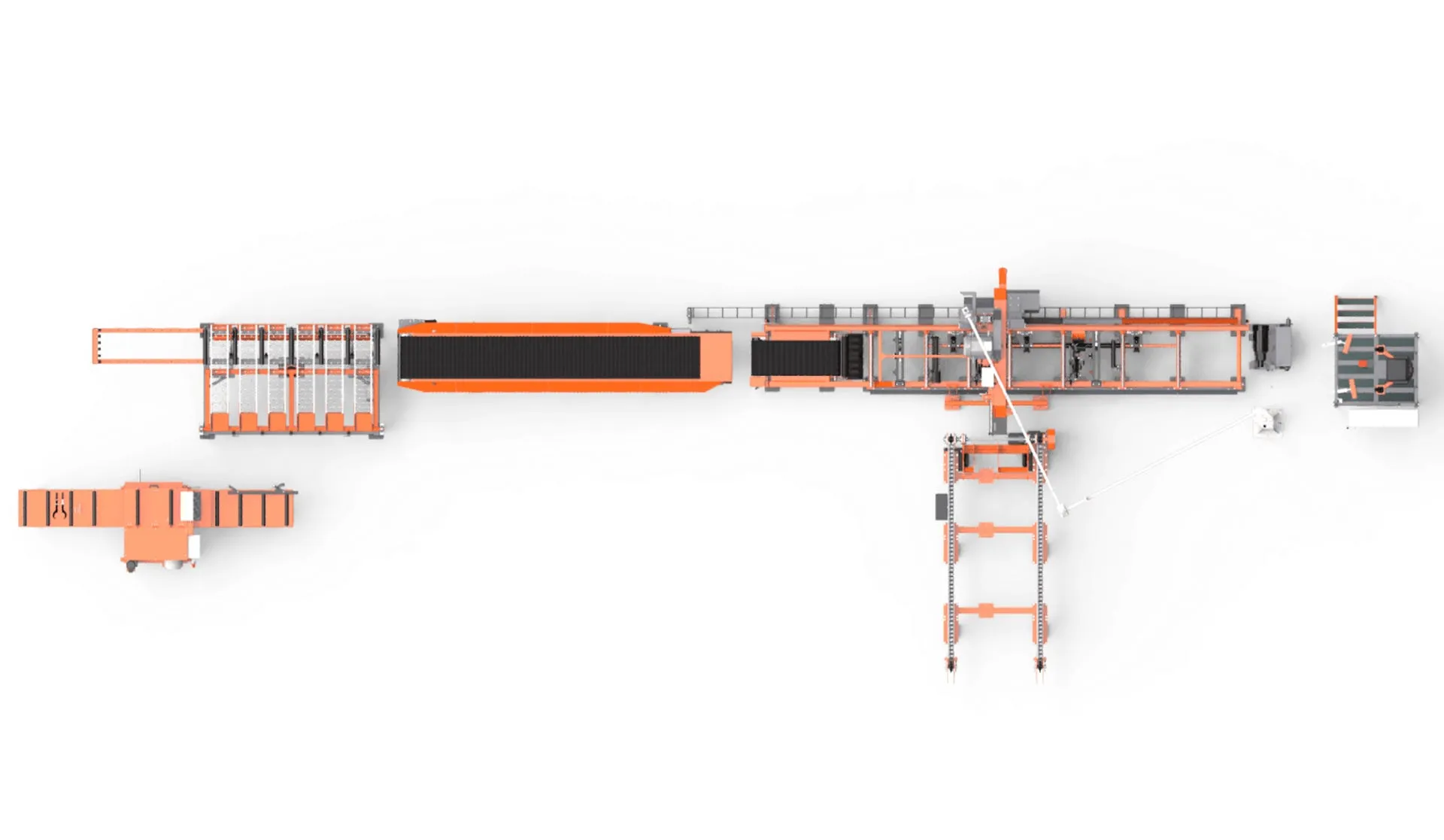
Render published by Wood-Mizer Wood-Mizer System 2
Made for: A complete line around the WM4500 headrig
Specs and details for the Wood-Mizer System 2
A line built around the WM4500 headrig. Wood-Mizer says one operator can manage log handling, sawing and timber removal.
- Log diameter
- 12 in and up
- Volume band
- 884–2,648 ft³
- Wood type
- Softwood or hardwood
Machines Wood-Mizer shows in it
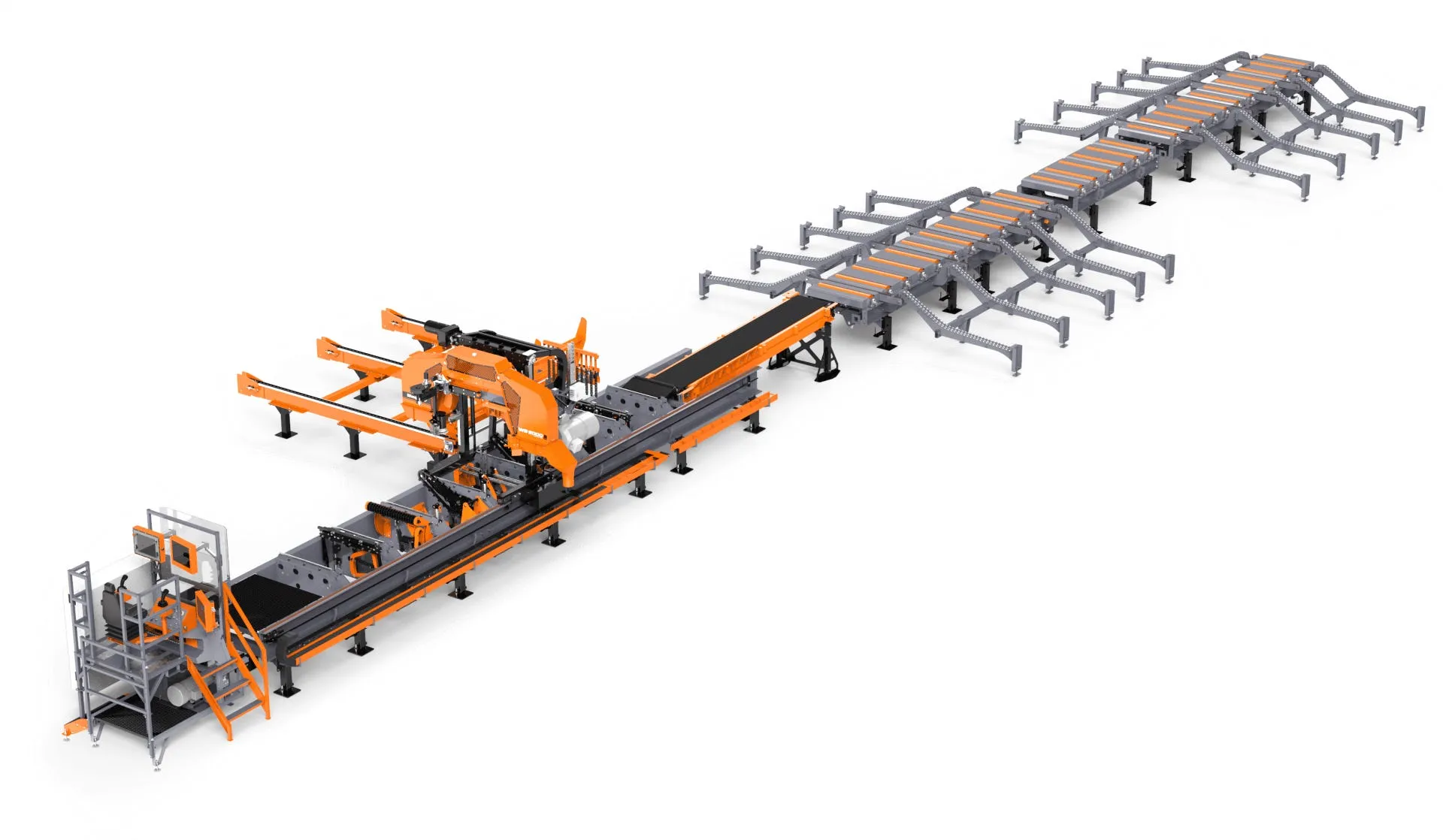
Render published by Wood-Mizer Wood-Mizer System 5
Made for: Large softwood, hardwood and tropical logs
Specs and details for the Wood-Mizer System 5
A large-log line for softwood, hardwood and tropical logs from 8 to 40 ft. Built on the WB2000, which Wood-Mizer now lists the WM5500 as succeeding.
- Log diameter
- 12 in and up
- Volume band
- 0–883 ft³
- Wood type
- Softwood or hardwood
Machines Wood-Mizer shows in it
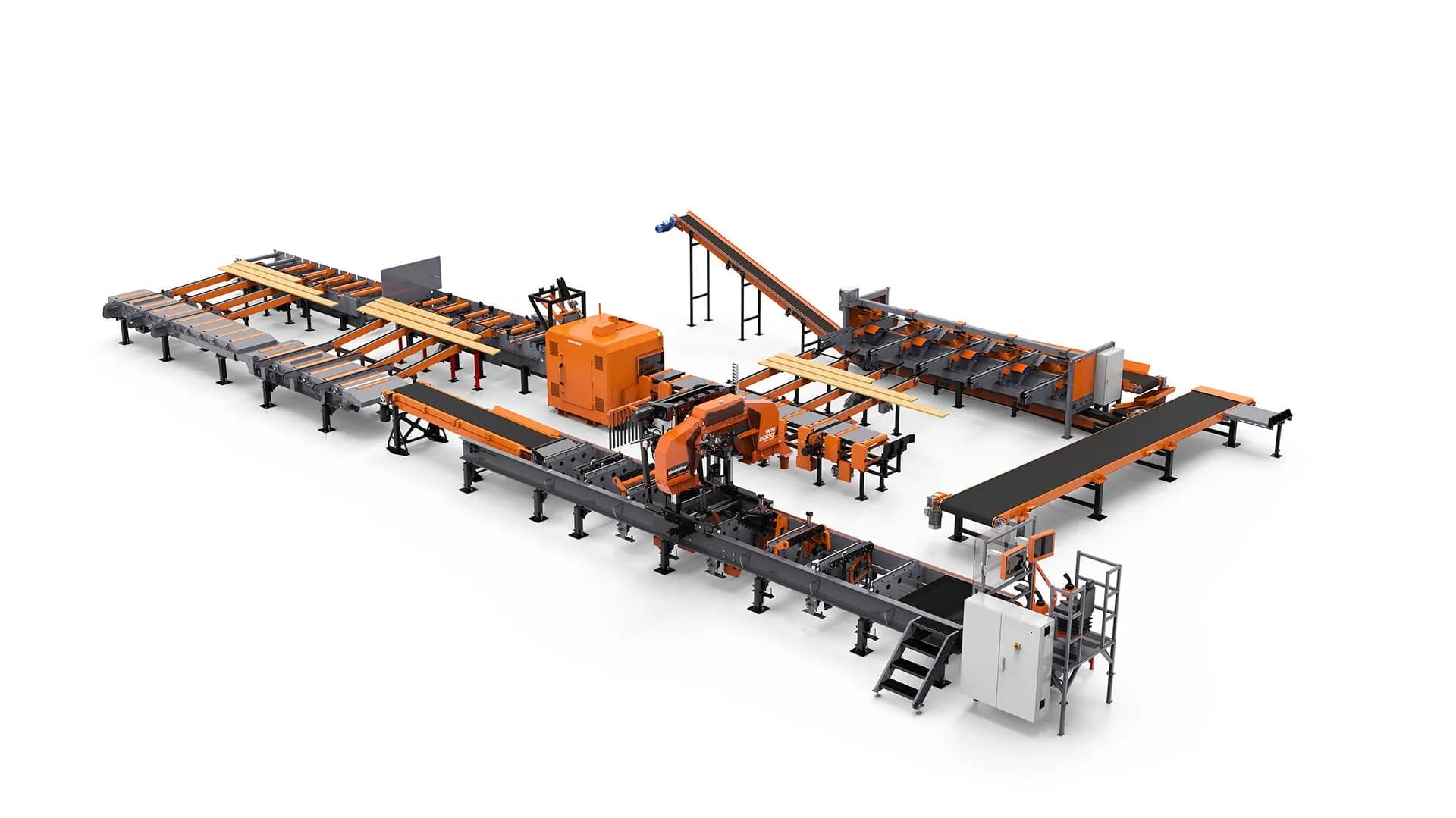
Render published by Wood-Mizer Wood-Mizer System 9
Made for: A horizontal headrig with automated crosscut and sorting
Specs and details for the Wood-Mizer System 9
A traditional horizontal headrig with automated flow between sawing, crosscutting and sorting, plus a multi-head crosscut.
- Log diameter
- 12 in and up
- Volume band
- 0–883 ft³
- Wood type
- Softwood
Machines Wood-Mizer shows in it
- WM5500 headrig
- MR250 multirip
- Multi-head crosscut
- Sorting
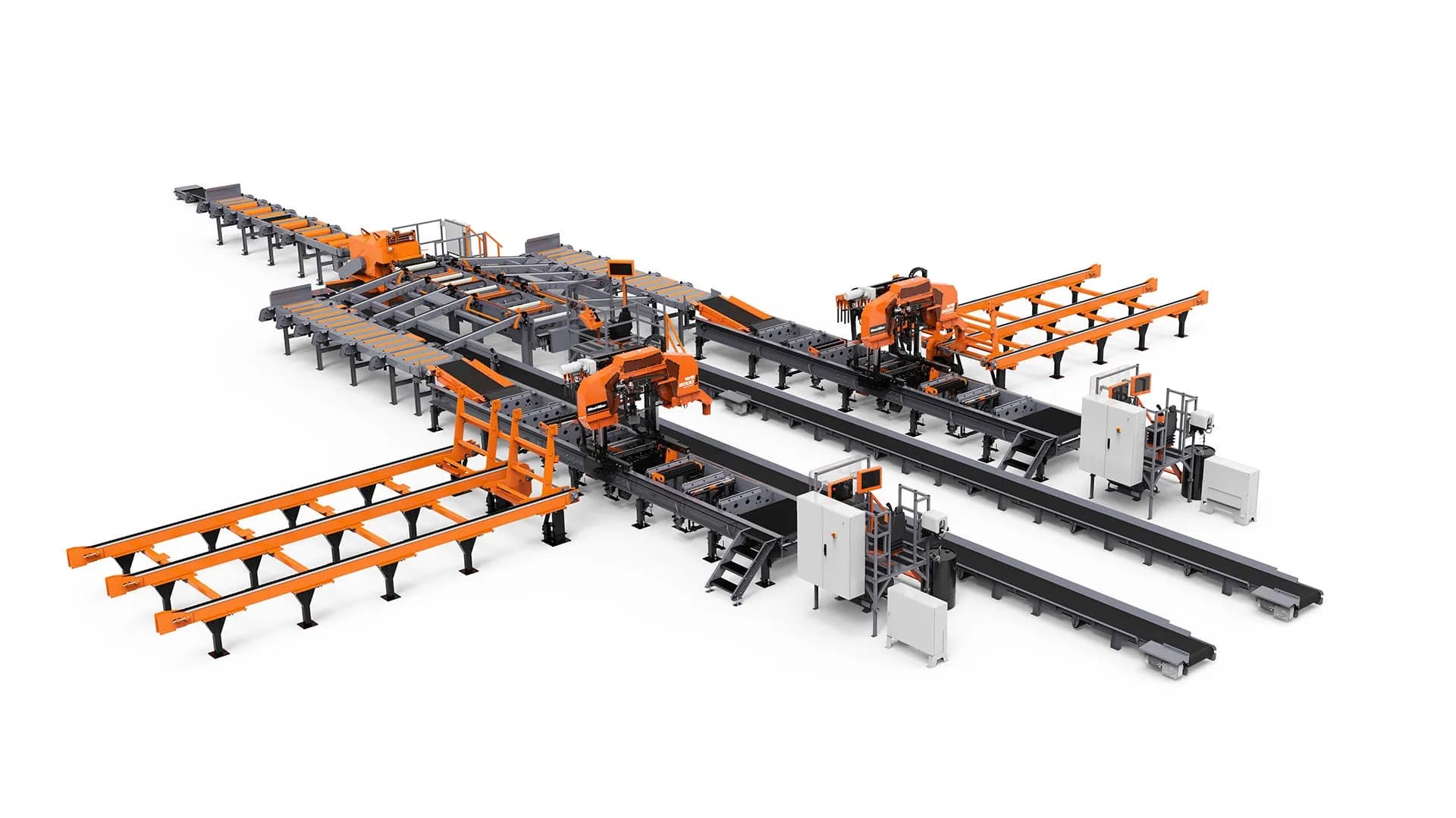
Render published by Wood-Mizer Wood-Mizer System 10
Made for: Board production with a focus on yield
Specs and details for the Wood-Mizer System 10
Board production with a focus on yield: material from more than one sawmill feeds a single edger, with automated sorting and waste separation.
- Log diameter
- 12 in and up
- Volume band
- 884–2,648 ft³
- Wood type
- Softwood
Machines Wood-Mizer shows in it
- WM5500 headrig
- EG800 board edger
- Automated sorting and waste separation
Wood-Mizer's layout drawing
Plan-view drawing published by Wood-Mizer, with its own labels. It shows an example layout, not a quoted configuration.
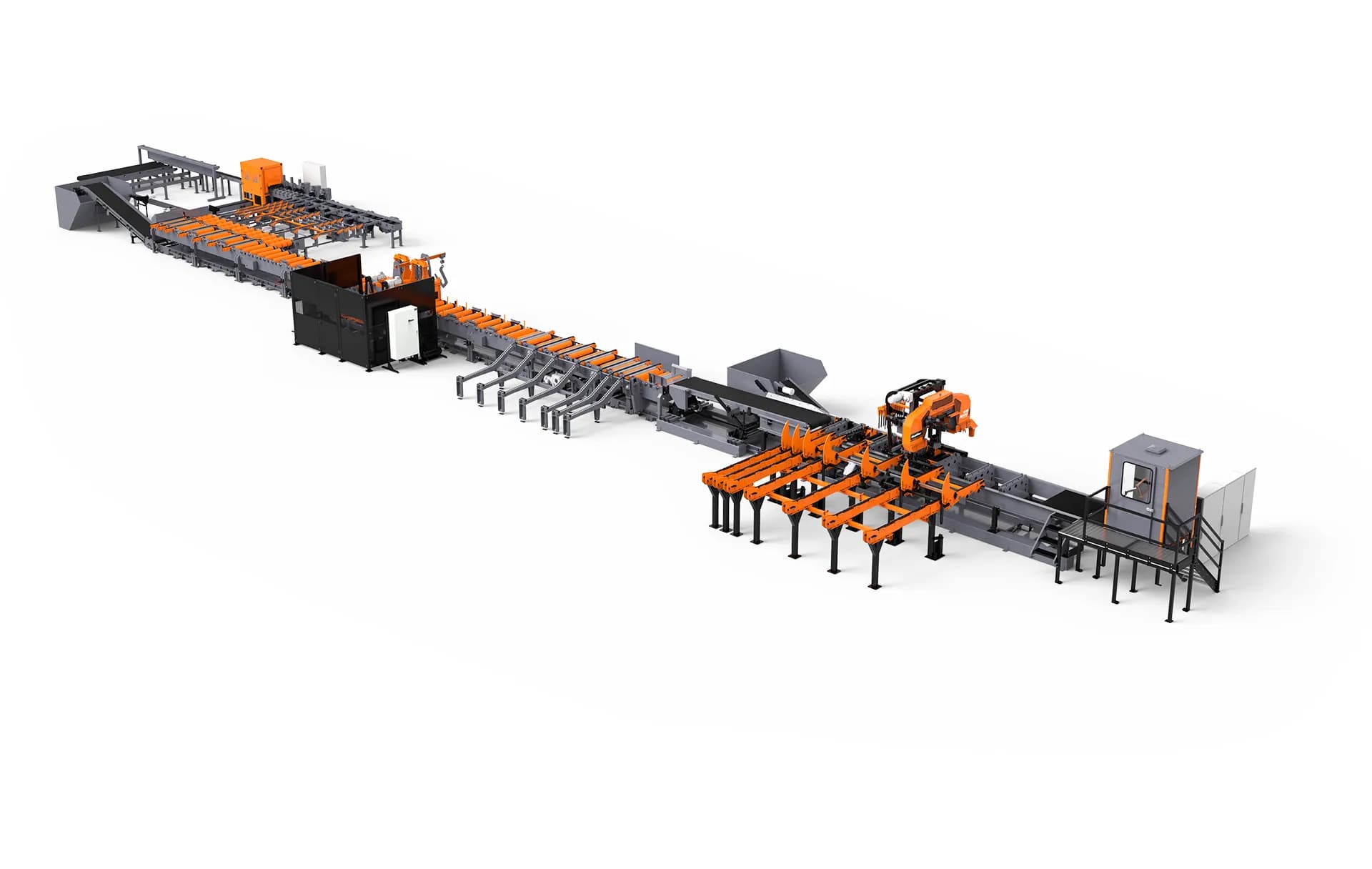
Render published by Wood-Mizer Wood-Mizer System 12
Made for: Irregular logs into a consistent product
Specs and details for the Wood-Mizer System 12
An automated line that cuts irregular logs into a consistent product, with a high-speed chop saw that reads chalk lines, in a compact footprint.
- Log diameter
- 12 in and up
- Volume band
- 0–883 ft³
- Wood type
- Softwood or hardwood
Machines Wood-Mizer shows in it
- WM5500 headrig
- MR6000 multirip
- High-speed chop saw that reads chalk lines
Wood-Mizer's layout drawing
Plan-view drawing published by Wood-Mizer, with its own labels. It shows an example layout, not a quoted configuration.
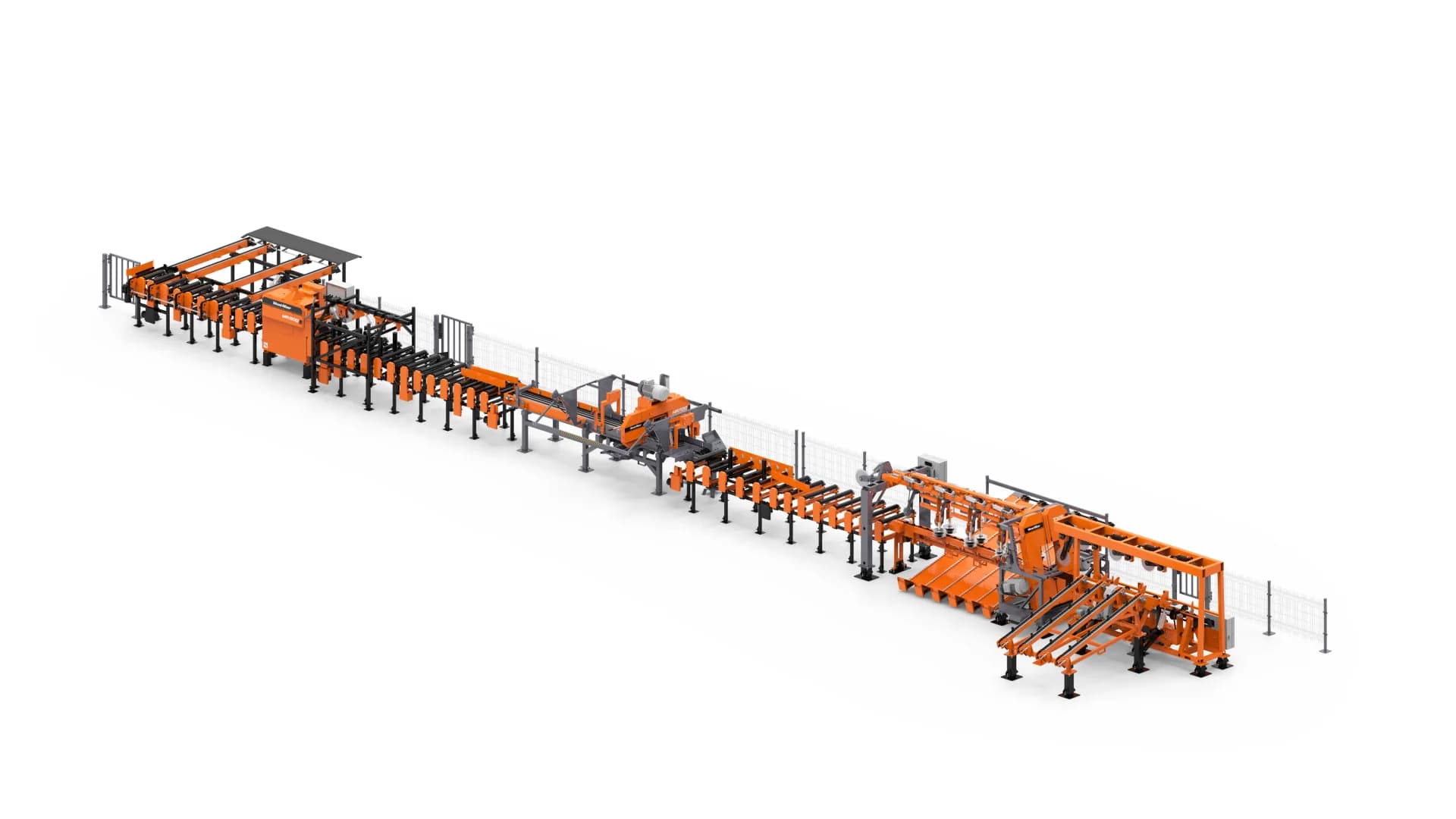
Render published by Wood-Mizer Wood-Mizer System 13
Made for: Pallet production
Specs and details for the Wood-Mizer System 13
A lower-investment, high-throughput pallet line with minimal infrastructure requirements.
- Log diameter
- 12 in and up
- Volume band
- 2,649 ft³
- Wood type
- Softwood
Machines Wood-Mizer shows in it
Wood-Mizer's layout drawing
Plan-view drawing published by Wood-Mizer, with its own labels. It shows an example layout, not a quoted configuration.
Specifications as published by Wood-Mizer; confirm your configuration with a specialist. Systems are illustrative combinations of machines, not fixed packages; the machines listed are the ones Wood-Mizer names for each system.
† Volume band as listed by Wood-Mizer, in cubic feet. Wood-Mizer gives no time basis (per shift, day or year) and doesn't say whether it is log or lumber volume, so it is not a production rate. Wood-Mizer publishes no throughput, crew, footprint or power figures for its systems.
How to plan a Wood-Mizer sawmill line
A turnkey sawmill starts with six answers. Bring what you know; a specialist fills the gaps with you. Many mills start with a headrig and its log handling and add machine centers later, so plan the whole layout first even if you buy it in stages.
- Your logs
- The range of diameters and lengths you will saw, and how straight they run. The log deck and headrig are sized to your biggest logs; the rest of the line to the typical ones. Wood-Mizer’s small-log systems start with a TVS twin vertical saw and multirip; its larger-log systems with a WM headrig.
- Species
- Softwood, hardwood or both, and whether you saw tropical or very hard logs. Wood-Mizer lists each system for softwood, hardwood or both, and System 5 for tropical logs as well.
- Products and volume
- What you will sell (pallet stock, grade lumber, structural timber, boards) and how much, in your own unit and per shift, day or year. Wood-Mizer publishes a volume band for each system but no throughput, so the line is sized to your figure.
- Building and yard
- A line runs long, with side transfers to the machine centers and sorting. Send the building’s length, width and doors, and where logs arrive and lumber leaves. Footprints aren’t published for any system here; they come from the layout for your site.
- Power
- Each machine brings its own motors and hydraulics, so a line needs three-phase service sized to the whole configuration. Some Wood-Mizer machines are listed only with a European 400 V 50 Hz supply; confirm North American power with a specialist.
- Crew
- How many people you have to run the mill now, and later. Wood-Mizer says one operator can manage log handling, sawing and timber removal on its System 2; the more of the handling between stations is automated, the less is done by hand. Wood-Mizer publishes no crew figures for its other systems.
Wood-Mizer system questions
Anything else, call a specialist at 1-888-465-8227. Comparing single machines instead? See the WM headrigs, edgers and resaws or log decks and conveyors.
What does a Wood-Mizer sawmill system include?
A log deck and infeed, a headrig or twin vertical saw that opens the logs, an edger, resaw or multirip that turns flitches and cants into boards, trimming and sorting, and the conveyors, transfer decks and residue handling that join them. Wood-Mizer presents its systems as example combinations rather than fixed packages, and names the machines in each one.
Every Wood-Mizer machine we offerHow much space and power does a sawmill line need?
Wood-Mizer publishes no footprint or power figure for a system, because both depend on the machines chosen. Individual machines are published: the WM5500 headrig at 50 HP and the MR6000 multirip at 2 × 100 HP, for example. Motors this size need three-phase power, and some Wood-Mizer machines are listed only with a European 400 V 50 Hz supply, so North American power is confirmed with a specialist. Send your building dimensions and power service and the layout is worked out from those.
Can I start with a headrig and add machines later?
Yes, and many mills grow that way. Wood-Mizer says its material handling is modular, configured to log size and site layout, and can be retrofitted to existing lines, and that its resaws and edgers run standalone or in a line. Plan the full layout at the start so later machines have room and the conveyors line up.
Wood-Mizer WM headrigsWhat is a turnkey sawmill?
Buyers use “turnkey” for a whole mill supplied as one project: the machines, the handling between them and the controls. What a particular project includes, such as delivery, installation, commissioning or training, is set out line by line in its written quotation, so ask for it there rather than assuming it.
What do Wood-Mizer’s volume figures mean?
Wood-Mizer lists each system with a volume band in cubic feet, such as 884–2,648 ft³, but does not say whether that is per shift, day or year, or whether it is log or lumber volume. Read it as Wood-Mizer’s rough grouping of its systems, not a production rate. A line is sized from your own target output.
How does quoting a sawmill line work?
Send the form or call 1-888-465-8227 with your logs, species, products, target output, building and power. A specialist works through the options with you and settles a configuration. You then get a written quotation that lists the machines, options and what is included, so you can compare it before you commit.
Is financing available for a sawmill line?
Bailey’s offers equipment financing. See the financing page for current options, and ask a specialist whether the configuration you are quoted qualifies.
FinancingPlan your sawmill line with a specialist
Tell us about your logs, the output you want, the building and the power on site. The more we know, the closer the first quotation is to the line you need.