

Slabbing mills for logs too wide for a sawmill
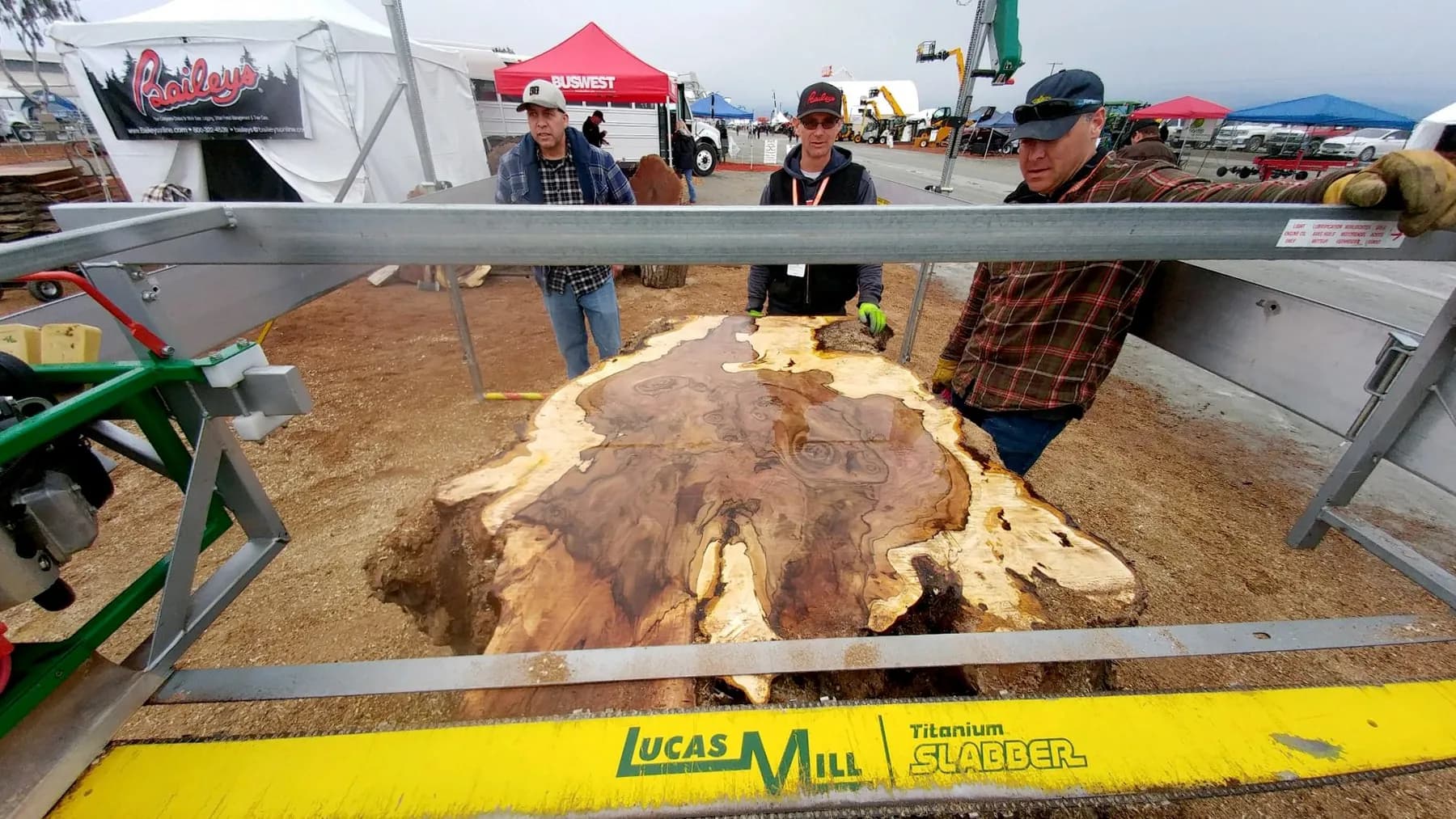
Lucas Mill slabbers from Bailey's: an attachment for the Lucas Mill you own, the DSM23 slab mill, or the Super Slabber for live-edge slabs up to 9 ft (2.7 m) wide.
Bailey's is the sole Lucas Mill distributor for the U.S., Canada and Mexico.
What a slabbing mill does
A slabbing mill cuts wide, flat slabs from logs too big for a regular sawmill, keeping the log's natural edge. Those live-edge slabs become tables, countertops, benches and mantels.
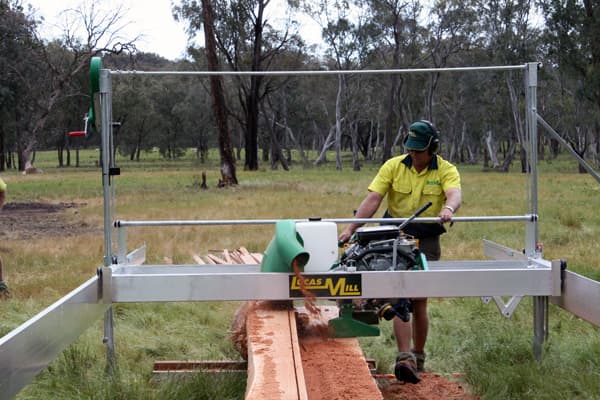
A chainsaw mill can cut slabs too, by hand along a guide rail. A slabbing mill drives its bar from an engine and carries it on rails, for steadier, wider cuts.
Set the log under the rails
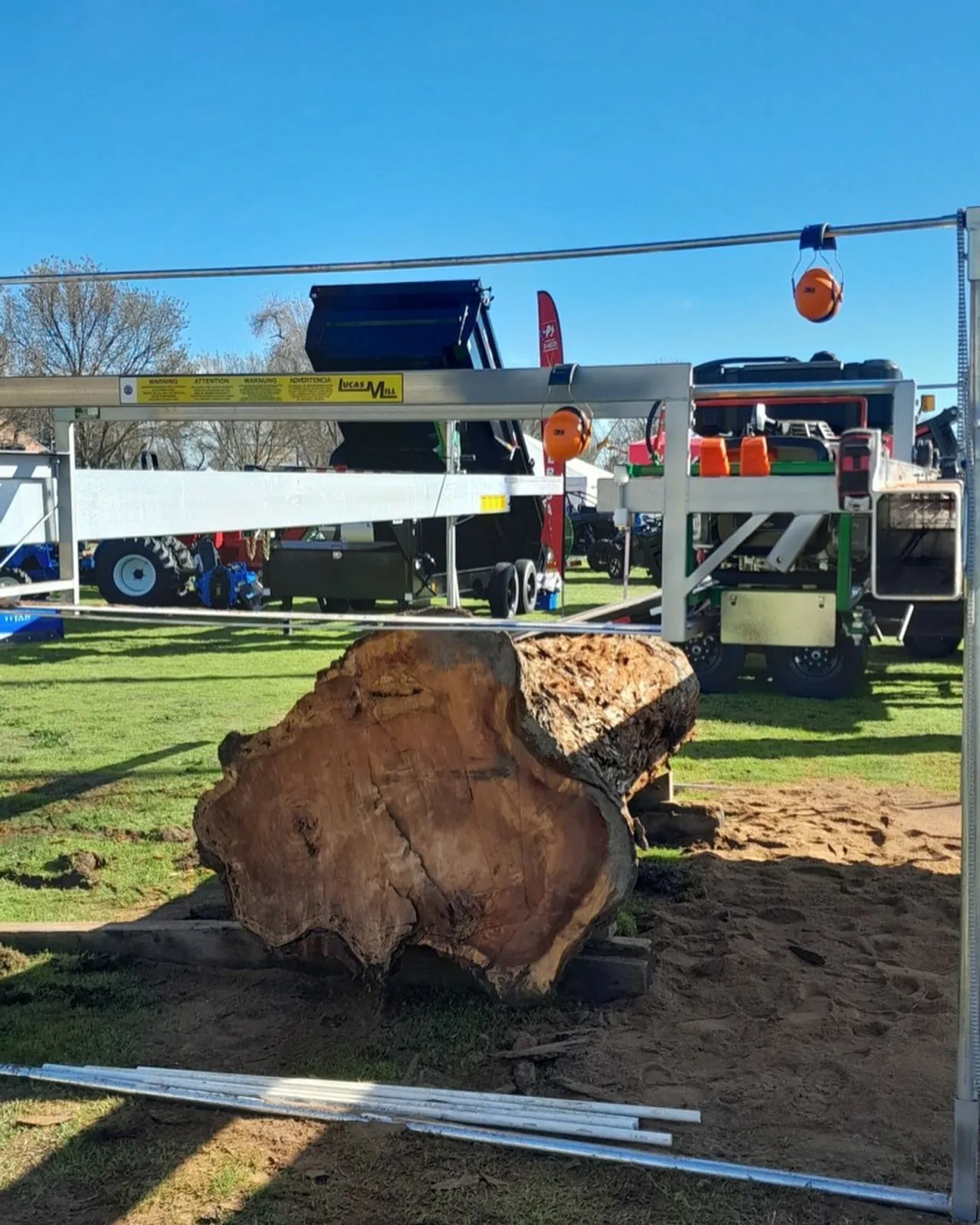
The tracks and end-frames stand over the log, so a log too wide or heavy for a sawmill bed stays where it is.
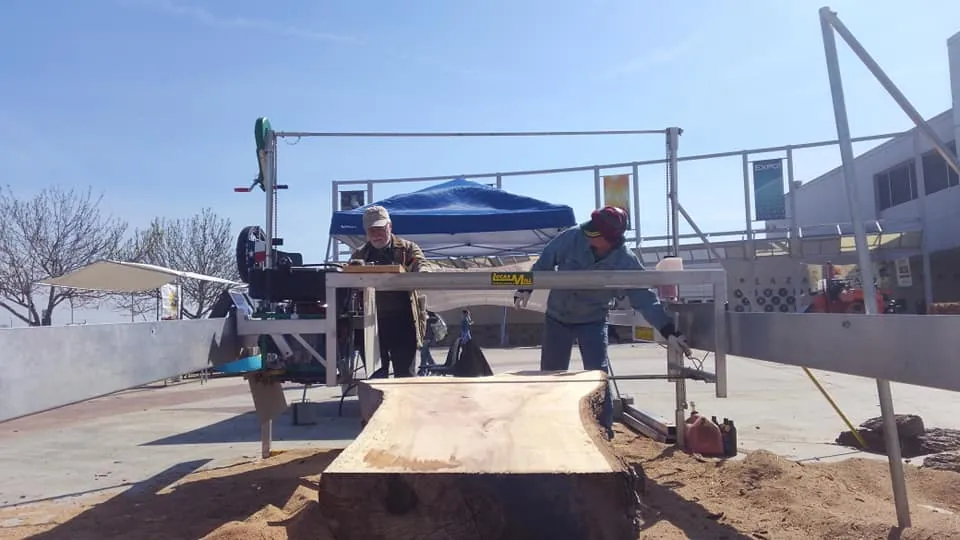
Cut slab after slab
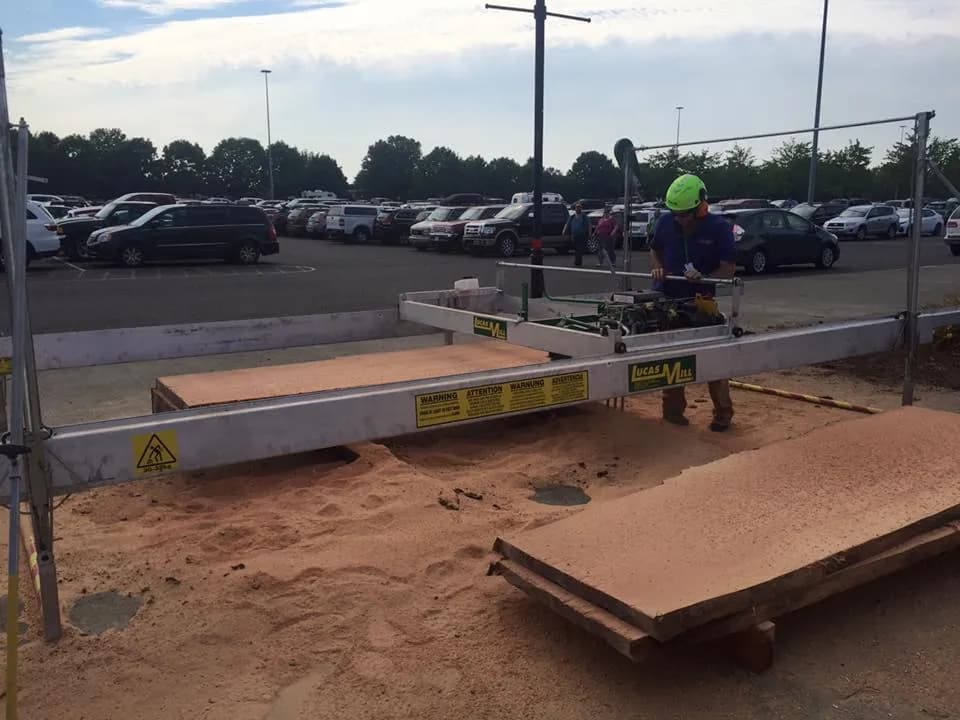
The slabbing bar runs the length of the log and takes a full-width slab off the top, keeping the natural edge on both sides.
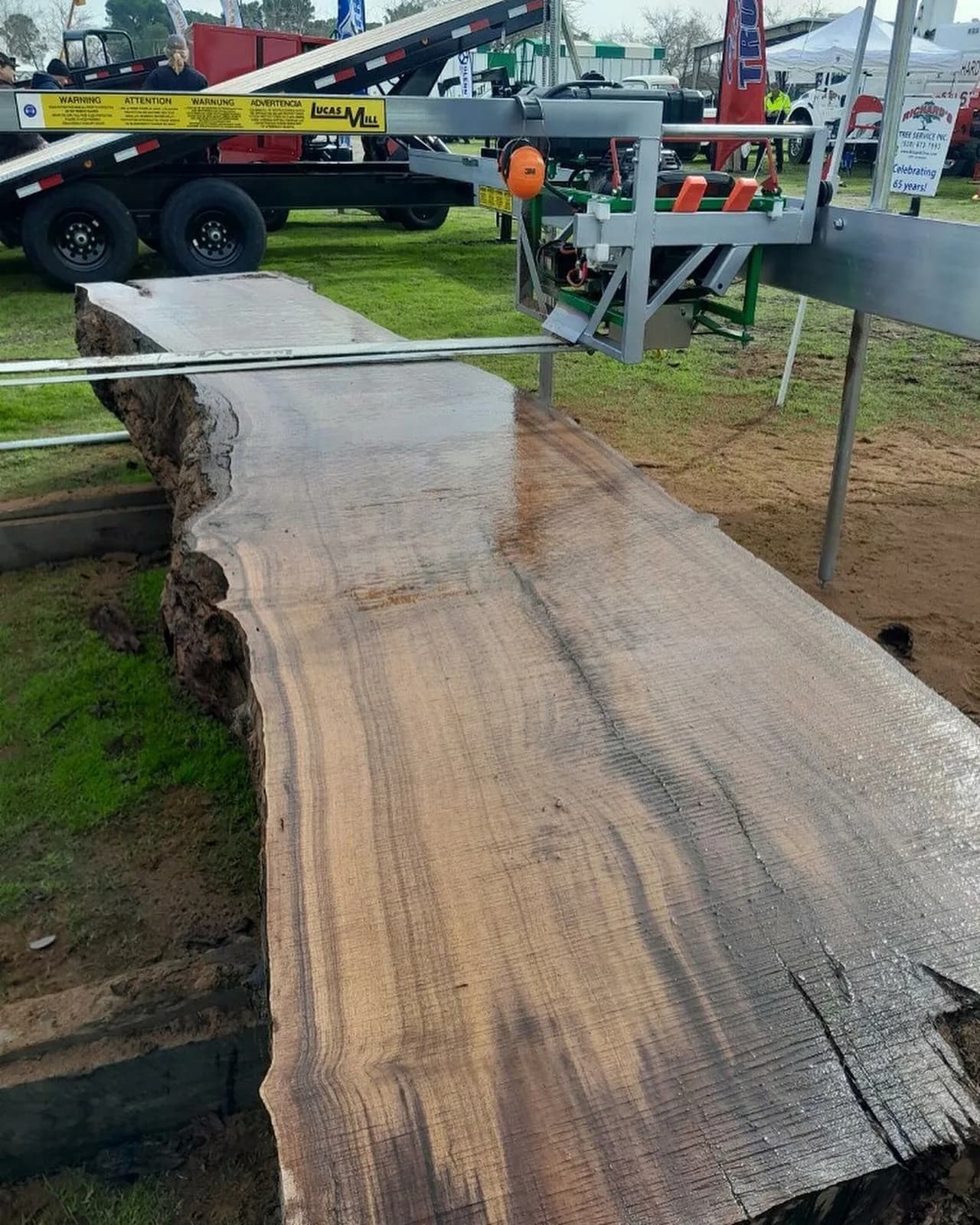
Seal the ends, then dry
Seal the end grain straight after cutting to limit checking. Stack slabs on stickers under cover to air-dry, or kiln-dry them.
Which slabber fits your logs?
Two answers point you to the right machine. The drawing shows the widest slab each one cuts, to scale.
Widest slab per machine: Lucas Mill's published figures for the DSM23 and Super Slabber, Bailey's store listings for the attachment. Lighter bars: the attachment on a Model 7, 8 or 10 host, and the DSM23 with its longer bar.
Recommended: DSM23
Lucas Mill DSM23 Dedicated Slabbing Mill
With the optional longer bar, which takes it from 5 ft to 6 ft 4 in.
- Widest slab
- 5 ft (1.5 m); 6 ft 4 in (1.9 m) with the longer bar
- Deepest cut
- 19.7 in (500 mm)*
- Power
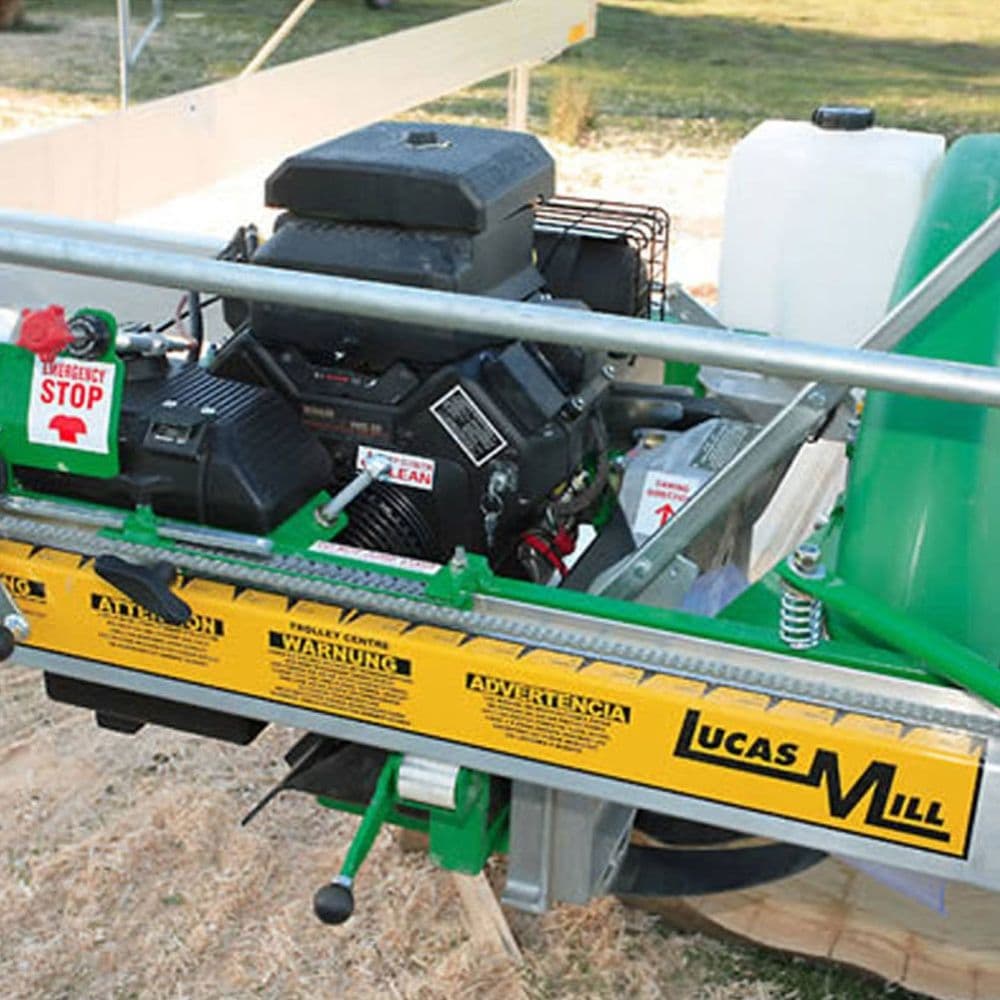
- 23 HP Vanguard V‑twin, electric start
*From Bailey's store listings or Lucas Mill brochure, not Lucas Mill's model page.
See the DSM23Three ways to cut slabs with a Lucas Mill
An attachment for the mill you own, or a dedicated slabber with its own engine. Pick by your mill and the width of your logs.
Lucas Mill Slabbing Attachment
Made for: Slabs now and then, on the mill you own
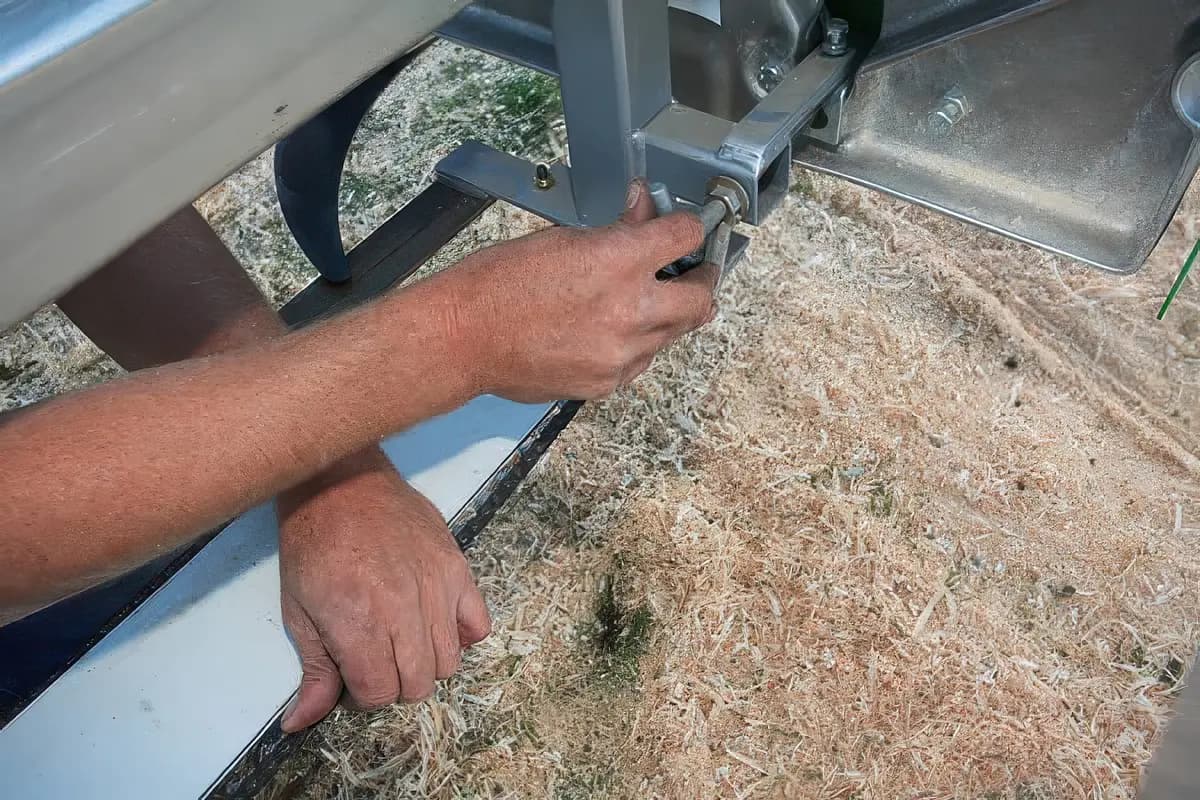
Turns your Lucas Mill swing-blade into a slabber. The circular blade comes off and a drive hub with a harvester sprocket drives a slabbing bar from the mill’s own engine. Lucas Mill puts the swap at 5–10 minutes.
- Widest slab
- 60 in (50 in on a Model 6)*
- Deepest cut
- 6 in (Models 6, 7) or 9 in (Models 8, 10)*
- Power
- Your Lucas Mill’s engine
- Needs a Lucas Mill?
- Yes, any Lucas Mill swing-blade, new or old
All specifications
- Fits
- All Lucas Mill models, new and old
- Swap time
- 5–10 minutes (Lucas Mill)
- Model 6 host
- 50 in wide, 6 in deep*
- Model 7 host
- 60 in wide, 6 in deep*
- Model 8 / 10 host
- 60 in wide, 9 in deep*
- In the kit
- Slabbing bar, chain, drive hub and sprocket, file and guide, oiler bottle*
*From Bailey's store listings or Lucas Mill brochure, not Lucas Mill's model page. A specialist will confirm it for your setup.
Get a quote on the Slabbing attachmentSee current price of the Lucas Mill Slabbing Attachment on Bailey’s store (opens in a new tab)Financing available for the Lucas Mill Slabbing Attachmentor call 1-888-465-8227Don't own a Lucas Mill yet? Compare the swing-blades
Lucas Mill DSM23 Dedicated Slabbing Mill
Made for: Regular slab work on its own frame
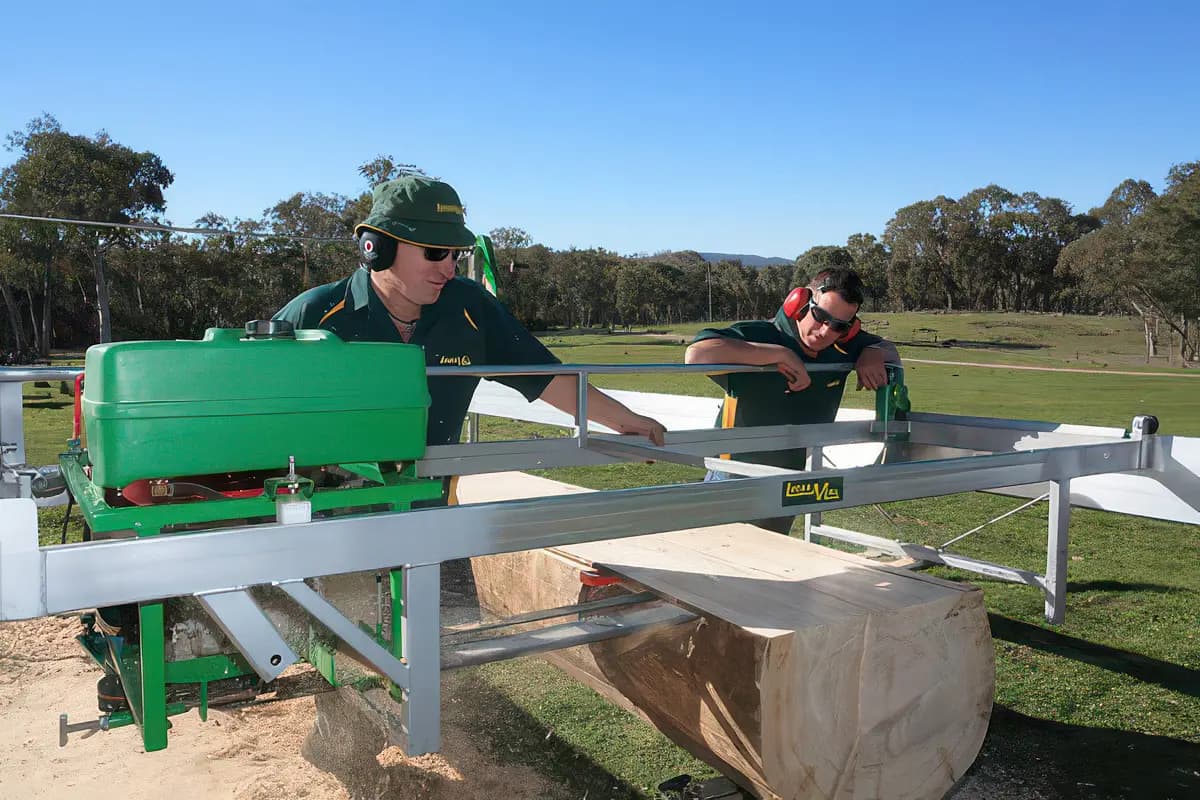
A dedicated slabbing mill with its own engine, tracks and end-frames, so no swing-blade is needed. For furniture, countertop and natural-edge slab work. A trolley-only version fits existing Lucas Mill setups (not the Model 4-6).
- Widest slab
- 5 ft (1.5 m); 6 ft 4 in (1.9 m) with the longer bar
- Deepest cut
- 19.7 in (500 mm)*
- Power
- 23 HP Vanguard V‑twin, electric start
- Needs a Lucas Mill?
- No. Trolley-only version available for existing setups
All specifications
- Engine
- 23 HP Vanguard V‑twin, vertical shaft, electric start
- Cut length
- Up to 20 ft (6.1 m)
- Carriage
- 276–298 lb (125–135 kg)
- Tracks / end-frames
- 134 lb (61 kg) / 179 lb (81 kg)
- Shipping weight
- 805 lb (365 kg)
- Shipping box / tracks
- 0.87 × 0.75 × 2.8 m / 0.3 × 0.2 × 6.1 m
*From Bailey's store listings or Lucas Mill brochure, not Lucas Mill's model page. A specialist will confirm it for your setup.
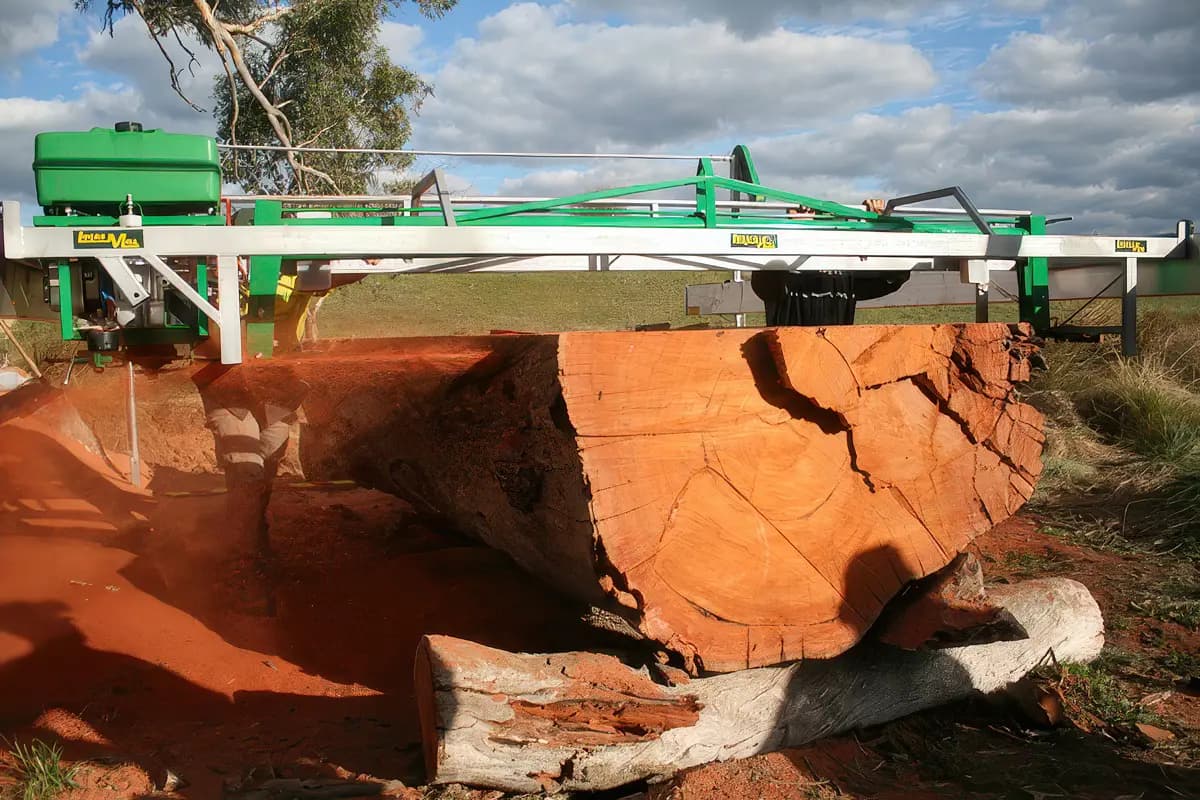
Lucas Mill DSSM Super Slabber
Made for: Logs wider than 6 ft 4 in
Lucas Mill’s widest slabber, for logs too wide for the DSM23. A stand-alone machine, or a trolley with parts to widen the end-frames of a mill you already have (older mills may need further upgrades).
- Widest slab
- 9 ft (2.7 m)
- Deepest cut
- 10.5 in (271 mm)
- Power
- 23 HP Vanguard, electric start
- Needs a Lucas Mill?
- No. Trolley option widens existing end-frames
All specifications
- Engine
- 23 HP Briggs & Stratton Vanguard, electric start
- Widest slab
- 9 ft (2.7 m)
- Deepest cut
- 10.5 in (271 mm)
- Build
- Stand-alone, or trolley for an existing mill
- Weights and shipping
- Ask a specialist for your configuration
The three side by side
Slabbing attachment
- Widest slab
- 60 in (50 in on a Model 6)*
- Deepest cut
- 6 in (Models 6, 7) or 9 in (Models 8, 10)*
- Power
- Your Lucas Mill’s engine
- Needs a Lucas Mill?
- Yes, any Lucas Mill swing-blade, new or old
- Made for
- Slabs now and then, on the mill you own
DSM23
- Widest slab
- 5 ft (1.5 m); 6 ft 4 in (1.9 m) with the longer bar
- Deepest cut
- 19.7 in (500 mm)*
- Power
- 23 HP Vanguard V‑twin, electric start
- Needs a Lucas Mill?
- No. Trolley-only version available for existing setups
- Made for
- Regular slab work on its own frame
DSSM Super Slabber
- Widest slab
- 9 ft (2.7 m)
- Deepest cut
- 10.5 in (271 mm)
- Power
- 23 HP Vanguard, electric start
- Needs a Lucas Mill?
- No. Trolley option widens existing end-frames
- Made for
- Logs wider than 6 ft 4 in
As published by Lucas Mill; *from Bailey's store listings (attachment) or Lucas Mill brochure (DSM23 depth). Lucas Mill prints 1.5 m as 5 ft, 1.9 m as 6 ft 4 in, 2.7 m as 9 ft and 271 mm as 10.5 in. Ask a specialist to confirm the configuration for your logs.
Why buy your slabber from Bailey’s?
Sole Lucas Mill distributor
Bailey’s is the sole Lucas Mill distributor for the United States, Canada and Mexico.
Help choosing, and after
Tell a specialist about your logs and the boards you want. We help with setup and keeping the mill cutting too.
Blades, tips and parts
Lucas Mill parts and accessories are on Bailey’s main store.
Shop Lucas Mill parts (opens in a new tab)
Warranty
Lucas Mill covers the machine. Engines are covered separately by the companies that make them.
- Lucas Mill machineDSM23, DSSM Super Slabber
- Three-year limited warranty against faulty parts and workmanship
- Vanguard enginesDSM23, DSSM Super Slabber
- Three years, from Briggs & Stratton
- Slabbing attachmentFits your Lucas Mill
- Ask a specialist for the terms
As summarized by Lucas Mill. The written warranty for your machine and engine sets the full terms; a specialist can go through them with you.
Slabs off Lucas Mills, with Bailey’s
Bailey’s own photos of slabs coming off Lucas Mills, many at our demo days and shows. Come and watch one cut.
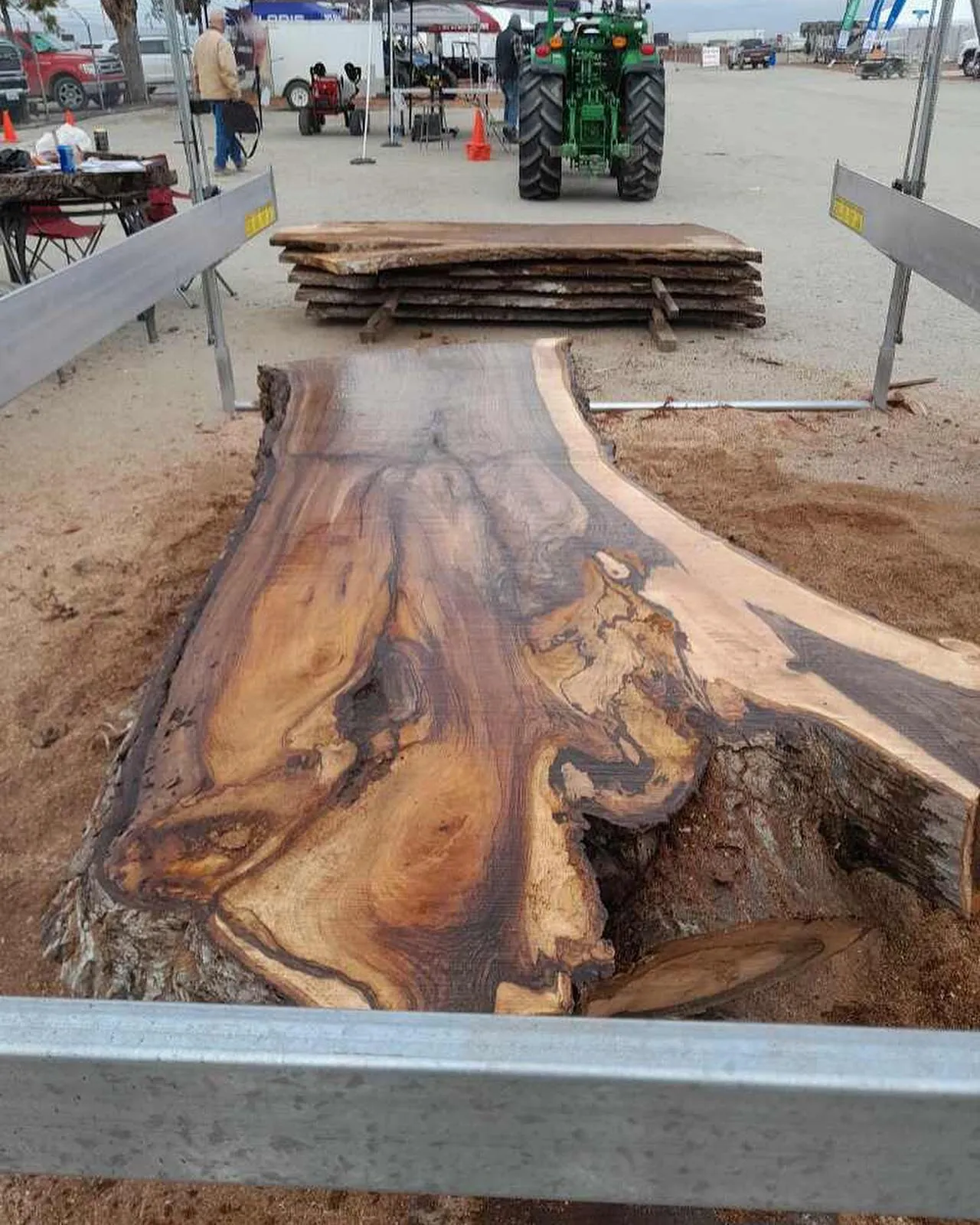
Figured slab on the rails 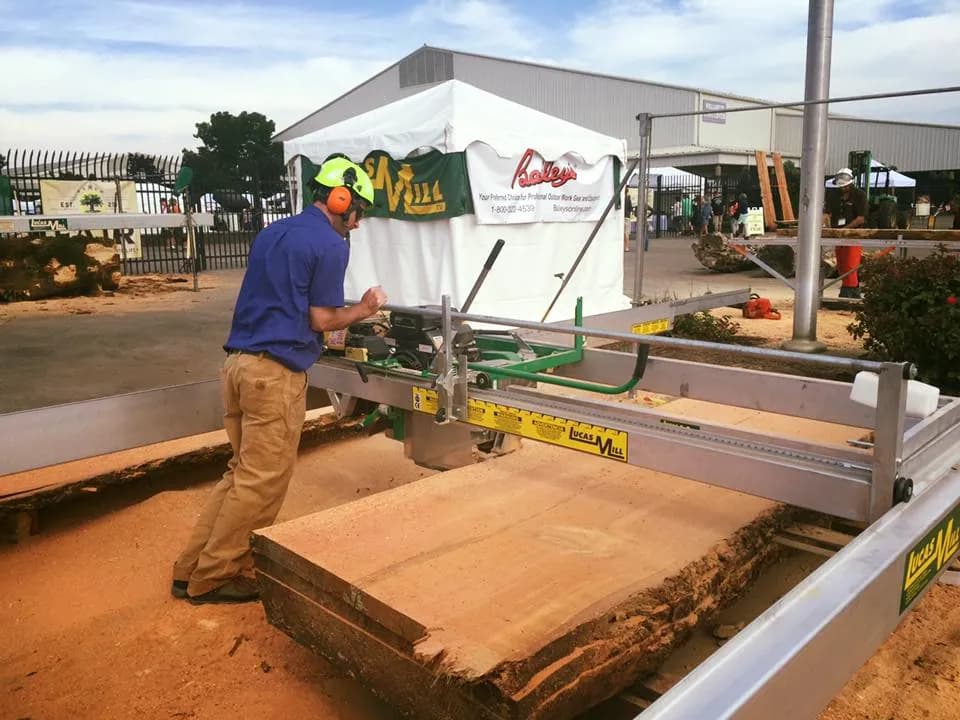
Wide slab at a Bailey’s show 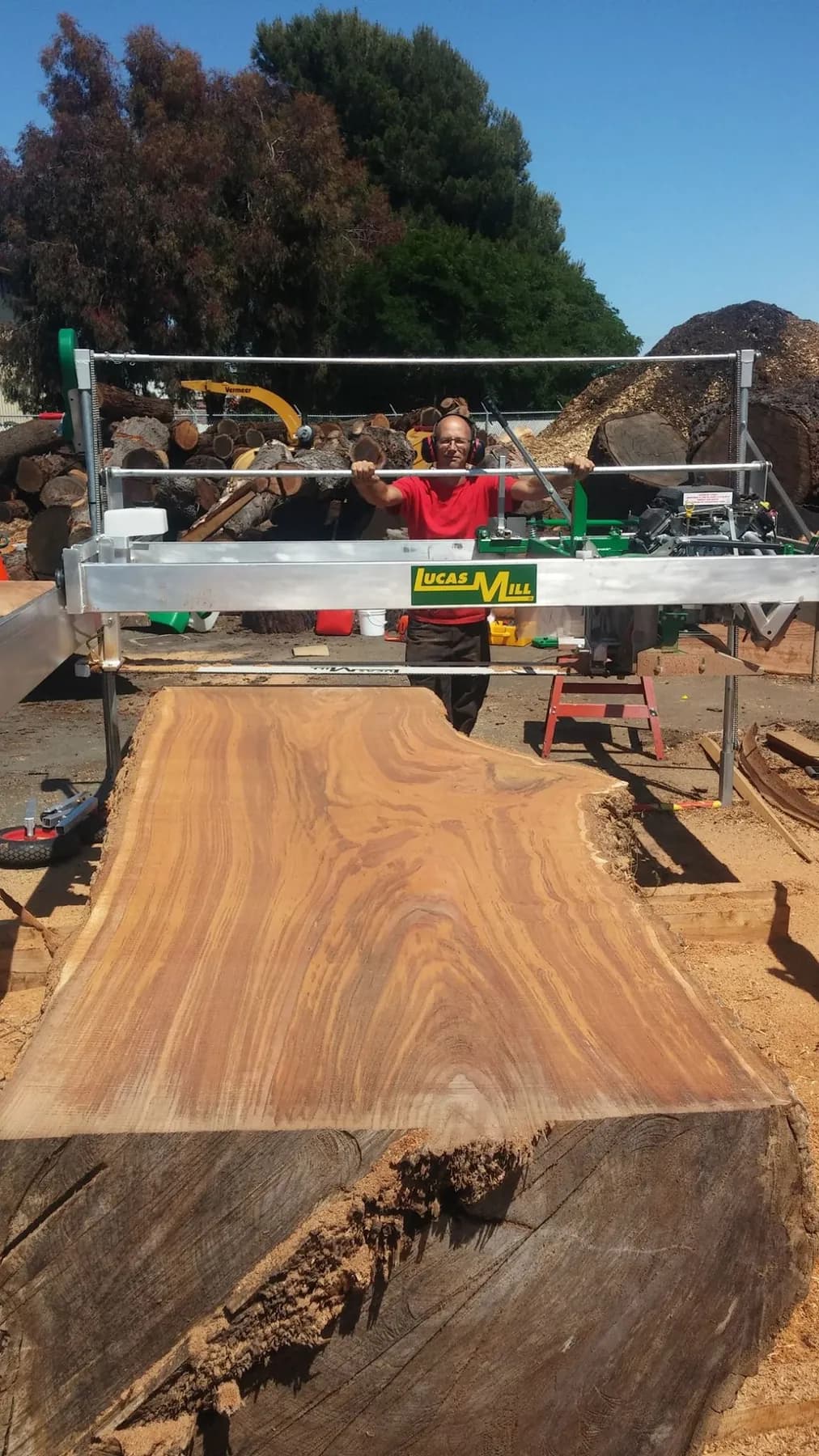
Big slab in a yard 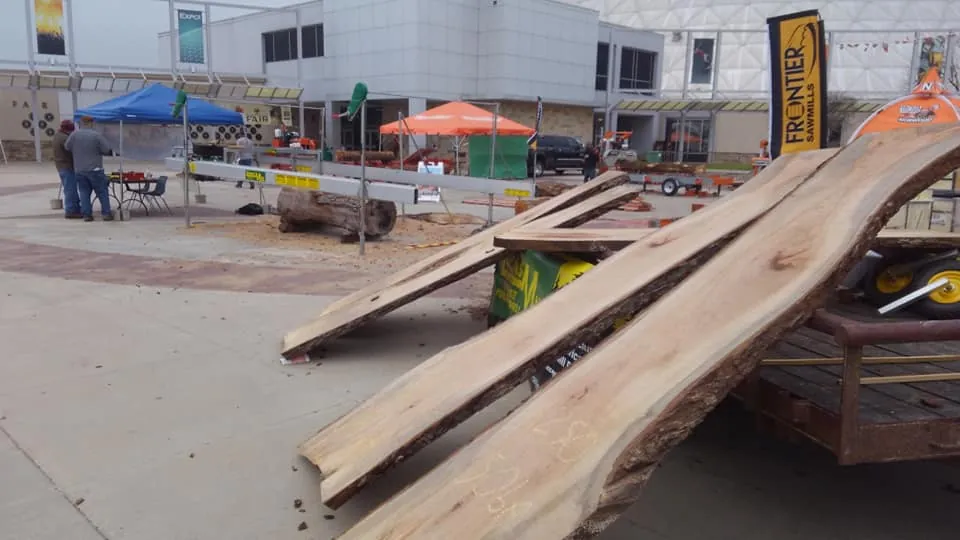
Slabs from a show demo 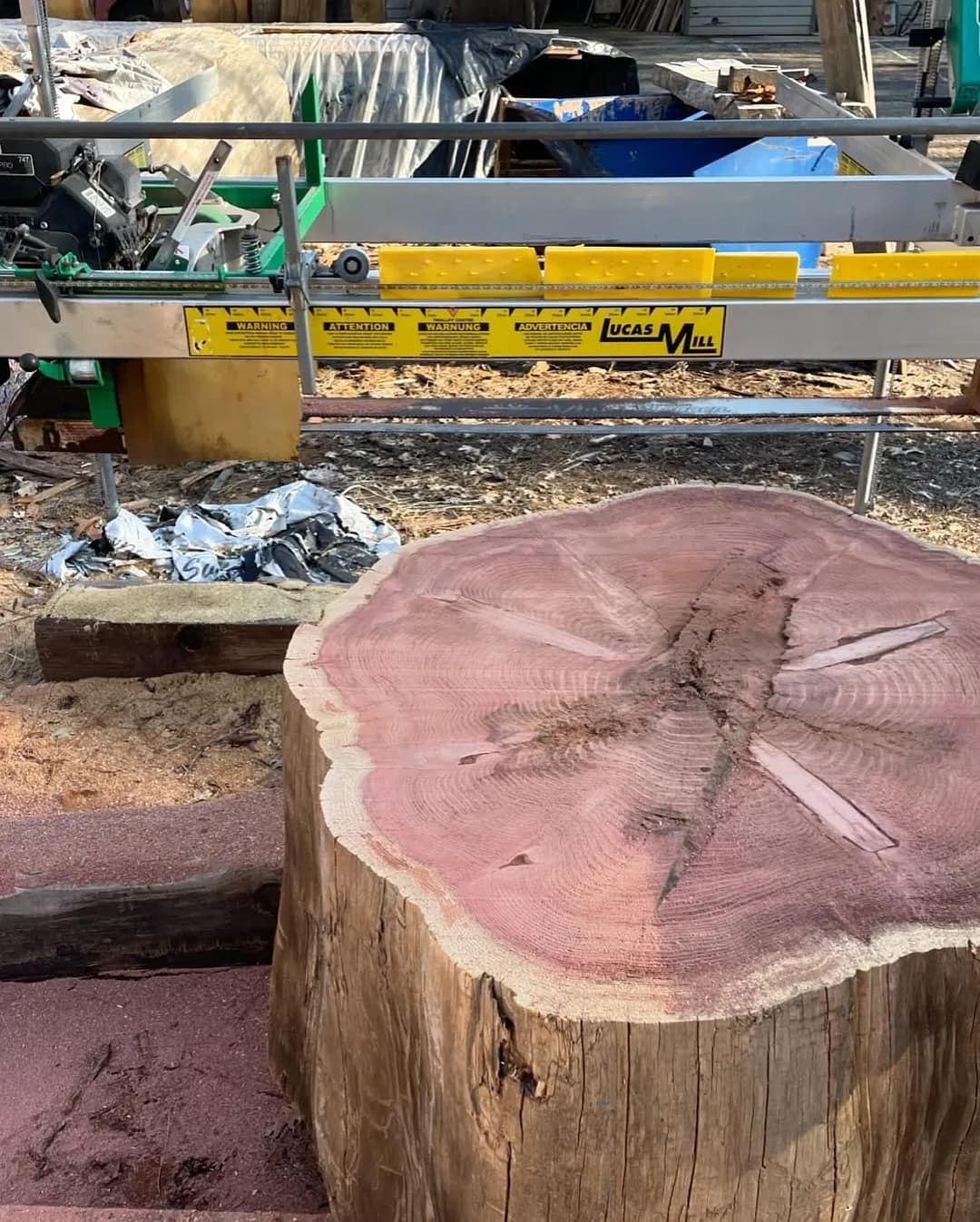
Cedar round 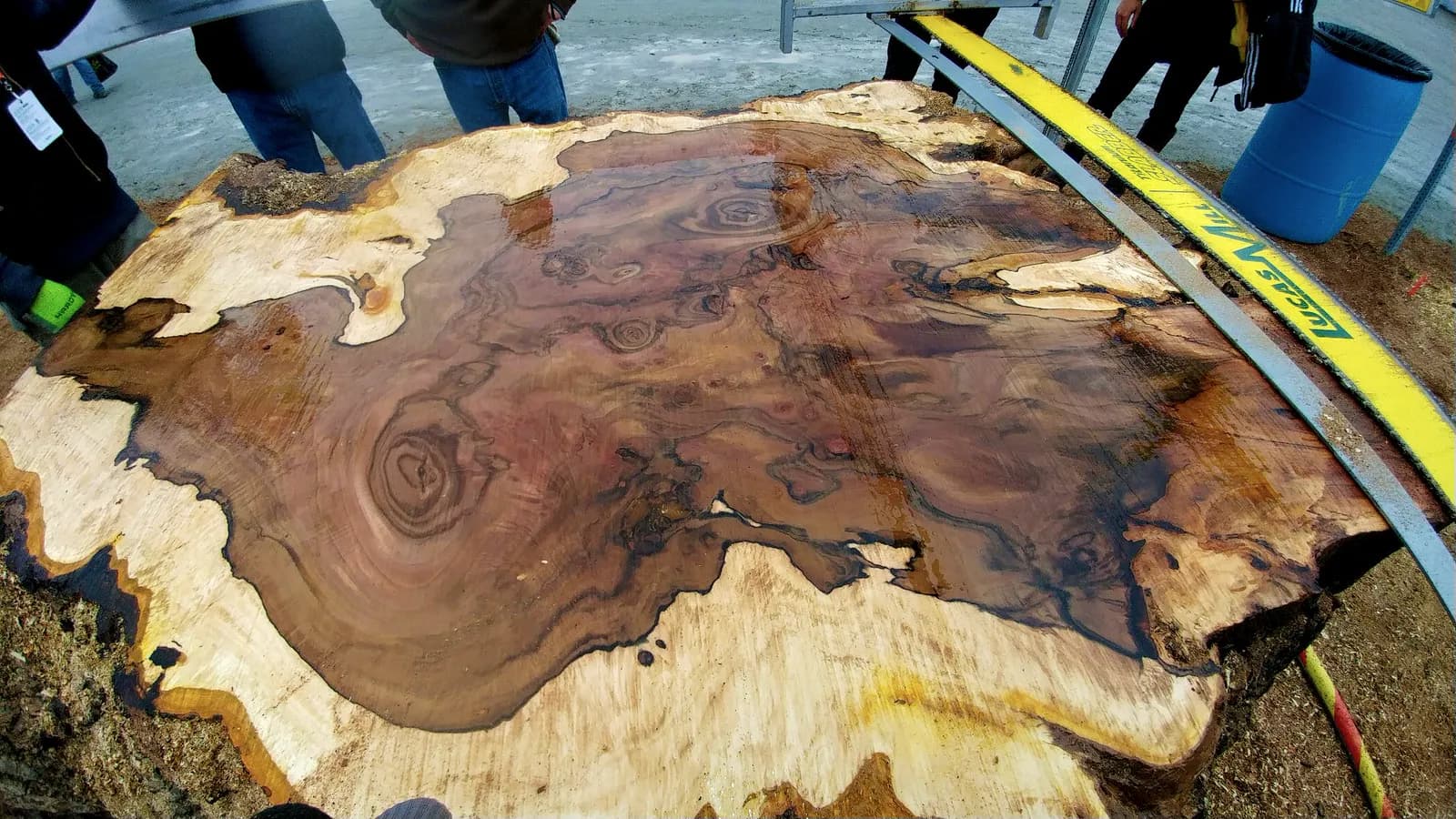
Wet burl slab
Questions buyers ask
Anything else, call a specialist at 1-888-465-8227.
What is a slabbing mill?
A slabbing mill runs a wide chain bar on rails over the log and cuts flat, full-width slabs that keep the natural edge on both sides. Lucas Mill makes three: the slabbing attachment for a Lucas Mill you own, the DSM23 dedicated slab mill, and the DSSM Super Slabber for slabs up to 9 ft (2.7 m) wide.
How much does a slabbing mill cost?
It depends on the machine. The slabbing attachment runs on a Lucas Mill you already own, while the DSM23 and the Super Slabber come as complete machines or as trolleys for an existing mill. Current prices for each are on Bailey’s main store, and financing is available.
See current slabber prices (opens in a new tab)Financing options
Can I use the slabbing attachment on my Lucas Mill?
Lucas Mill says the attachment is available for all Lucas Mill models, new and old. The circular blade comes off and a drive hub with a harvester sprocket goes on the output shaft; Lucas Mill puts the swap at 5–10 minutes following the supplied instructions. Tell a specialist your model so the right hub and bar come with it.
How wide and thick a live-edge slab can I cut?
The attachment cuts slabs up to 60 in wide (50 in on a Model 6), 6 in thick on a Model 6 or 7 and 9 in on a Model 8 or 10 (Bailey’s store listings). The DSM23 cuts 5 ft (1.5 m) wide, or 6 ft 4 in (1.9 m) with the longer bar, and is listed at 19.7 in (500 mm) deep in Bailey’s brochure. The DSSM Super Slabber cuts up to 9 ft (2.7 m) wide; Lucas Mill lists its depth as 271 mm, printed as 10.5 in. Lucas Mill publishes slab width and depth rather than a maximum log diameter, so send a specialist your log measurements or a photo.
Do I need a Lucas Mill for the DSM23 or the Super Slabber?
No. Both come as complete machines with their own engines. Each also comes as a trolley for a mill you already have: the DSM23 trolley fits existing Lucas Mill setups except the Model 4-6, and the Super Slabber trolley comes with parts to widen your end-frames (older mills may need further upgrades).
How long a log can I slab?
Lucas Mill lists the DSM23 at up to 20 ft (6.1 m). With the attachment, cut length follows your swing-blade mill’s tracks. Ask a specialist about the Super Slabber setup for your logs.
Slabbing mill or chainsaw mill?
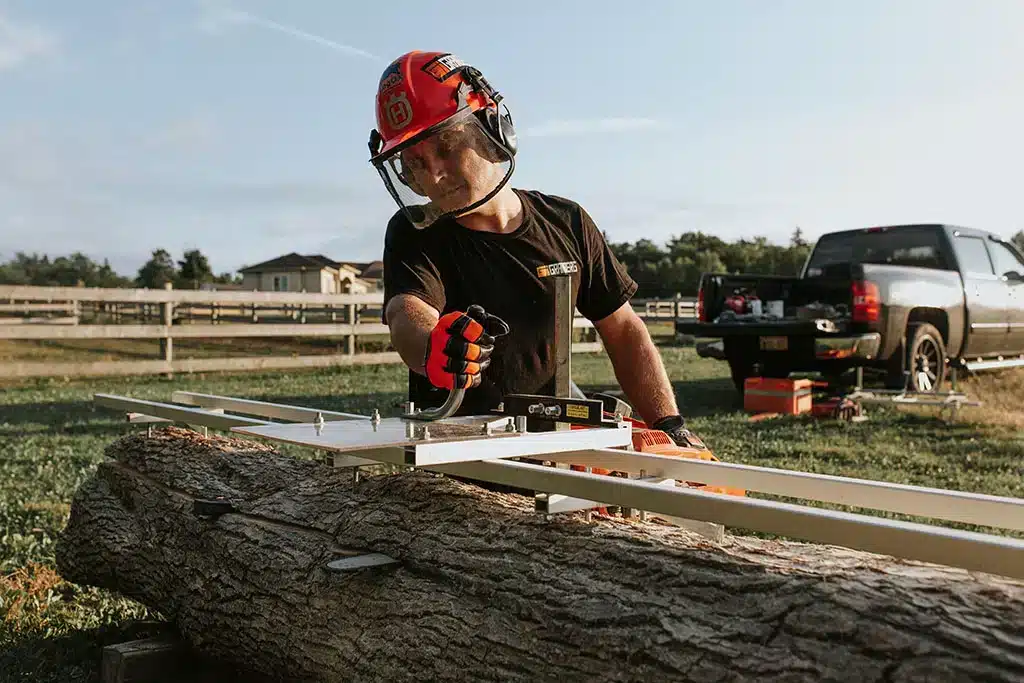
A chainsaw mill such as the Granberg Alaskan is the lowest-cost way to cut slabs: it clamps to your chainsaw and you push it along a guide rail by hand. A slabbing mill drives its bar from an engine and carries it on rails, for steadier and wider cuts.
What warranty comes with them?
Lucas Mill gives its machines a three-year limited warranty against faulty parts and workmanship, and the Vanguard engines on the DSM23 and Super Slabber carry three years from Briggs & Stratton. Ask a specialist about the slabbing attachment.
Talk to a sawmill specialist
Tell us about your operation and the equipment you're interested in. A Bailey's sawmill specialist will get back to you.
Slabbing Equipment & Lucas Mill
Industrial Sales Group
1-888-465-8227Lucas Mill slabbing equipment, portable sawmills, accessories, and parts.
What Happens After You Submit?
You submit this form
Takes 2 minutes
Specialist reviews your needs
A sawmill specialist, not a call center
Personalized quote delivered
Sized to your logs and goals
Follow-up consultation
Phone or video, your choice
Order placed
When you are ready
Equipment Financing
Financing is available on sawmill equipment. See the options or apply online.