
Wood-Mizer log decks, conveyors and material handling

The saw only cuts as fast as wood reaches it and leaves it. Wood-Mizer log decks and ramps, incline and roll-case conveyors, transfer and sorting tables, a green chain and the Log Tally Scanner, which Wood-Mizer says are modular and configured to your logs and your building.

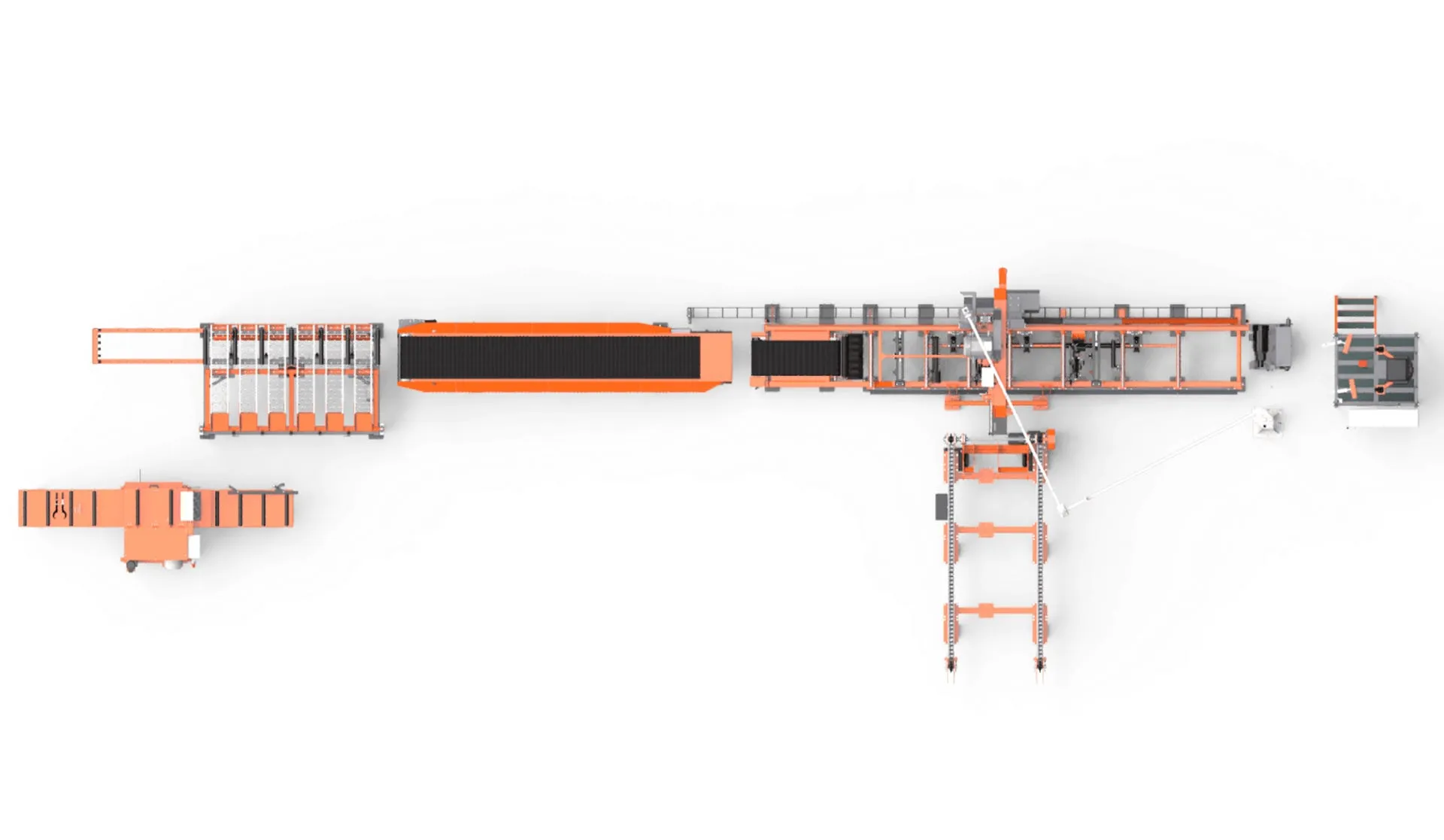
Top-view render of a Wood-Mizer WM4500 system line with conveyors and operator cab

Bailey's is a Wood-Mizer dealer for industrial systems.

How wood moves through a mill

Material handling is everything that moves wood between the saws. Most production mills follow the same order, from the log yard to the stack. A small mill may skip steps; a large one runs several machines at each.

  1. Step 1

    Log yard

    Logs are stored, measured and sorted before they go in. A log scanner counts and measures each one.

    Log scanning
  2. Step 2

    Log deck

    Holds a queue of logs beside the headrig and feeds them on one at a time.

    Log decks and ramps
  3. Step 3

    Headrig

    The primary saw. It opens each log into cants, flitches and boards.

    WM headrigs
  4. Step 4

    Transfer and roller tables

    Incline conveyors, roll cases and transfer tables carry each piece away and across to the next machine.

    Tables and conveyors
  5. Step 5

    Edger and resaw

    The edger squares flitches into boards; the resaw splits cants into more boards.

    Edgers and resaws
  6. Step 6

    Green chain and sorting

    Sawn lumber slows down on a chain deck so it can be graded, sorted and stacked.

    Green chain and sorting
  7. Step 7

    Sawdust removal

    A conveyor carries sawdust from the saws to one collection point.

    Sawdust conveyor

Built around your line, not off a shelf

Wood-Mizer says its material handling components are modular: each is configured to the log length and diameter you cut and to your site layout, and they can be retrofitted to an existing line. So most of the pieces below publish few or no fixed dimensions; the figures come with your quotation.

Planning a whole line rather than one piece? See complete sawmill systems.

Sawmill log decks and ramps

A log deck holds the next logs beside the headrig and rolls them onto the carriage one at a time, so the saw isn't waiting on a loader. A ramp in front of it lets a forklift drop logs on without hitting the deck.

Wood-Mizer lists its heavy duty deck with the WM4500 industrial headrig; the other three belong to its SLP line, which feeds a twin vertical saw (see edgers and resaws).

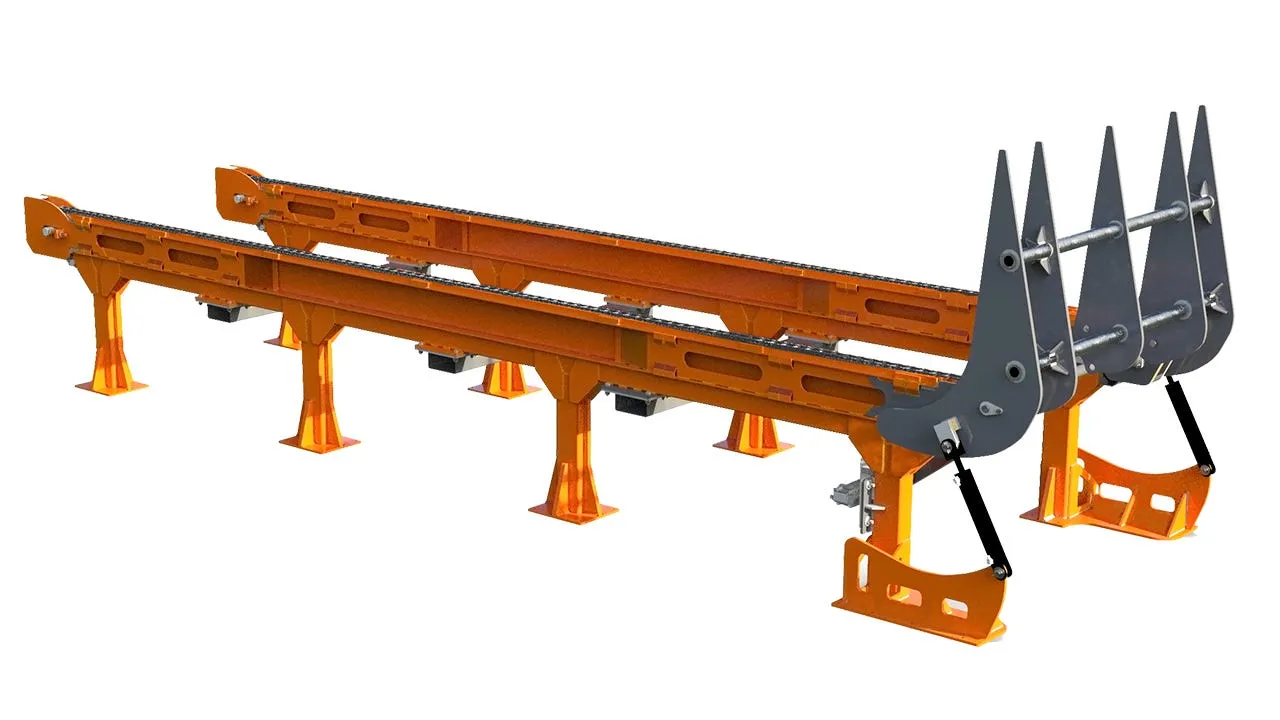
  • Wood-Mizer heavy duty log deck with loader arms, studio render

    Wood-Mizer Heavy Duty Log Deck

    In front of the headrig. Wood-Mizer lists it as a related item for its WM4500.

    Details

    An industrial deck for staging and loading heavy logs, with a full-length I-beam reinforced deck, large loader ends and strengthened legs.

    No dimensions or capacities are published for this item. It’s configured to your log length and layout when it’s quoted.
    Get a quote on the Heavy Duty Log Deck
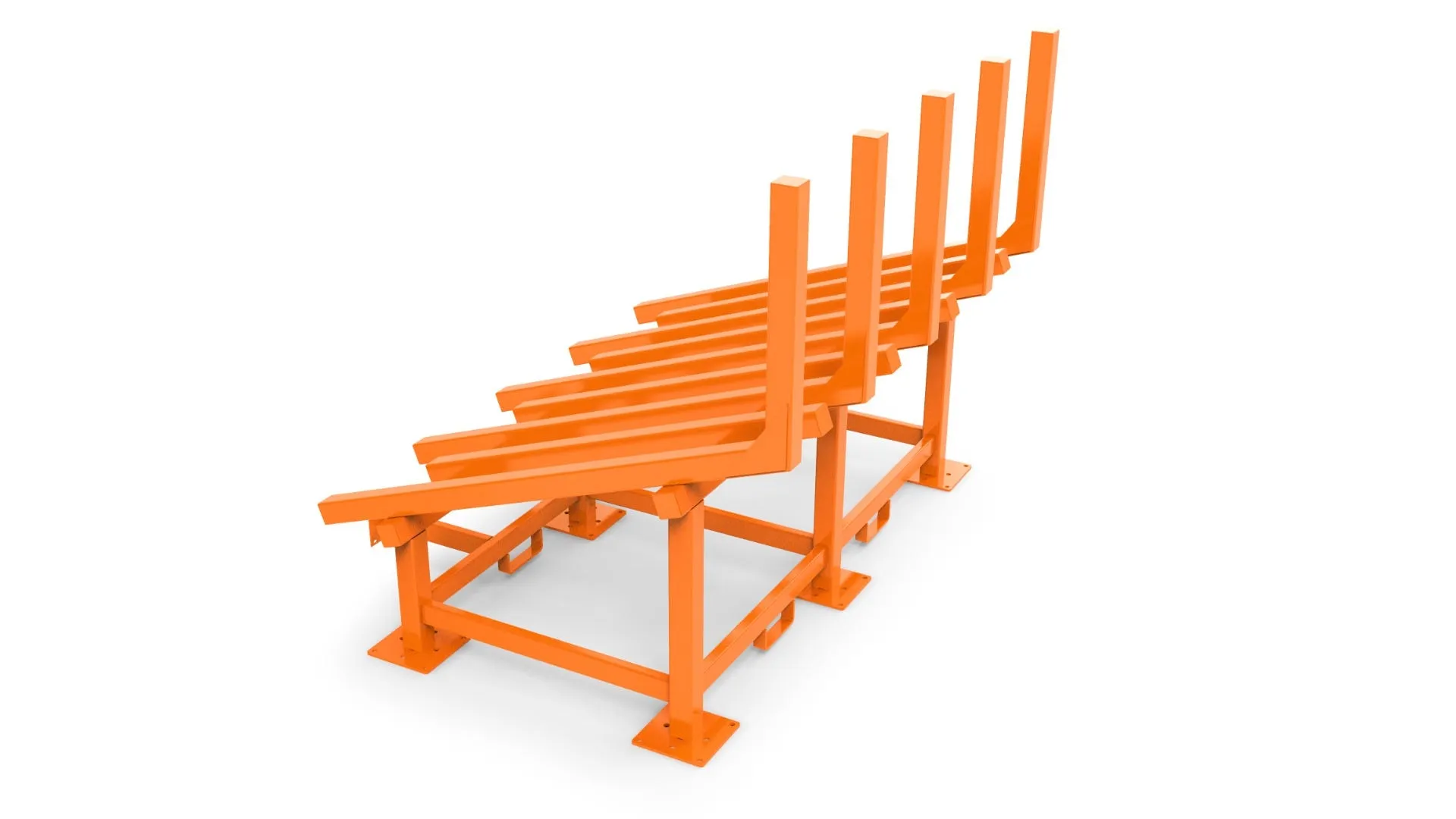
  • Wood-Mizer two-strand log deck, studio render

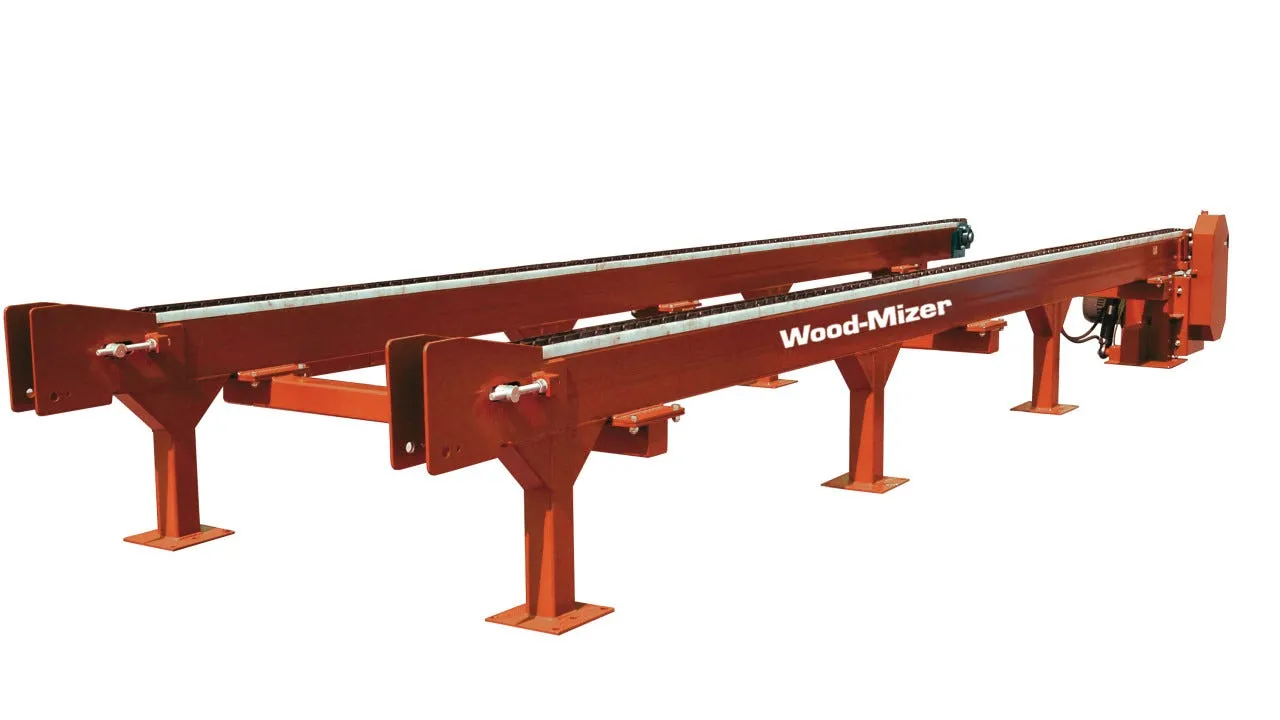
    Wood-Mizer 2 Strand Log Deck for SLP System

    At the start of the SLP line, where logs are staged before the incline deck.

    Details

    A two-strand log infeed deck for Wood-Mizer’s Smart Log Processing (SLP) line.

    No dimensions or capacities are published for this item. It’s configured to your log length and layout when it’s quoted.
    Get a quote on the 2 Strand Log Deck
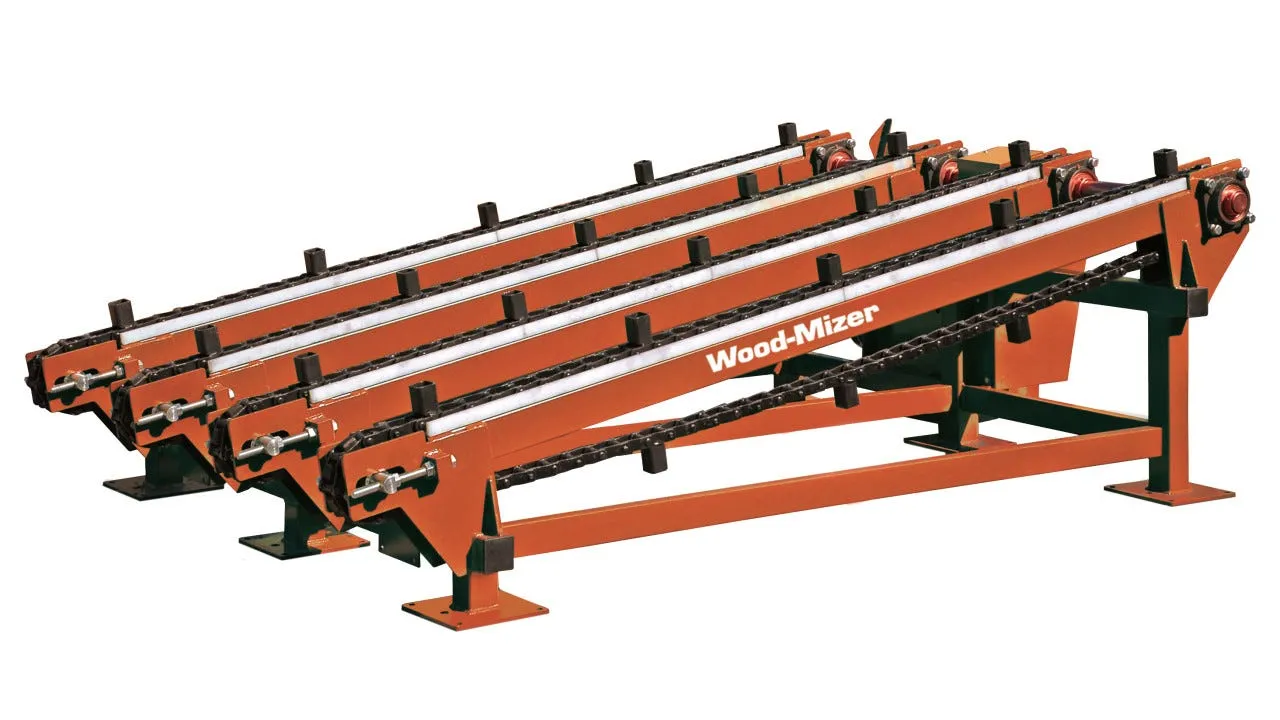
  • Wood-Mizer log incline deck, studio render

    Wood-Mizer Log Incline Deck for SLP System

    Between the log deck and the TVS twin vertical saw in the SLP line.

    Details

    An incline deck that brings logs to the operator station in a controlled way for continuous feeding into the TVS twin vertical saw.

    No dimensions or capacities are published for this item. It’s configured to your log length and layout when it’s quoted.
    Get a quote on the Log Incline Deck
  • Wood-Mizer log ramp, studio render

    Wood-Mizer Log Ramp for SLP System

    Ahead of the SLP log deck, where logs are loaded by forklift.

    Details

    A ramp that makes forklift loading of the SLP log deck easier and adds to the deck’s log capacity.

    No dimensions or capacities are published for this item. It’s configured to your log length and layout when it’s quoted.
    Get a quote on the Log Ramp

Specifications as published by Wood-Mizer; confirm your configuration with a specialist. Items and descriptions from Wood-Mizer's material handling pages, observed October 2026.

Sawmill conveyors, tables and green chain

After the headrig, every piece has to be carried away, turned or moved across to the next machine, then graded and stacked. Incline conveyors take cut pieces off the saw, roller tables and transfer tables move them between machine centers, a sorting table splits them, and the green chain slows them down for grading.

Only the green chain and the sawdust conveyor carry published figures. The rest are sized to your log length and layout when they're quoted.

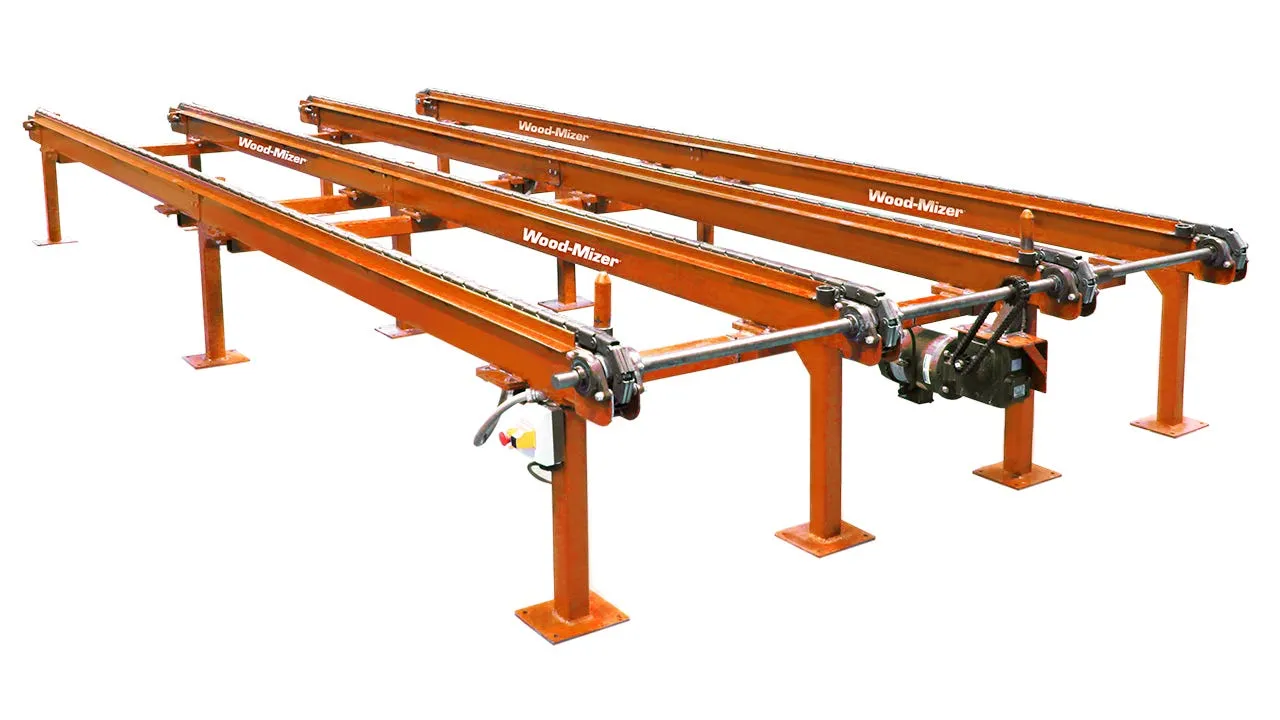
  • Wood-Mizer three-strand green chain, studio render

    Wood-Mizer Green Chain

    At the end of the mill, where sawn lumber is graded and stacked.

    Specs and details

    A modular three- or four-strand lumber delivery chain that moves sawn lumber at a controlled rate for grading and stacking.

    Strands
    3 or 4 (modular)
    Length
    Extendable to 60 ft (18.3 m) in 10 ft (3 m) extensions; may vary with material weight
    Deck height
    33 in (838 mm)
    Deck speed
    15 ft/min
    Get a quote on the Green Chain
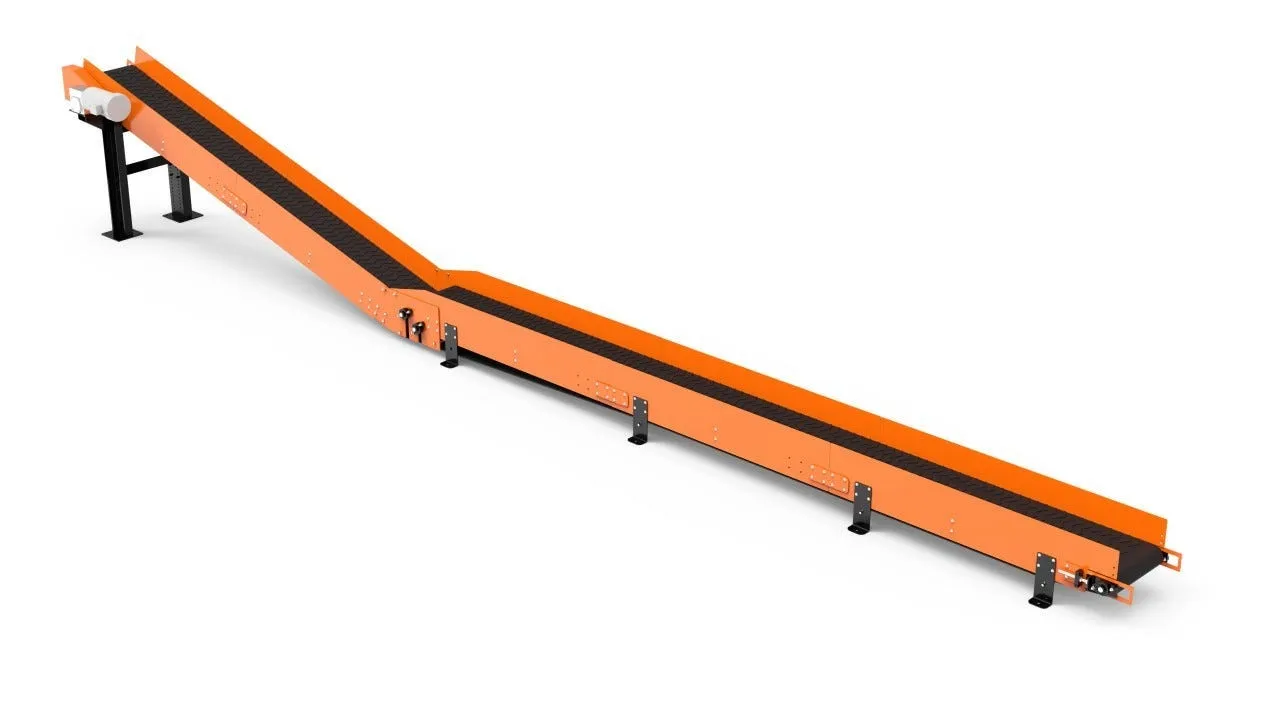
  • Wood-Mizer inclined belted sawdust conveyor, studio render

    Wood-Mizer Belted Sawdust Conveyor

    Alongside the saws, carrying sawdust to one collection point.

    Specs and details

    A heavy-duty single-phase belt conveyor that carries sawdust to a central collection point; ships disassembled on a skid.

    Power
    2 HP (1.5 kW); 115 V 1-phase 20 A or 230 V 1-phase 10 A, 60 Hz
    Length options
    10–45 ft (3–13.7 m) in 5 ft steps
    Belt width
    16 in (406 mm)
    Height to belt
    5 ft 2 in (1.6 m)

    Wood-Mizer’s published overall length (31–56 ft) doesn’t match its 10–45 ft options; confirm the length you need with a specialist.

    Get a quote on the Belted Sawdust Conveyor
  • Wood-Mizer transfer table with boards at an outdoor yard

    Wood-Mizer Transfer Table

    After the incline conveyor, moving pieces across to the next machine.

    Specs and details

    A pneumatic cross-transfer table after the incline conveyor: a sensor-triggered airbag tilts the rollers and pneumatic kickers push to the other side, with no chains, gears or motors.

    Set-up
    Right- or left-hand

    Wood-Mizer publishes no other figures for it. It’s configured to your layout when it’s quoted.

    Get a quote on the Transfer Table
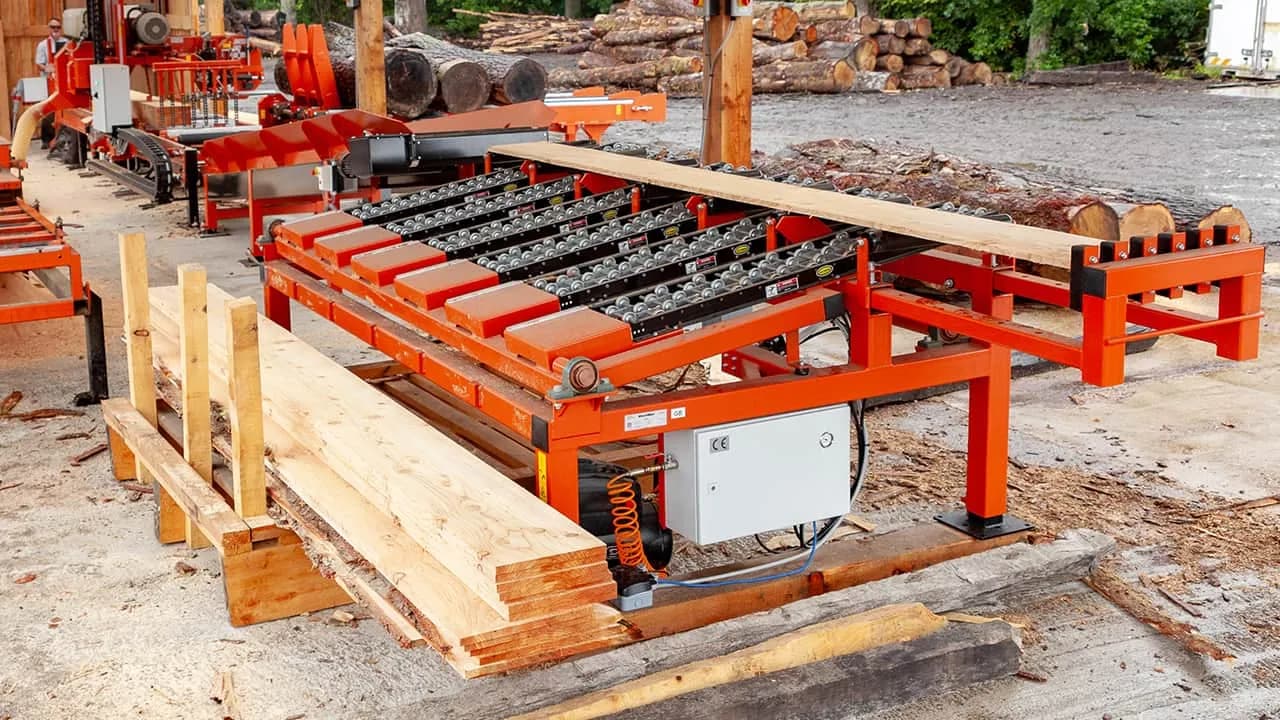
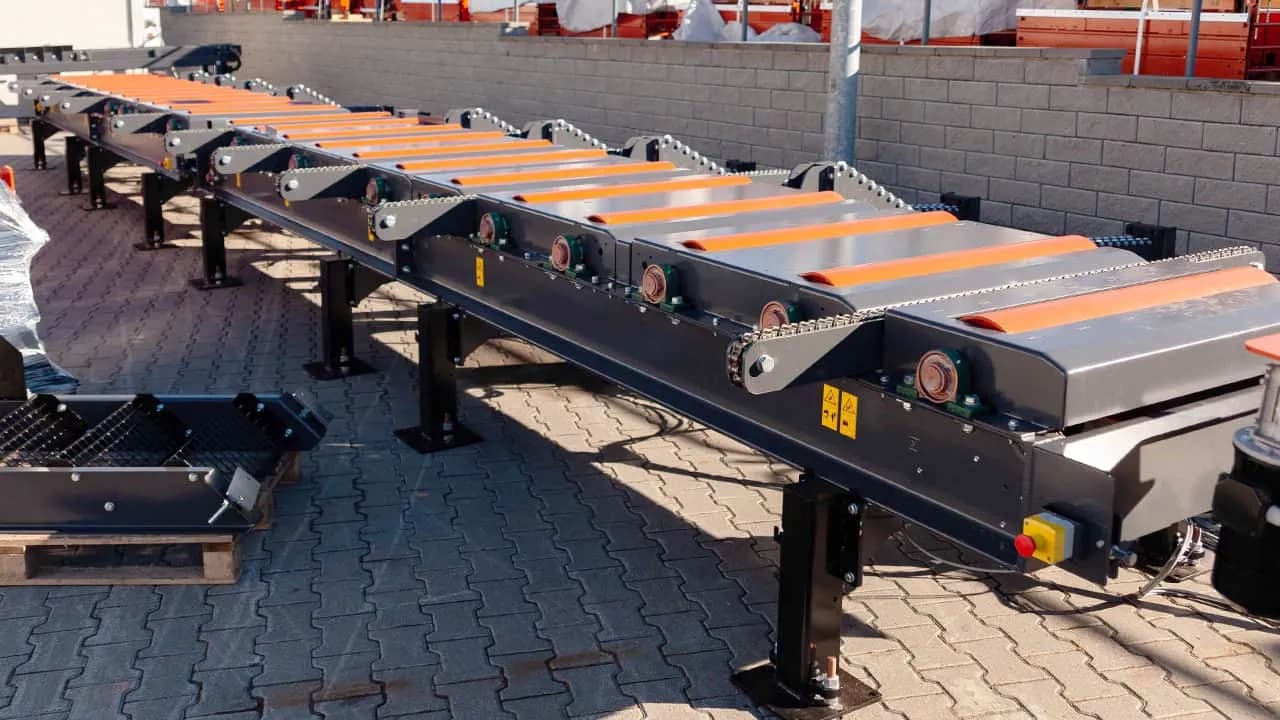
  • Wood-Mizer three-way sorting table outdoors on a paved yard

    Wood-Mizer Three-Way Sorting Table

    Where cut pieces of different lengths are sorted and sent on.

    Details

    A heavy-duty, modular three-way sorting table for timber of various lengths, with several transfer options.

    No dimensions or capacities are published for this item. It’s configured to your log length and layout when it’s quoted.
    Get a quote on the Three-Way Sorting Table
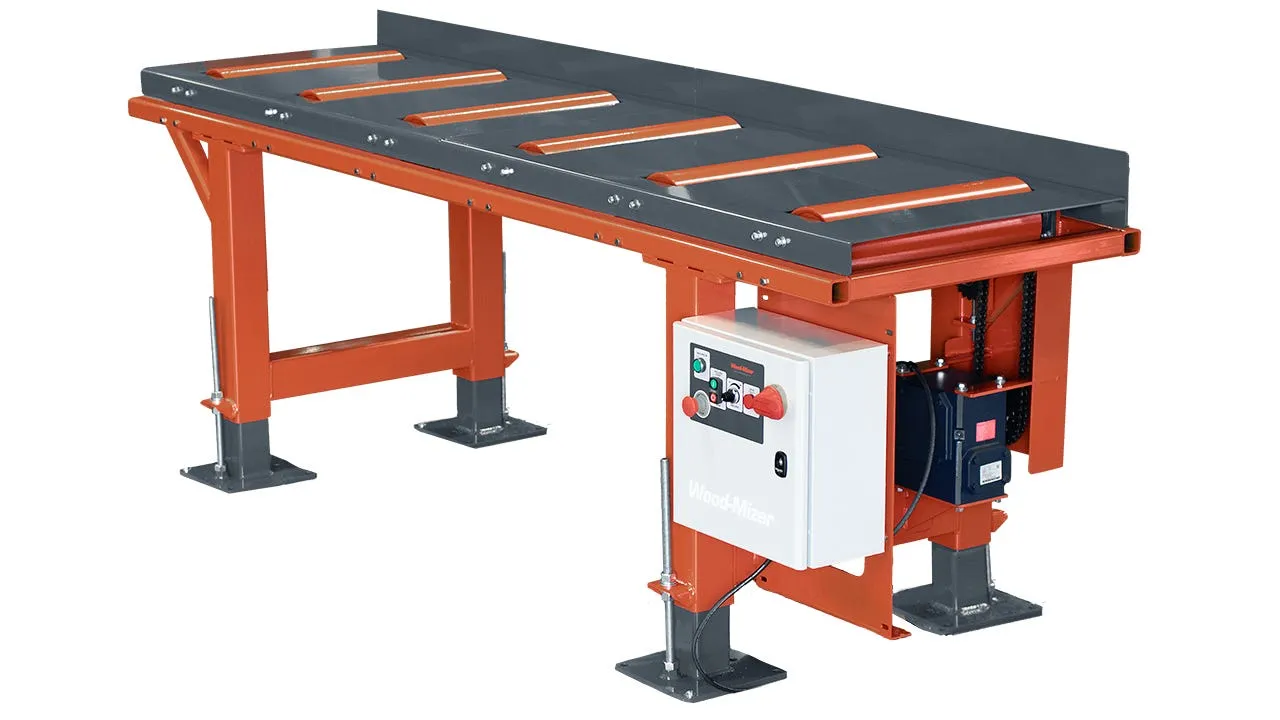
  • Wood-Mizer powered roll case conveyor with control box, studio render

    Wood-Mizer Roll Case Conveyor

    Downstream of the sawmill, moving material along the line.

    Details

    A powered roll case with adjustable legs that moves material downstream of the sawmill.

    No dimensions or capacities are published for this item. It’s configured to your log length and layout when it’s quoted.
    Get a quote on the Roll Case Conveyor
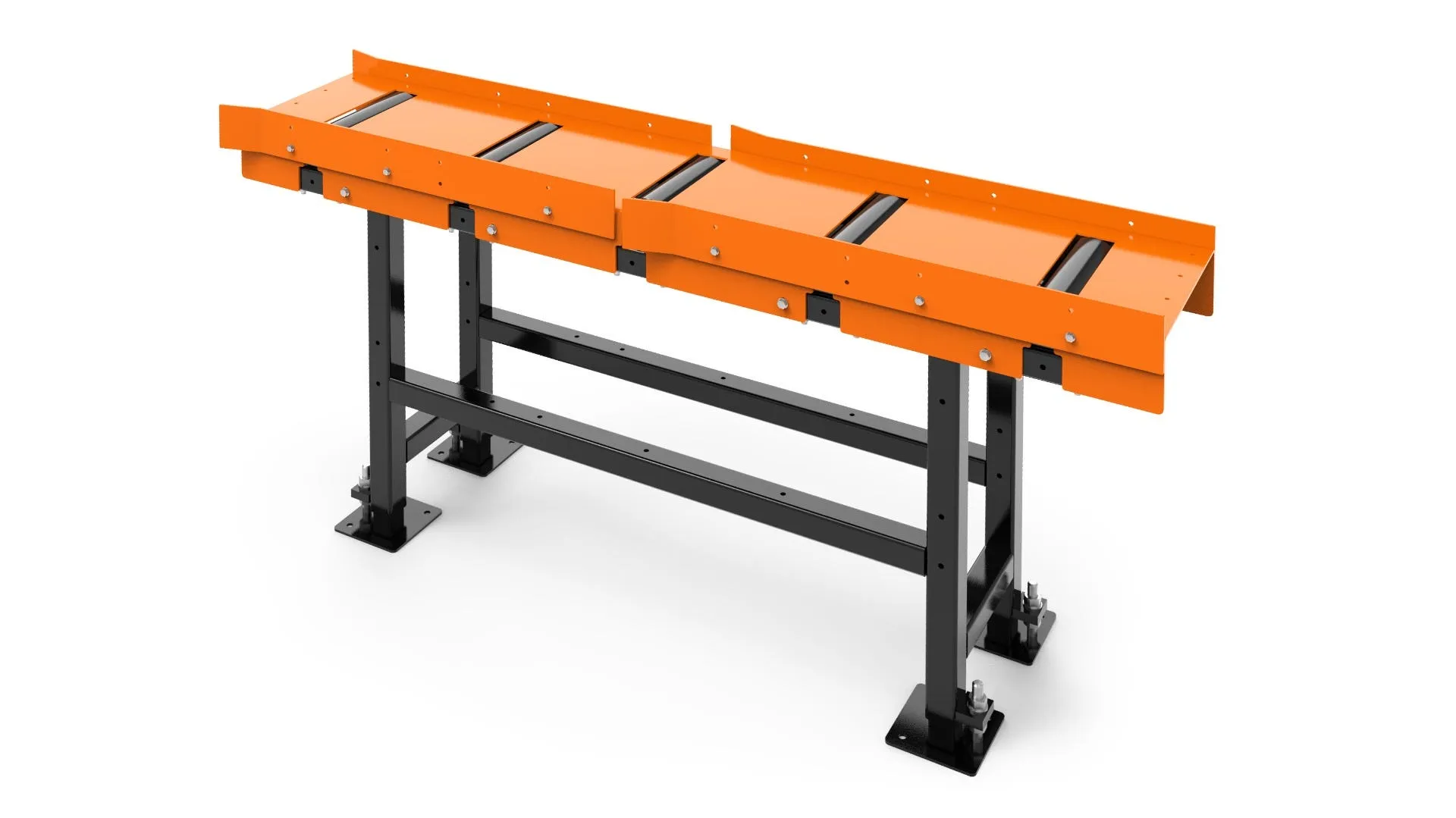
  • Wood-Mizer idle roller table, studio render

    Wood-Mizer Idle Roller Table

    Inline between machines, keeping material moving straight.

    Details

    A height-adjustable inline idle roller table for straight material flow within a system.

    No dimensions or capacities are published for this item. It’s configured to your log length and layout when it’s quoted.
    Get a quote on the Idle Roller Table
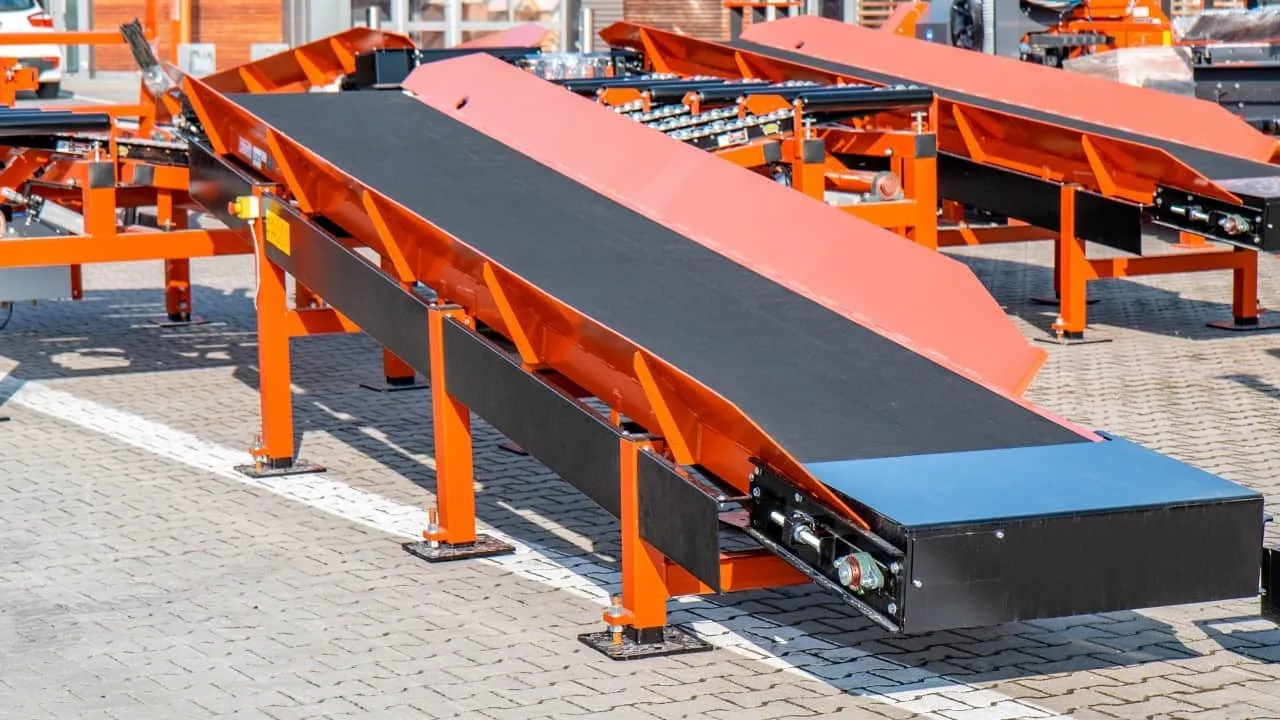
  • Wood-Mizer incline belt conveyor beside other conveyors on a paved yard

    Wood-Mizer IC-2 Incline Conveyor

    Right behind a Wood-Mizer headrig, taking each cut piece away.

    Details

    An incline conveyor sized to mate with Wood-Mizer headrigs, carrying cut pieces away at a slight incline to a transfer deck or three-way conveyor.

    No dimensions or capacities are published for this item. It’s configured to your log length and layout when it’s quoted.
    Get a quote on the IC-2 Incline Conveyor
  • No photograph published

    Wood-Mizer IC-5 Incline Conveyor

    Right behind a Wood-Mizer headrig, taking each cut piece away.

    Details

    An incline conveyor that receives each cut piece as it is pushed off a Wood-Mizer headrig and carries it away at a slight incline.

    No dimensions or capacities are published for this item. It’s configured to your log length and layout when it’s quoted.
    Get a quote on the IC-5 Incline Conveyor

Specifications as published by Wood-Mizer; confirm your configuration with a specialist. Items and descriptions from Wood-Mizer's material handling pages, observed October 2026.

Before the saw: log scanning

One machine works on whole logs before they reach the log deck. Wood-Mizer's Log Tally Scanner measures and counts every log and, set up for sorting, drives the log kickers that sort them by the rules you give it.

Wood-Mizer log tally scanner frame over a log conveyor in a mill

Wood-Mizer Log Tally Scanner

Over a log conveyor, where logs are measured and counted.

Details

A log scanning and tally system, set up for scanning only or for scanning and sorting (driving log kickers), with data export, reports, imperial or metric units and remote web access.

No dimensions or capacities are published for this item. It’s configured to your log length and layout when it’s quoted.
Get a quote on the Log Tally Scanner

Wood-Mizer publishes no hardware specifications, accuracy or log-size limits for the scanner. Specifications as published by Wood-Mizer; confirm your configuration with a specialist.

Questions buyers ask

Anything else, call a specialist at 1-888-465-8227.

Can I add a log deck or conveyors to the mill I already run?

Usually, yes. Wood-Mizer says its material handling components are modular, configured to log length, log diameter and site layout, and can be retrofitted to existing lines. Whether a particular deck or conveyor suits your saw and building is worked out when it is quoted, so tell us what headrig you run, the logs you cut and how the building is laid out.

Log decks and ramps
What decides how long a sawmill conveyor needs to be?

Mainly the longest pieces you cut, the distance between the machines it joins, and how much lumber you want waiting between them so one machine never stops the next. On a green chain it is also how many people grade and stack along it. Weight matters too: Wood-Mizer notes its green chain extends to 60 ft in 10 ft sections, but the maximum length may vary with total material weight. Its belted sawdust conveyor comes in lengths from 10 to 45 ft in 5 ft steps.

Tables and conveyors
What is a green chain in a sawmill?

A green chain is a slow, multi-strand chain deck at the end of the mill. Freshly sawn ("green") lumber travels across it at a controlled pace so it can be graded, sorted and stacked by hand. Wood-Mizer’s green chain has three or four strands, a 33 in deck height and a published deck speed of 15 ft/min, with channels for a customer-built grading floor and left or right on-loading.

Wood-Mizer Green Chain
How is the Wood-Mizer Log Tally Scanner used?

As Wood-Mizer describes it, the scanner measures and tallies logs as they pass. It can be set up for scanning only, or for scanning and sorting, where it controls log kickers and other equipment to sort the logs. It includes a data export program and reports, works in imperial or metric units, offers remote web access, and has backup for power outages. Wood-Mizer publishes no hardware, accuracy or log-size figures, so a specialist confirms the setup for your line.

Log scanning
Do I need a debarker in front of a Wood-Mizer headrig?

A debarker strips bark, and the dirt and stones it carries, so less of it reaches the blade. Wood-Mizer lists a debarker as standard on the WM2500 and as an option on the WM5500, so ask about it when the headrig is quoted rather than as a separate machine.

WM headrigs
How does quoting work for material handling?

Send the form or call 1-888-465-8227 with your log lengths and diameters, species, the machines you run or plan to run, and a rough sketch or measurements of the building. A specialist works out which decks, conveyors and tables fit and how long they need to be, and you get a written quotation that lists the configuration and what is included.

Is financing available for log decks and conveyors?

Bailey’s offers equipment financing. See the financing page for current options, and ask a specialist whether the configuration you are quoted qualifies.

Financing

Plan your log handling with a specialist

Tell us your log lengths and diameters, the saws you run and how the building is laid out. Handling is sized to those, so the more we know, the closer the first quotation is.

Fields marked optional can be skipped. Everything else helps the specialist quote the right setup.

Interested in financing? (optional)
Best way to reach you (optional)

We use your details to answer this request. See Bailey's privacy policy.