How each mill cuts
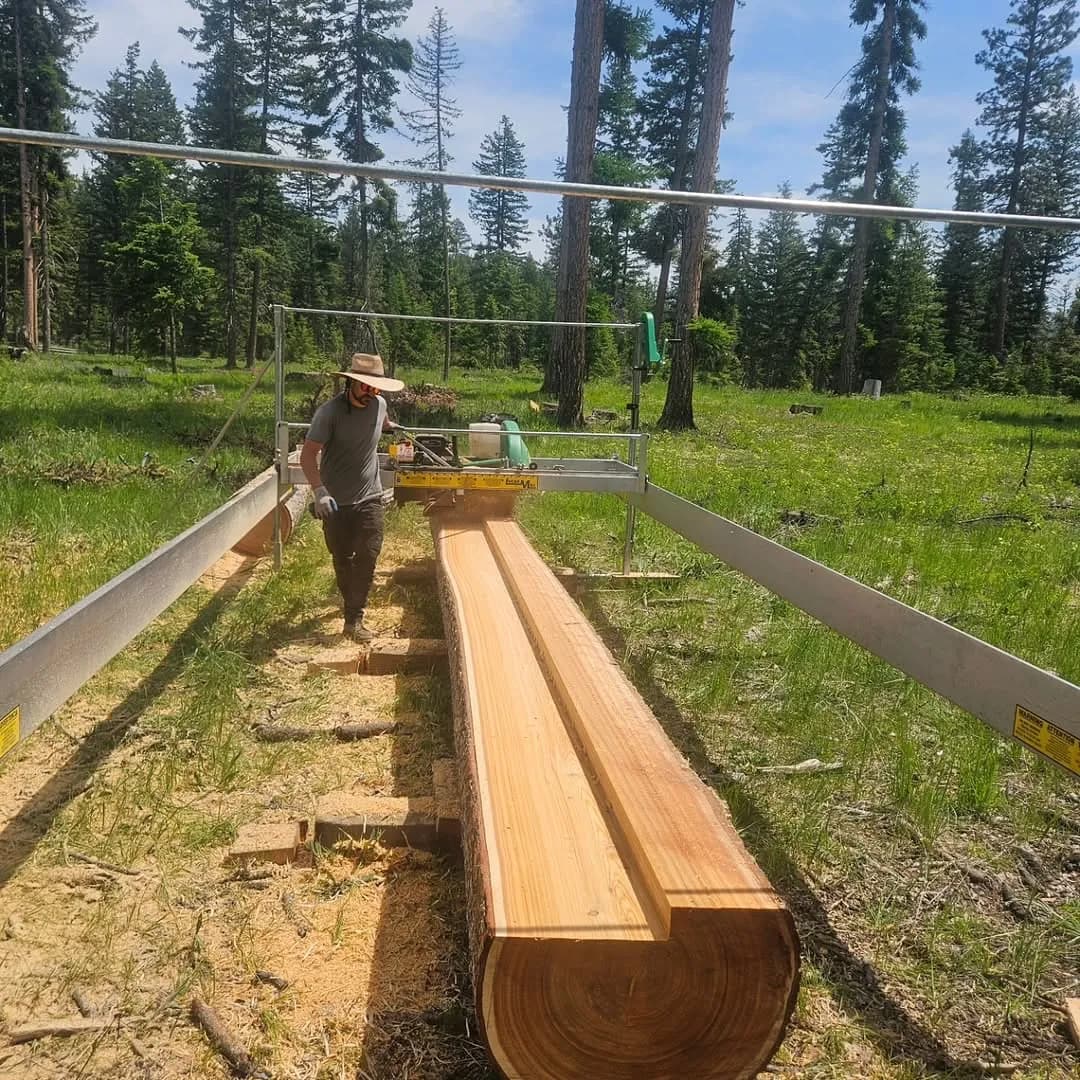
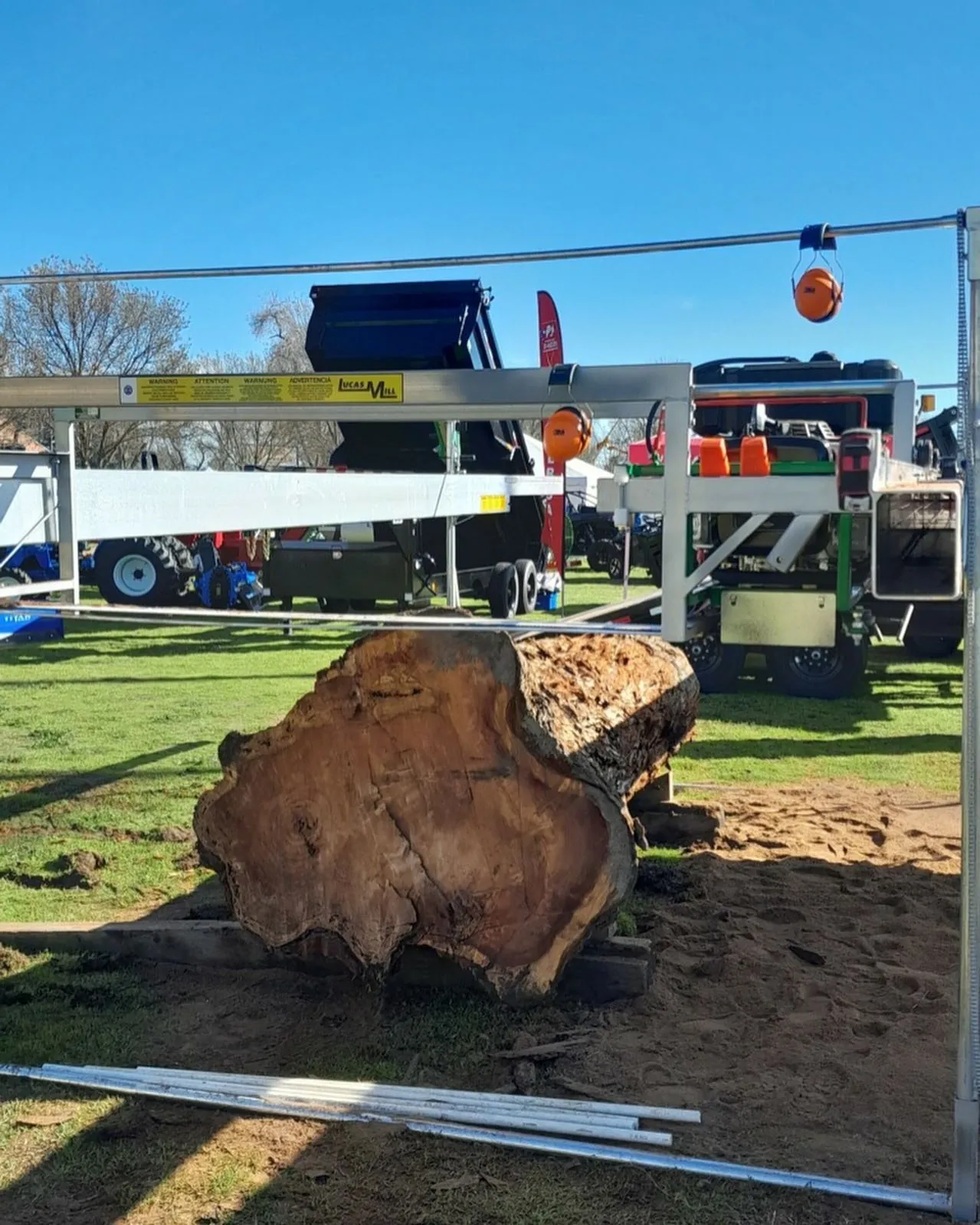
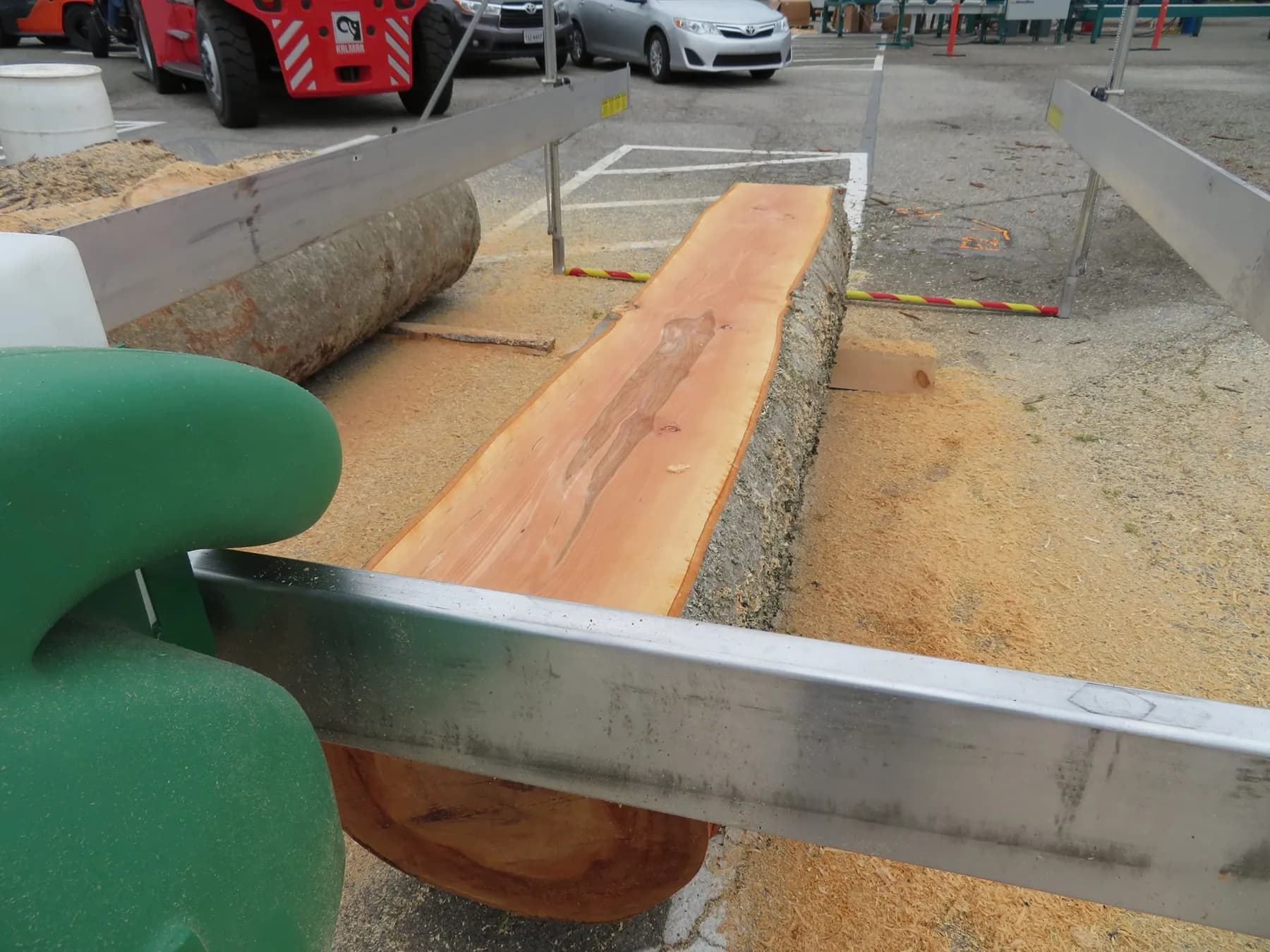
Swing-blade sawmill. One circular blade cuts the vertical face, pivots 90 degrees and cuts the horizontal face, freeing a board. The mill’s frame and rails go up around the log, and the carriage runs along them, so the log stays where it lies. Boards wider than one pass come from a double cut, one pass from each side. Lucas Mill makes the swing-blade mills Bailey’s carries.
Band sawmill. A thin band blade runs around two wheels, and the head travels along a track while the log sits on the bed. The sawyer turns the log between cuts to square it and take boards. Band mills are made in portable and stationary forms; industrial band headrigs, such as the ones on our industrial sawmills page, are the stationary end of the family.
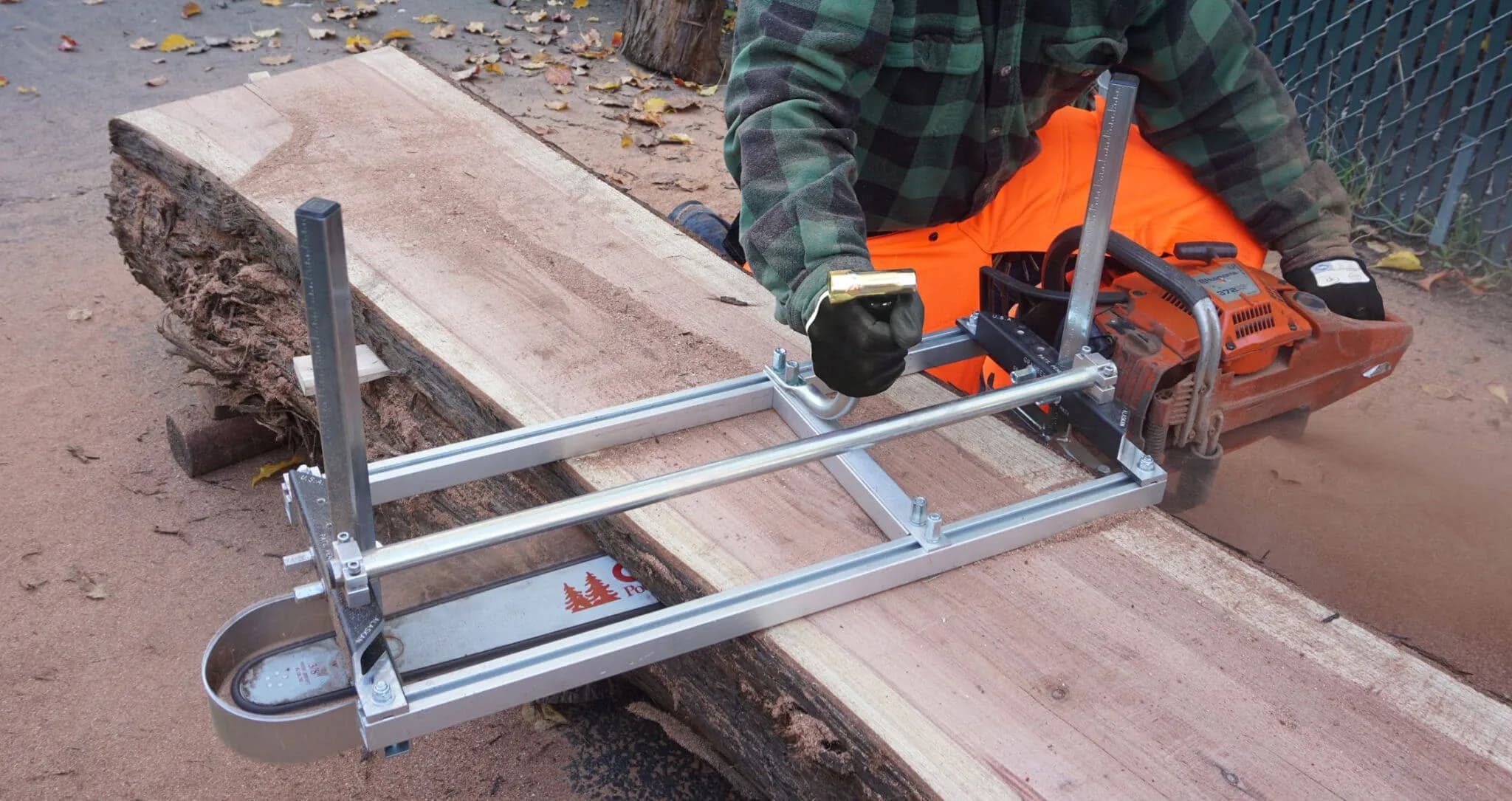
Chainsaw mill. A frame clamps to a chainsaw’s bar and rides on a guide rail for the first cut, then on the flat face of the log. The saw does the cutting with ripping chain. Granberg’s Alaskan mills are the chainsaw mills Bailey’s sells.
Swing-blade vs band sawmill: the honest trade-offs
| Swing-blade sawmill | Band sawmill | |
|---|---|---|
| Blade | One circular blade with replaceable teeth | A thin band blade, tensioned and tracked on two wheels |
| Kerf | Wider than a band | Thinner, so less wood goes to sawdust |
| Where it sets up | Over the log, where it lies | The log is loaded onto the mill’s bed |
| Turning the log | Not needed for boards; the blade swings | Needed to square the log and take boards |
| Widest board in one pass | Set by the blade’s reach; wider boards by double cut | Set by the throat between the band wheels |
| Wide slabs | With a slabbing attachment or a dedicated slabber | Up to the mill’s throat width |
| Blade upkeep | Sharpen or replace teeth on the blade | Sharpen and set bands; keep tension and tracking right |
Kerf. The band’s thinner kerf is its main advantage: more of each log becomes lumber, which matters most with valuable hardwoods. Lucas Mill publishes a 5 mm kerf for the 6-16 and 5.7 mm for the 8-30.
Logs that are hard to move. The swing-blade’s main advantage is that the log doesn’t have to come to the mill. Big logs, logs on a slope or in the bush, and logs you can’t lift onto a bed can be sawn where they lie. A band mill needs the log on its bed, which for large logs means a loader or a tractor.
Upkeep. A band blade has to be tensioned and tracked, and bands are sharpened and set. A swing-blade’s circular blade is sharpened tooth by tooth. Neither is hard once you’ve learned it; they’re different jobs.
Dimensional lumber and beams. A swing-blade cuts square-edged boards straight off the log, so dimensional lumber, posts and beams come off with no separate edging. On a band mill, you edge boards by turning them on the bed or with an edger.
Where a chainsaw mill fits
A chainsaw mill is the third option, and the lowest cost: a frame for a saw you may already own. It cuts the widest slabs for the money, because the width is set by the bar, and it goes anywhere you can carry a saw. Granberg publishes a cut up to 32 in wide for the 36 in Alaskan MKIV, and wider mills take longer bars.
The trade-offs: it’s slower than a swing-blade or a band mill, the kerf is the widest of the three, and it’s hard work on the saw and the operator. For a few logs a year, or slabs from a tree too big to move, it’s often the right tool. Read how to use an Alaskan chainsaw mill.
Circular sawmills: swing-blade and fixed-blade
“Circular sawmill” covers two kinds. A traditional circular sawmill uses one large fixed blade, with the log carried past it on a carriage; that is the classic stationary mill. A swing-blade is a portable circular sawmill whose blade pivots so it can make both cuts. When people ask for a portable circular sawmill today, they usually mean a swing-blade. See our portable sawmills.
How to choose
- Your logs are big, far from a road, or hard to load: a swing-blade sawmill, set up where the log lies.
- You saw valuable hardwood where every board counts, and logs can come to the mill: a band sawmill’s thinner kerf is worth weighing.
- You want beams, posts and dimensional lumber with square edges straight off the log: a swing-blade.
- You want wide slabs on a small budget, from a few logs: a chainsaw mill.
- Wide slabs as a regular product: a swing-blade with a slabbing attachment, or a dedicated slabber. See slabbing mills.
- Production, measured by the shift: an industrial line with a headrig. See industrial sawmills.
For prices by class, see how much a sawmill costs.