Log scale and board foot calculator
Inside the bark, across the narrow end; 6 in or more
Whole feet, rounded down
- Doyle
- 256 bd ft
- Scribner
- 272 bd ft
- International ¼ in
- 290 bd ft
Estimates from the published log rules. What you actually saw out depends on the log, the sawing pattern and the mill.
How to calculate board feet of lumber
Multiply thickness in inches by width in inches by length in feet, and divide by 12. A 2 × 6 that is 8 ft long is 2 × 6 × 8 ÷ 12 = 8 board feet. Use the actual size for rough-sawn lumber and the nominal size when you’re pricing dressed lumber sold by nominal size.
How to measure a log
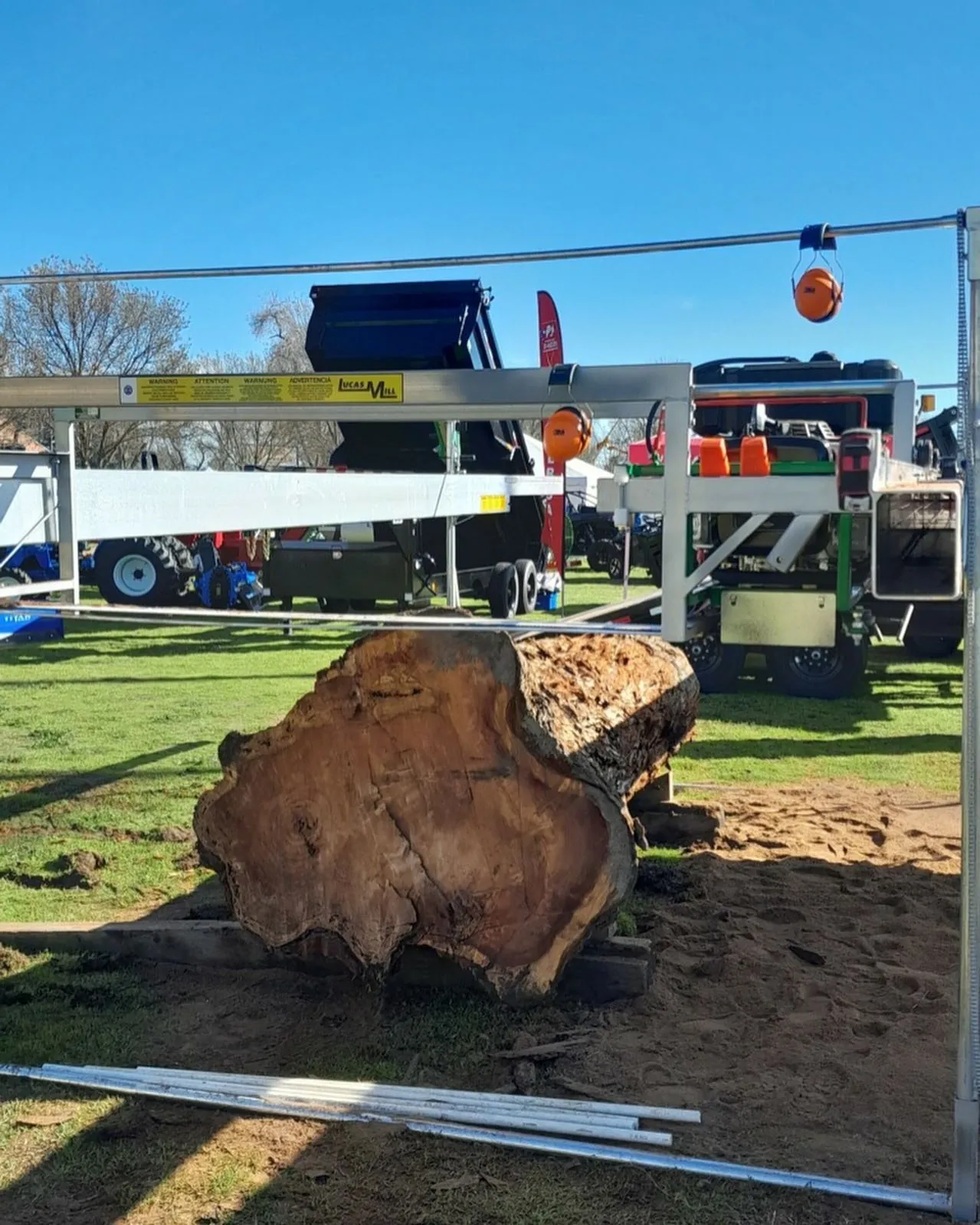
- Diameter: measure across the small end, inside the bark, in inches. Log rules use the small end because it is the smallest square-edged board area all the way through the log. If the end isn’t round, take two measurements at right angles and average them.
- Length: measure in feet, and round down to the nearest foot. Scalers usually allow a few inches of trim on top of the nominal length.
- Defects: the log rules assume a straight, sound log. Rot, sweep, splits and large knots reduce what you’ll actually saw.
The three log rules
Doyle. The simplest of the three: board feet = ((D − 4) ÷ 4)² × L, where D is the small-end diameter in inches and L the length in feet. It subtracts 4 in for the slabs, which is too much on small logs, so Doyle under-scales small logs and comes closer on large ones. It is common for hardwoods in the eastern and southern U.S.
Scribner. Drawn from diagrams of 1-in boards in circles, with a ¼-in kerf. Its official form is a table (Scribner Decimal C, in tens of board feet); the calculator uses the common formula approximation, board feet = (0.79D² − 2D − 4) × L ÷ 16. It is common in the West. Results may differ slightly from the printed table.
International ¼-inch. Built from a formula that allows for a ¼-in kerf, shrinkage and taper. It works in 4-ft sections: each section’s board feet = 0.905 × (0.22d² − 0.71d), where d starts at the small-end diameter and grows ½ in for each 4 ft of length. It is the closest of the three to what a careful mill actually saws.
Why the rules disagree
Each rule makes its own allowance for slabs, kerf and taper. Doyle’s flat 4-in slab allowance is the big one: on a 10-in log it removes 40 percent of the diameter, on a 30-in log about 13 percent. So the gap between rules is widest on small logs and narrows as logs grow.
When you buy or sell logs, agree which rule you’re using. The same log can carry very different numbers.
Worked example
A 16-in small-end log, 12 ft long:
| Rule | Working | Board feet |
|---|---|---|
| Doyle | ((16 − 4) ÷ 4)² × 12 = 3² × 12 | 108 |
| Scribner (formula) | (0.79 × 256 − 32 − 4) × 12 ÷ 16 | about 125 |
| International ¼-inch | 0.905 × (44.96 + 48.18 + 51.51) for d = 16, 16½, 17 | about 131 |
A 10-in log of the same length scales 27 board feet by Doyle, about 41 by Scribner and about 46 by International ¼-inch. On the smaller log, Doyle gives about 40 percent less than International.
Your mill’s yield is not the log scale
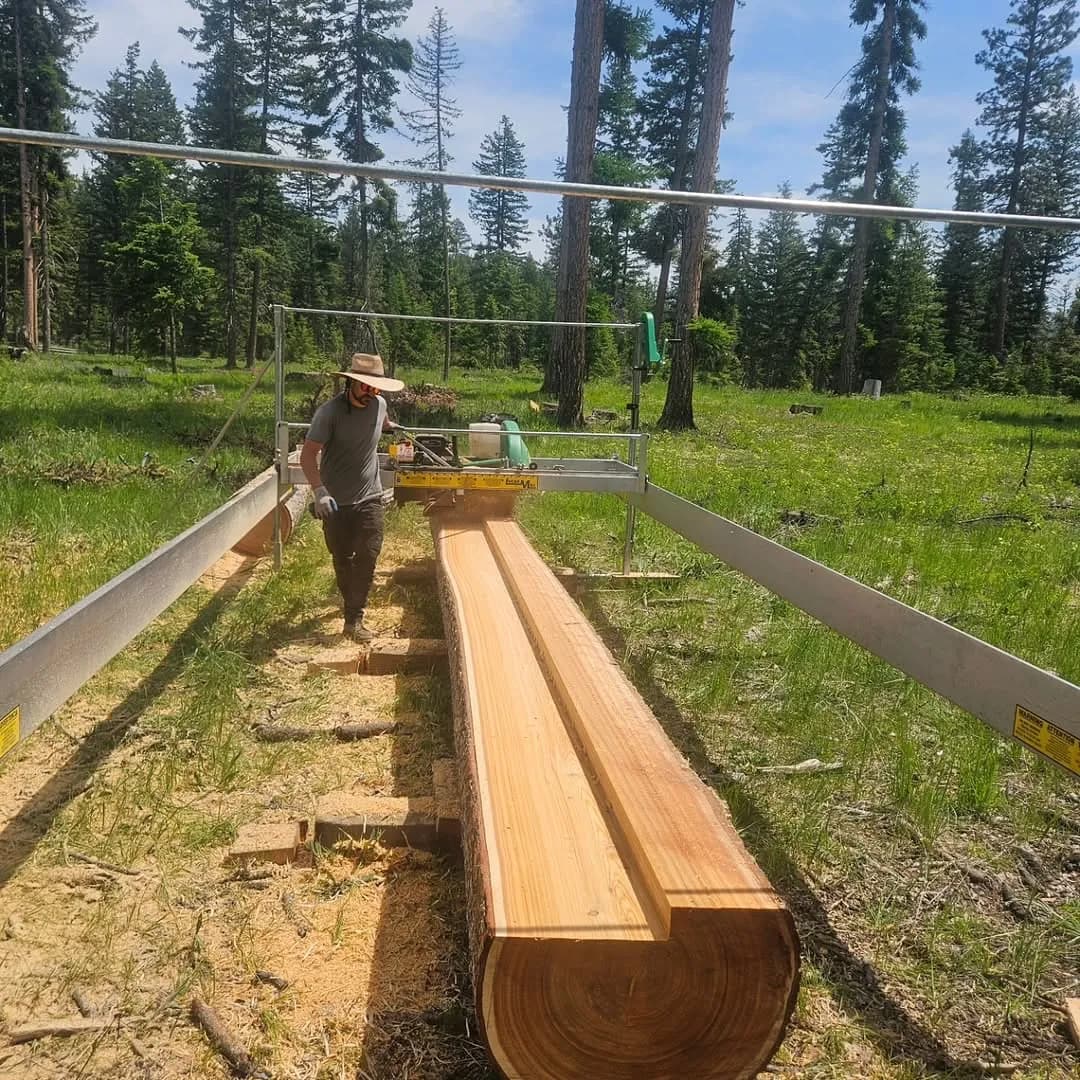
The log rules estimate what a log should yield; what you actually stack depends on how you saw it.
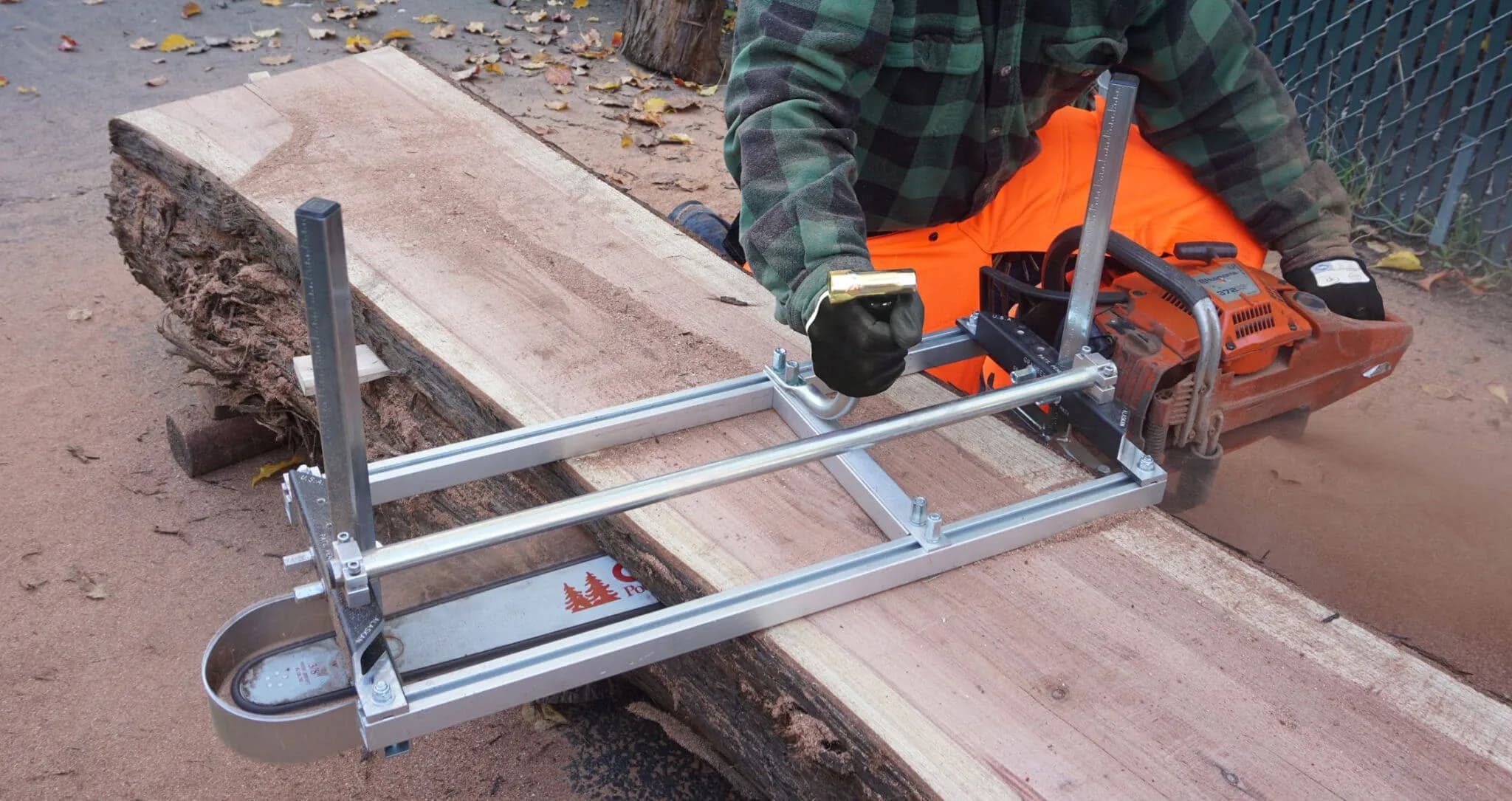
- Kerf. Every cut turns a strip of wood into sawdust. A mill with a wider kerf yields less from the same log than one with a thinner kerf; see swing-blade vs band sawmill.
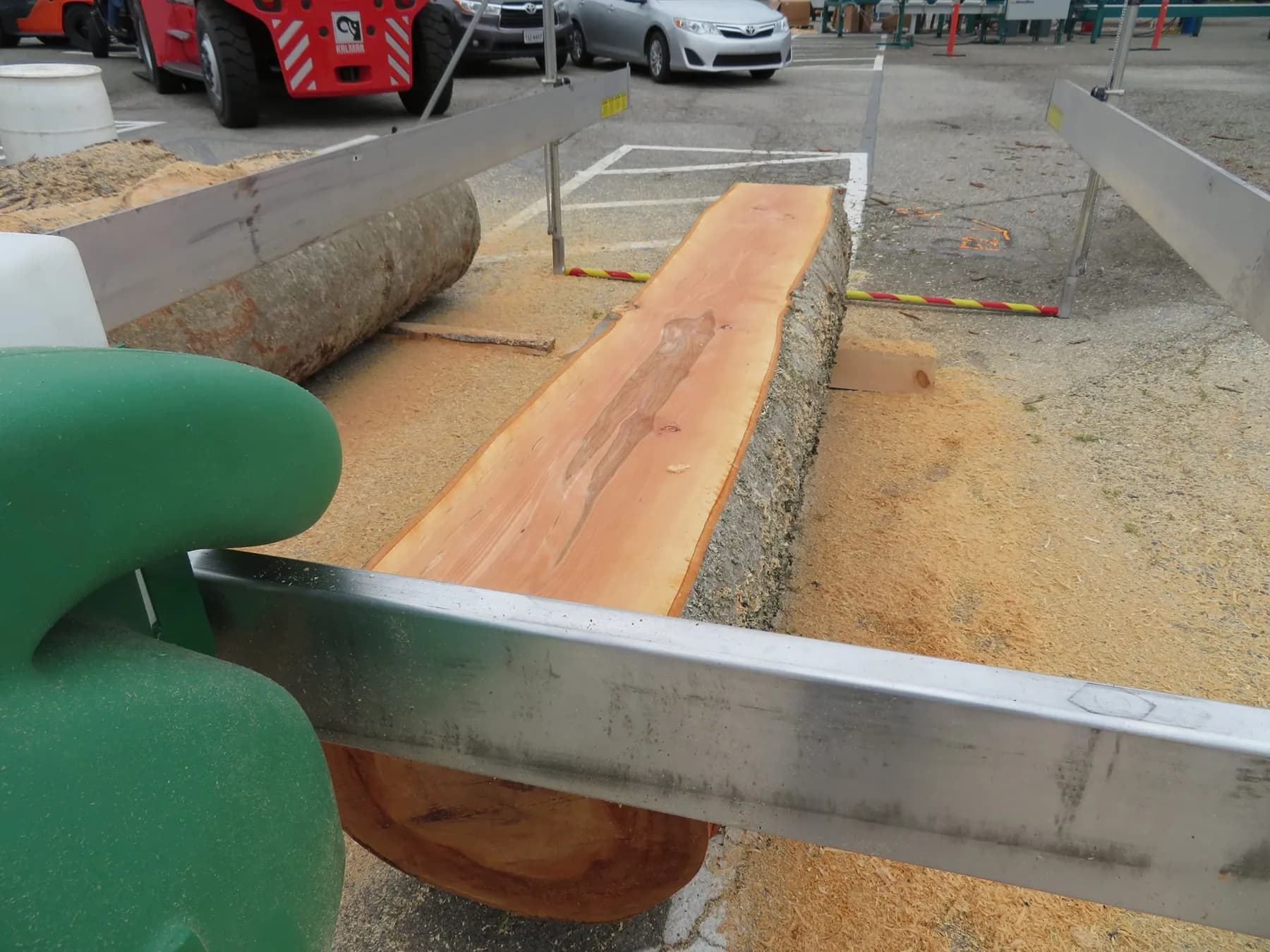
- Slabs and edgings. The rounded outside of the log comes off as slabs, and boards lose wane to edging.
- Board thickness. Thicker boards mean fewer cuts and less kerf; thin boards mean more.
- Sawing pattern and log quality. Taper, sweep and defects change what you can get out, and how you open the log matters.
Treat the scale as a starting estimate, and track what your own mill yields from your own logs.