What you need
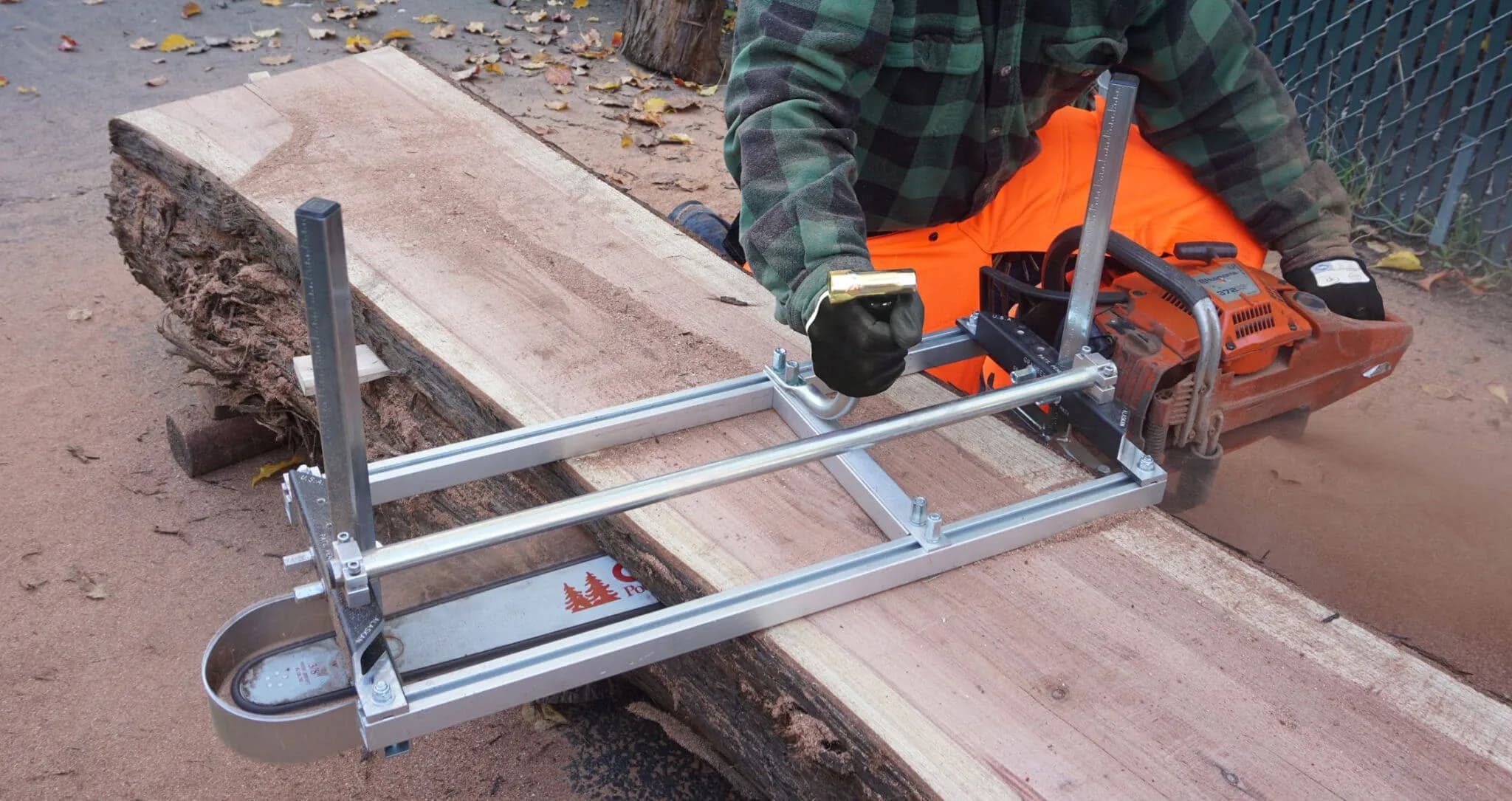
- The mill. A Granberg Alaskan MKIV sized to your bar. The mill mounts take up bar length: Granberg says you lose about 4 in of usable bar with any MKIV, and more with a roller-tip nose sprocket.
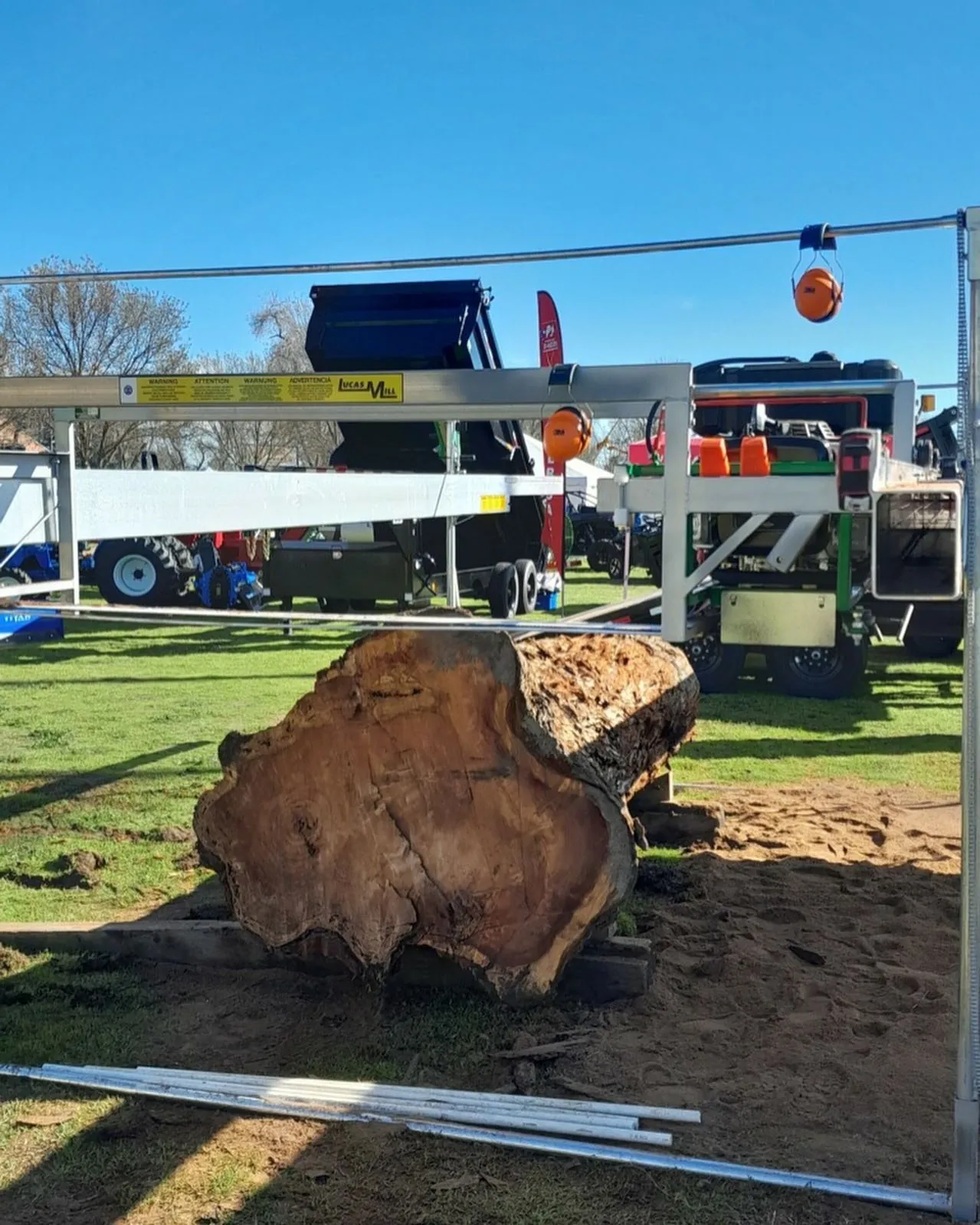
- A first-cut guide. A ladder rail, Granberg’s EZ-Rail or two straight boards fixed to the log. Granberg’s slabbing brackets hold a rail above the log.
- A saw that matches the mill. Granberg publishes a minimum: 50cc for the 24 in MKIV, 70cc for the 36 in, 90cc for the 48 in and 120cc for the 56 in and wider. Granberg recommends against battery and electric saws for milling. To choose the saw itself, see the milling saws on Bailey’s Husqvarna site (opens in a new tab).
- Ripping chain in the right pitch, gauge and drive-link count for your bar.
- Wedges, a helper handle for the nose end on wide cuts, and an auxiliary oiler for long bars.
- Safety gear: helmet with face screen, hearing protection, gloves, chainsaw chaps or trousers and boots.
Bailey’s MKIV Complete kit includes the mill, a double-ended bar, a loop of ripping chain, the helper handle, an auxiliary oiler and slabbing brackets. See Granberg chainsaw mills.
Seen from the end of the log.
- 1. Log (on blocks or chocks)
- 2. First-cut guide: ladder rail (or EZ-Rail / two straight boards)
- 3. Slabbing brackets holding the rail to the log
- 4. Alaskan mill frame: rails and end brackets
- 5. Depth posts (set cut thickness)
- 6. Cut thickness
- 7. Chainsaw powerhead (drive end)
- 8. Bar with ripping chain
- 9. Helper handle (nose end)
- 10. Auxiliary oiler (nose end)
- 11. Wedges in the kerf
- 12. Direction of cut
- 13. Flat face left by the first cut: the mill rides on it, rail removed
Step 1: Prepare the log
Choose a log that sits steady, and block it so it can’t roll. Clean the line of the cut: knock off mud, grit and loose bark, because dirt dulls chain fast. Look for nails, wire and fence staples, common in yard and fence-line trees. Granberg recommends debarking and metal scanning for its Skip Rip chain; it’s good practice with any chain.
Step 2: Set up the first-cut rail
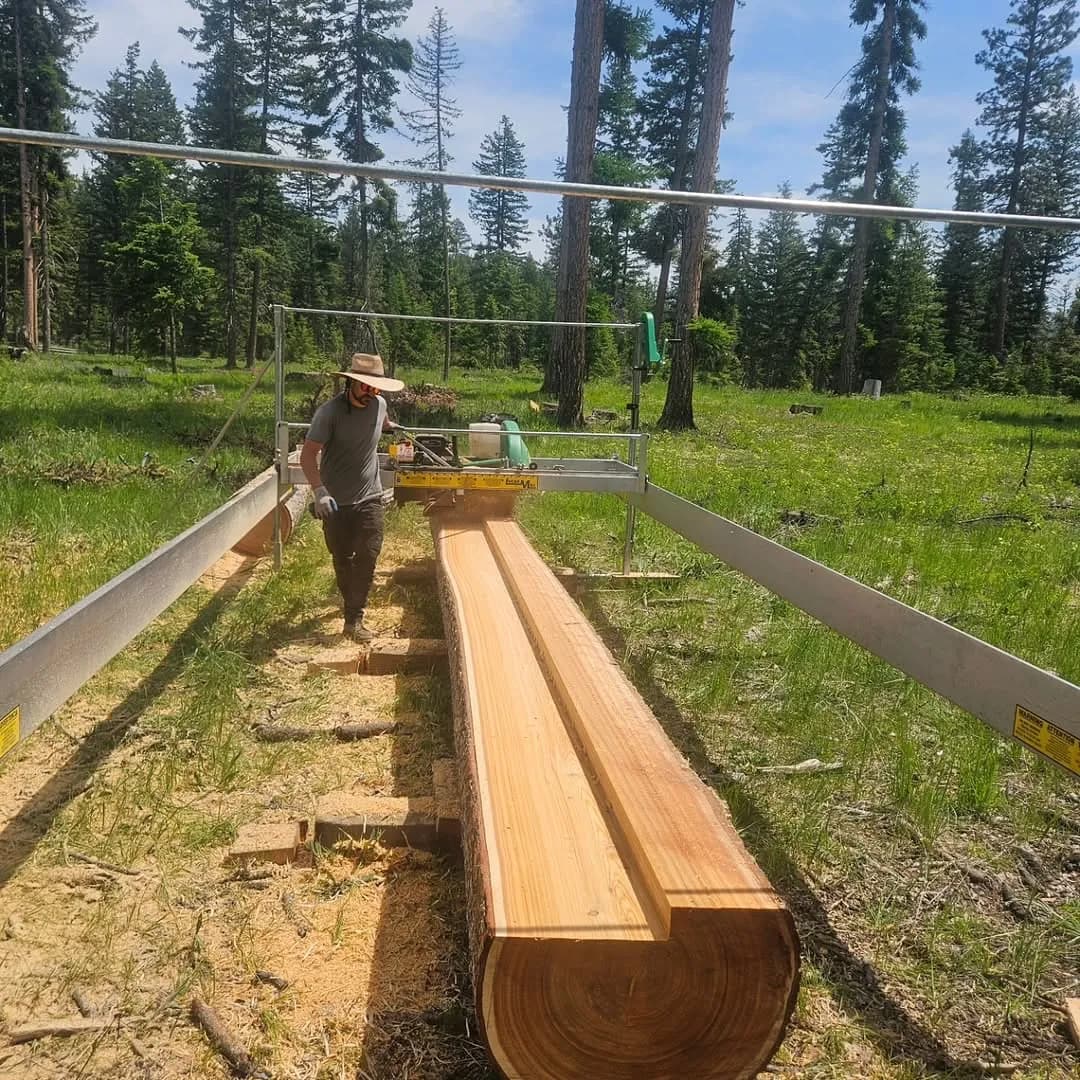
The first cut decides how flat every board will be. Fix the ladder rail or boards to the top of the log with screws or Granberg’s slabbing brackets, and check it is straight and level along its length. Set it so the first cut takes off just enough to give a full-width flat face.
Step 3: Set the depth
The depth posts on each end of the mill set how far below the rail the bar runs, and that is the thickness of the cut. Granberg publishes a depth range of ½ to 13 in for the MKIV. Set both ends to the same measurement, check the bar is parallel to the rails, and tighten everything before you start the saw.
Step 4: Make the first cut
Start the saw with the mill resting on the rail at the end of the log, and ease the chain into the wood. Feed steadily: let the chain cut, and don’t force it. As the cut opens, tap wedges into the kerf behind the saw so the slab can’t settle and pinch the bar. On a wide cut, a helper guides the nose end with the helper handle. Keep the chain oiled; on long bars, the auxiliary oiler feeds the nose end. When the cut is through, lift off the slab.
Step 5: The rest of the cuts
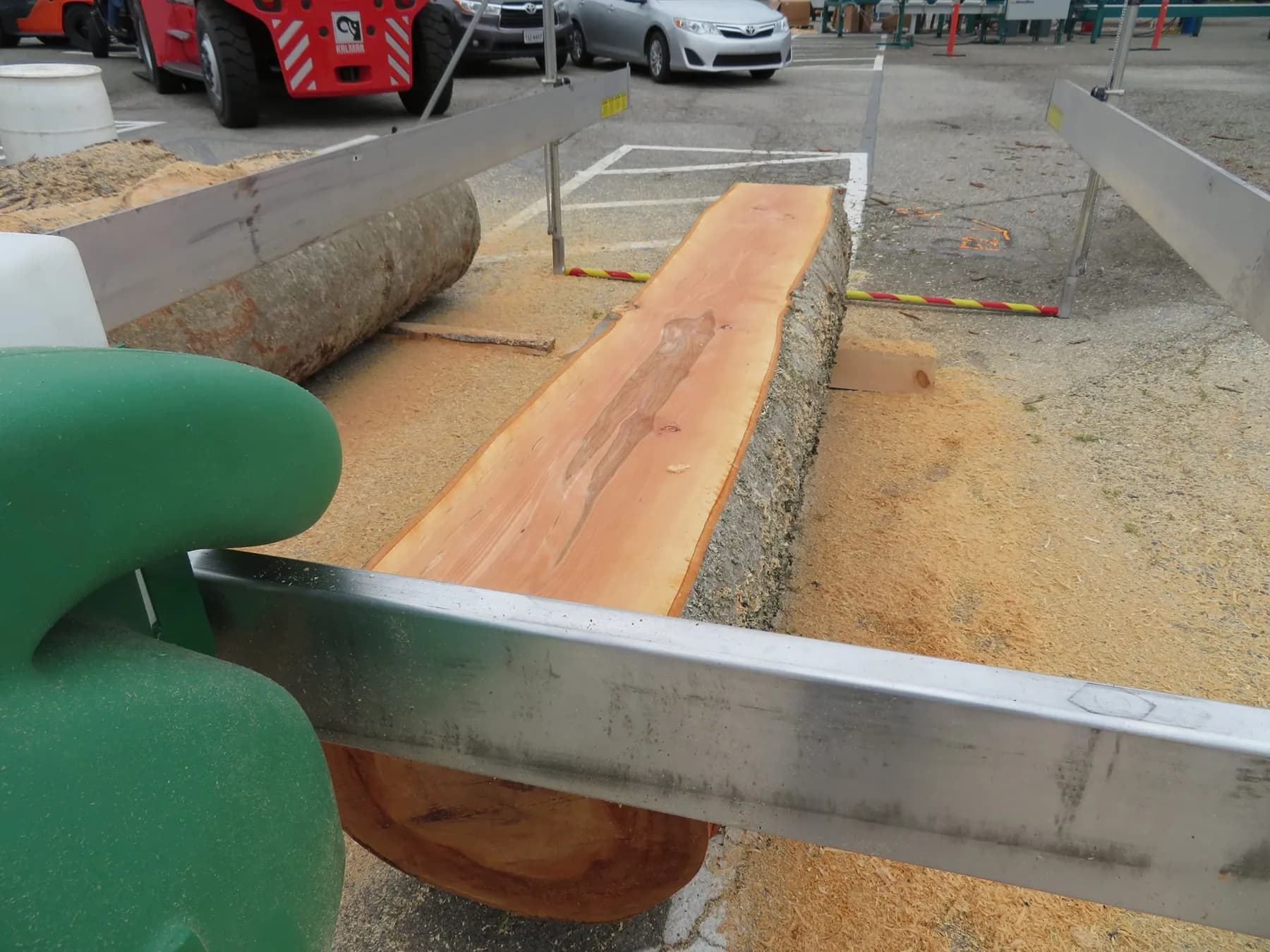
Take the rail off. From now on the mill rides on the flat face you just cut. Set the depth to the board or slab thickness you want and make the next cut. To get square-edged boards or a beam, roll the log 90 degrees, set up the rail again and cut a second face. Stack each board flat with spacers between layers so it can air-dry straight.
Ripping chain
Ripping chain is ground for cutting along the grain, which is what a chainsaw mill does. Granberg’s ripping chain has scoring and clearing cutters: about half of each tooth is shaved off so each tooth takes a quarter of the kerf. Granberg says it takes less feeding pressure and less power than standard crosscut chain and cuts smoother.
Sharpen it as the chain’s maker says. Granberg’s instruction is 10 degrees on both scoring and clearing cutters, and Granberg’s own estimate is that a new chain cuts around 600 board feet before it needs sharpening. Carry a spare loop.
Granberg sells ripping chain with no warranty, as a wear item.
Safety basics
Milling is long, hard running for a saw and its operator. These basics apply to any chainsaw mill; read the saw’s and the mill’s manuals first.
- Wear full chainsaw protection, including eye, face and hearing protection.
- Keep everyone clear of the bar’s nose and of the slab as it comes free.
- Stop the saw before adjusting the mill, changing chain or moving wedges.
- Take breaks: the saw runs at full throttle for minutes at a time, and so do you.
- Use a saw with enough power for the mill size. Granberg warns that it won’t take responsibility for damage caused by under-powered saws.